A beautiful backyard and a freshly painted living room tell you almost nothing about the actual quality of care your parent will receive. It’s a heavy weight to carry, especially when you’re balancing the guilt of moving a parent out of their home with the fear of choosing the wrong place. You want the intimacy of a small setting, but you need to know your loved one is safe, respected, and well-attended.
We understand that this decision feels overwhelming, but you don’t have to do it alone. This board and care home checklist is designed to help Los Angeles families evaluate any facility with the eyes of an expert. We’ll show you how to look past the decor to check for 2026 California RCFE compliance, staffing consistency, and genuine resident engagement. By the end of this guide, you’ll have a clear set of questions for your tours and the peace of mind that comes from making a truly informed choice.
Key Takeaways
- Understand the 6-bed residential model and how California RCFE standards protect your loved one’s safety and dignity.
- Master the “smell test” and other environmental cues to evaluate a home’s cleanliness and maintenance with confidence.
- Apply our comprehensive board and care home checklist to observe staff interactions and verify consistent, high-quality care.
- Look beyond the decor to assess the heart of the home, including nutritious dining experiences and meaningful social engagement.
- Recognize critical red flags like high staff turnover or evasive answers before you sign any admission agreements.
Understanding the Board and Care Model in California
A board and care home is essentially a single-family house in a quiet neighborhood that has been licensed to provide 24-hour care. In California, these are officially known as Residential Care Facilities for the Elderly (RCFE). They are strictly regulated by the California Department of Social Services (CDSS) to ensure safety and quality. For many families in Woodland Hills and the San Fernando Valley, these homes offer a sense of familiarity that large, corporate facilities simply cannot match. Residential care in this format allows seniors to live in a real home, often with a backyard, a shared living room, and home-cooked meals.
While the name might sound informal, the oversight is rigorous. Every licensed RCFE must follow state-mandated standards for staffing, fire safety, and resident rights. This model is particularly popular in Los Angeles because it blends professional care with a neighborly atmosphere. It allows your loved one to age in a setting that feels like the home they have known for decades, but with the added security of trained caregivers just a few steps away at all times.
Board and Care vs. Assisted Living: The Key Differences
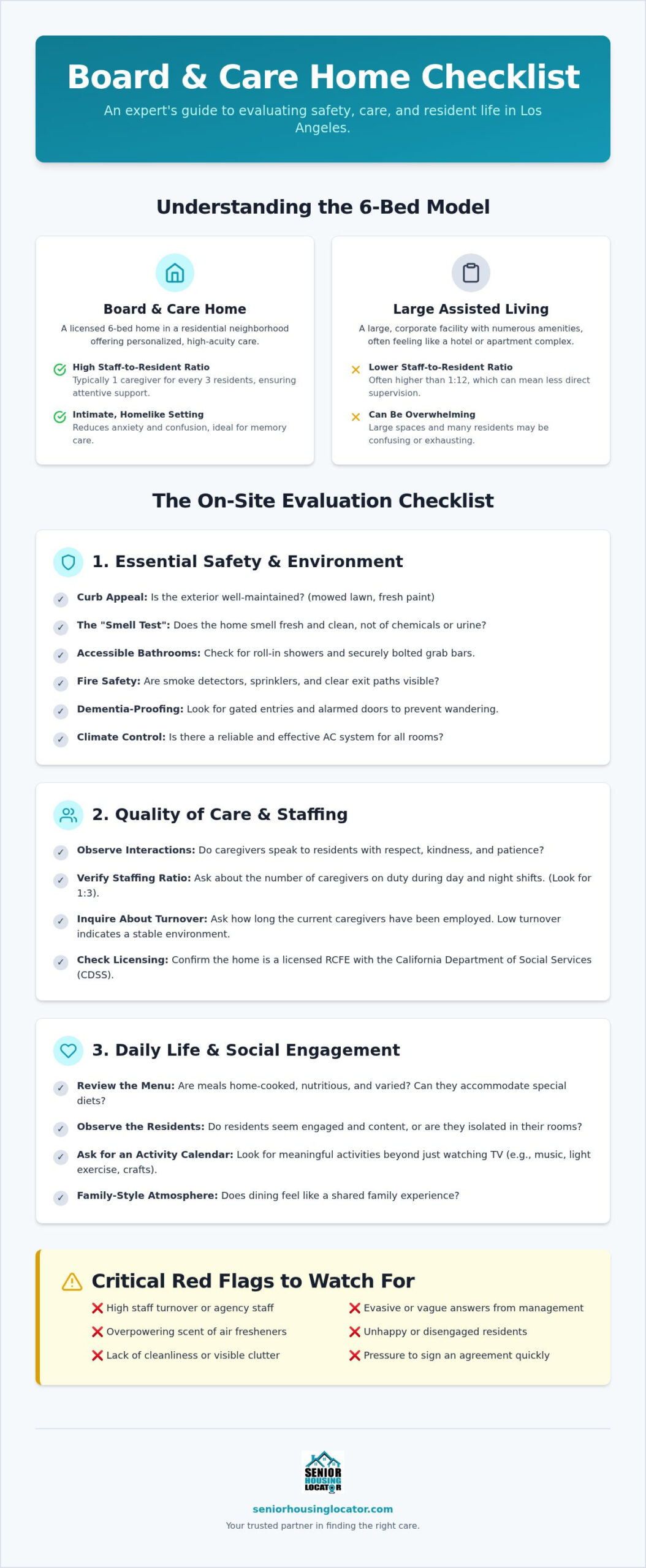
Choosing between these two options depends on the level of interaction and support your loved one needs. Large assisted living communities look like luxury apartments or hotels. They offer many amenities but can feel anonymous. In contrast, board and care homes focus on a smaller scale, typically housing only six residents. This smaller footprint allows for a staff-to-resident ratio that is often 1:3, which is significantly better than the ratios found in larger settings. If you are weighing a board and care home vs assisted living, consider how much direct supervision is required. Board and care homes excel at managing “high-acuity” needs, meaning they can provide more hands-on help for seniors who are frail or have advanced memory issues.
Who is the Ideal Candidate for a Board and Care Home?
Not every senior thrives in a bustling community with hundreds of neighbors. Some find the long hallways and crowded dining rooms of assisted living confusing or physically exhausting. A board and care home is often the right choice for seniors who:
- Need significant help with activities of daily living like bathing, dressing, or medication management.
- Experience anxiety or “sundowning” in large, noisy environments.
- Value a family-style dining experience where the caregivers know their favorite recipes and routines.
Using a board and care home checklist helps you determine if the specific house you are visiting can truly meet these personal needs. It allows you to look past the cozy furniture to see if the environment is safe, the staff is attentive, and the atmosphere is truly supportive. This intimate setting ensures that no one gets lost in the shuffle, providing a level of peace of mind that is hard to find in larger institutions.
Essential Safety and Environment Checklist
When you first pull up to a potential home, take a moment to look at the curb appeal. Is the lawn mowed? Is the paint peeling? A well-kept exterior often reflects the level of attention given to the residents inside. This is the first step in your board and care home checklist. Once you step through the front door, trust your nose. A quality home should smell like fresh laundry or a home-cooked meal. If you notice a heavy scent of chemical air fresheners or a lingering odor of urine, it may indicate that the staff is struggling to keep up with hygiene and incontinence care.
You’ll also need to decide between private rooms and shared spaces. Private rooms offer dignity and quiet, while shared rooms can lower costs and provide companionship. Regardless of the room type, check the bathrooms. Look for roll-in showers and sturdy grab bars that are bolted securely into the wall. These aren’t just conveniences; they are essential for preventing falls and ensuring your loved one can maintain some independence. If you feel overwhelmed by these details, our team can help you find pre-screened board and care homes that already meet these high standards.
Physical Safety Features to Verify
Safety goes beyond what you can see at a glance. Every home should have a visible fire safety system, including sprinklers, smoke detectors, and clearly marked exit paths. For families dealing with dementia, gated entries and alarmed doors are non-negotiable to prevent wandering. You can cross-reference these features with the official state pre-licensing checklist provided by the CDSS. Don’t forget to ask about climate control. In the San Fernando Valley heat, having a reliable AC system that keeps every bedroom comfortable is a matter of health, not just comfort.
Cleanliness and Organization Standards
A quick peek into the kitchen can tell you a lot about the home’s daily rhythm. Is the food prep area organized? Is the refrigerator clean and stocked with fresh produce? Common areas should be free of clutter like loose rugs or stray power cords, which are major trip hazards for seniors using walkers. Finally, ask about the laundry schedule. Bed linens and towels should be changed at least once a week, or immediately if they become soiled. A clean, organized home shows that the caregivers have a structured routine and take pride in their environment.
Evaluating Quality of Care and Staffing Ratios
The physical house provides the setting, but the staff provides the soul of the home. A thorough board and care home checklist must dive deep into the daily habits of the caregivers. During your visit, watch how the staff interacts with current residents. Are they making eye contact? Do they use the residents’ preferred names? Patience is the most valuable skill in a 6-bed home. You want to see caregivers who remain calm and kind, even when a resident is repetitive or confused. If the staff seems hurried or ignores residents to look at their phones, it’s a sign that the culture of care may be lacking.
Consistency is just as important as kindness. Ask the manager how long the current caregivers have been with the home. High turnover often leads to gaps in care and emotional distress for seniors who rely on familiar faces. In contrast, seeing the same team for years suggests a stable, well-managed environment. You should also ask about nighttime staffing. Does the home have an “awake” staff member at 3 AM, or is it a “live-in” model where the caregiver sleeps? For residents who wander or need frequent bathroom assistance, an awake staff member is essential for safety. Finally, check their medication management. Prescriptions should be kept in a locked cabinet with a clear log showing exactly when each dose was administered.
Questions for the Care Manager
Ask the manager how they handle a sudden hospital discharge. You need to know they can pivot quickly when care needs change. Inquire about their specific background with dementia or Parkinson’s care. These conditions require specialized techniques that general caregivers might not always possess. Communication is also vital for your peace of mind. Ask how they share daily updates or health changes with families. A manager who is transparent and easy to reach makes the entire transition much smoother for everyone involved.
Professional Qualifications and Training
Every facility in California must have a licensed administrator with a valid RCFE certification. Don’t be afraid to ask to see this document during your tour. Beyond the legal basics, look for caregivers who have received specialized training in memory care or hospice support. This extra education shows a commitment to high-quality care. While you are there, observe how staff help residents move from a bed to a chair. They should use proper lifting and transfer techniques to protect both themselves and your loved one from injury. If a caregiver looks like they are straining or using improper form, it could lead to a fall that a more trained eye would have prevented.
Assessing Social Engagement and Daily Life
A house can be perfectly safe and impeccably clean, but if it feels hollow or lonely, it isn’t the right home for your parent. While the first half of your board and care home checklist focused on safety and staffing, this section focuses on the “vibe” and the emotional quality of life. Social engagement is the heartbeat of a successful 6-bed home. Because the setting is so intimate, the personalities of the other residents and the rhythm of the day will directly impact your loved one’s happiness. You want to find a place where life continues to be vibrant, even if the pace has slowed down.
Start by looking at the common areas. Are residents sitting together in the living room, or is everyone isolated in their bedrooms? While privacy is important, total isolation can lead to rapid cognitive decline. Check for outdoor access as well. A safe, enclosed patio or a small garden allows residents to enjoy the California sunshine and fresh air, which is vital for mental health and sleep regulation. You should also ask about pet policies. Some homes allow residents to bring a small, well-behaved pet, while others have a “house pet” like a friendly cat or dog that provides therapeutic companionship for everyone. If you need help finding a home with a specific social atmosphere, you can contact our local advisors for a personalized referral.
Food and Nutrition Checklist
Dining in a board and care home should feel like a family dinner, not a cafeteria service. Ask to see a sample weekly menu to check for variety and nutritional balance. The meals should be home-cooked and use fresh ingredients rather than processed, pre-packaged foods. If your loved one has specific health requirements, ask how the home accommodates special diets, such as low-sodium or diabetic-friendly options. During your tour, observe if residents are encouraged to eat together in the dining room. This communal experience is often the most important social event of the day, providing a natural time for conversation and connection.
Social Climate and Resident Happiness
Trust your intuition when you look at the current residents. Do they appear clean, well-groomed, and content? If residents are still in their pajamas at 2 PM or seem unkempt, it may suggest a lack of structured daily care. Ask the manager about scheduled activities. While a 6-bed home won’t have a full-time “activity director,” they should still offer engagement like music therapy, simple games, or chair yoga. Finally, ask how they handle special occasions. Birthdays and holidays should be celebrated with warmth and enthusiasm, ensuring that every resident feels seen and valued as a member of the family.
Making the Final Decision: Red Flags and Next Steps
Once you have completed the technical parts of your board and care home checklist, it is time to step back and look at the bigger picture. Some warning signs are subtle, but they speak volumes about the daily reality of a facility. For instance, if the staff seems rushed or avoids eye contact during your tour, it often signals burnout or a lack of management support. You should also be wary of any lingering odors that suggest a failure in incontinence care. Finally, a major red flag is receiving vague answers regarding pricing or additional care fees. Under California’s 2026 transparency laws, homes must be clear about their rates and history. If they aren’t, it is a sign that they may not be the trusted partner you need. Using a professional board and care home checklist is the best way to spot these issues before they become problems for your family.
This is where a Senior Living Advisor in Los Angeles becomes your greatest asset. We have already done the heavy lifting of vetting these homes, so you don’t have to worry about hidden issues. We know which homes have stable staffing and which ones provide the best value for your specific budget. We focus on the details so you can focus on your parent’s well-being.
The Final Walkthrough: Trusting Your Gut
Beyond the paperwork, you must listen to your intuition. Does this home feel like a place where your parent would be respected and truly seen? Look at the other residents. Are they people your parent would enjoy sitting with at the dinner table? After your tour, take a quiet moment to write a single sentence summarizing your immediate emotional reaction to the house. If that sentence includes words like “warm,” “safe,” or “homey,” you are likely on the right track. If you feel any hesitation, it is okay to keep looking until you find the perfect fit.
Taking Action with Senior Housing Locator
Choosing the right care is a journey, but you don’t have to walk it alone. Our free referral service matches families with pre-vetted board and care homes throughout the San Fernando Valley, including Woodland Hills and Encino. We help you schedule tours, coordinate the move-in paperwork, and navigate the complex transitions of senior life. Our support doesn’t end when the contract is signed. We stay with you even after the placement is made to ensure your loved one is thriving. Let us handle the research and the logistics while you focus on being a supportive daughter or son.
Finding Peace of Mind in Your Final Choice
Choosing the right senior living environment is a deeply personal journey. It is about more than just finding a clean room; it is about finding a community that feels like family. By using this board and care home checklist, you have gained the tools to look past the surface and evaluate what truly matters. You now know how to verify staffing consistency, assess social engagement, and trust your intuition when something feels off. This knowledge transforms a stressful search into a confident decision for your loved one’s future.
You don’t have to navigate this transition alone. Our team offers expert local knowledge of Woodland Hills, Encino, and Sherman Oaks to guide you toward the best options. We perform a comprehensive vetting of every facility we recommend, ensuring they meet the high standards your parent deserves. Let us help you find the perfect Board and Care home in Los Angeles; our service is 100% free for families. You are making an incredibly loving choice for your parent, and with the right support, you can find a place where they will truly thrive.
Frequently Asked Questions
How much do board and care homes cost in Los Angeles in 2026?
Pricing in Los Angeles varies based on the specific neighborhood, the level of care required, and whether your loved one chooses a private or shared room. While locations in Woodland Hills or Encino may have different rate structures, all facilities must now provide a three-year history of rate increases. We recommend asking for a detailed fee schedule during your tour to avoid any unexpected costs after the move.
Is a board and care home the same as a nursing home?
No, board and care homes and nursing homes serve very different purposes. A nursing home, or skilled nursing facility, provides 24-hour medical care in a clinical environment. A board and care home is a residential house that focuses on personal care and assistance with daily activities. It offers a much more intimate, family-style setting that many seniors find more comfortable and less intimidating than a large medical institution.
How do I check the licensing and violation history of a California RCFE?
You can verify the status of any California Residential Care Facility for the Elderly through the California Department of Social Services (CDSS) website. Their transparency portal allows you to view recent citations and inspection reports. Additionally, as of 2026, facilities are legally required to disclose their violation history and staffing ratios to you directly before you sign an admission agreement. This ensures you have all the facts before making a commitment.
What happens if my parent’s care needs increase over time?
Most board and care homes are designed to allow seniors to age in place even as their physical or cognitive needs grow. Facilities conduct regular reappraisals to adjust care plans, often every 12 months or whenever a significant health change occurs. If needs become very high, many homes in the San Fernando Valley work with outside hospice agencies to provide additional support, allowing your parent to stay in their familiar environment.
Can I visit my parent at any time in a board and care home?
Yes, you can typically visit your parent at any time, as these are residential homes rather than clinical facilities. While some homes may have preferred “quiet hours” in the late evening to respect other residents’ sleep, they generally encourage family involvement. Maintaining these social connections is a vital part of your board and care home checklist. Always check the specific house rules during your initial tour to ensure they match your family’s schedule.
Do board and care homes in the San Fernando Valley offer private rooms?
Yes, many board and care homes throughout the San Fernando Valley offer both private and shared room options. In neighborhoods like Sherman Oaks and Northridge, private rooms are highly sought after for those who value independence and quiet. Shared rooms can be a more budget-friendly choice and provide built-in companionship. Your board and care home checklist should include a walkthrough of the specific room to ensure it meets your parent’s space needs.
Are board and care homes covered by Medicare or Medi-Cal?
Medicare generally does not cover the “room and board” costs of a residential care facility, as it only pays for medical services. Some Medi-Cal programs, like the Assisted Living Waiver, may provide assistance, but many board and care homes in Los Angeles operate on a private pay basis. It is important to review your long-term care insurance policy or personal savings to understand how your family will manage these monthly costs.
How long does the placement process typically take with an advisor?
The placement process can move very quickly depending on your family’s urgency. If there is a sudden hospital discharge, an advisor can often help you find a pre-vetted match in Woodland Hills or Burbank within 24 to 48 hours. For families who have more time, the process typically takes a few weeks to allow for multiple tours and a calm transition. Our goal is always to find the right long-term fit rather than a rushed solution.