
Last night, you sat at your kitchen table in the San Fernando Valley surrounded by brochures, feeling more confused than when you started. It’s a heavy weight to carry, especially when every website looks the same and the care levels feel like a puzzle. Choosing an assisted living facility for a loved one is one of the most emotional and complex decisions you’ll ever face. You want more than just a beautiful lobby; you want safety, specialized care, and a community where they’ll actually thrive.
We understand that the sheer number of options in Los Angeles can feel overwhelming. You deserve a clear path forward that replaces fear with peace of mind. This guide provides a step-by-step roadmap to help you evaluate your options with confidence, empathy, and expert local insights. We’ll walk you through the latest 2026 care trends, clarify the differences between board and care homes versus larger facilities, and provide a checklist for your tours. By the end, you’ll have the tools to make a choice that ensures your parent is happy, safe, and well-cared for.
Key Takeaways
- Learn how to use the “Activities of Daily Living” framework to objectively determine if your loved one is ready for professional support.
- Simplify the process of choosing an assisted living facility by comparing the unique benefits of boutique board and care homes versus large-scale communities in Los Angeles.
- Identify your top three non-negotiables for care and budget to narrow down the best options for 2026 without feeling overwhelmed.
- Use our expert touring checklist to spot critical sensory cues and staff interaction patterns that a standard brochure won’t show you.
- Understand how a local ally can provide a pre-vetted list of communities in the San Fernando Valley, saving you time and emotional energy.
Recognizing the Signs: When is Assisted Living the Right Choice?
Are you noticing small changes that feel like big worries? Perhaps your mom is more forgetful lately, or your dad seems unsteady on his feet. It’s natural to feel hesitant when you start wondering, What is assisted living? and how it fits into your life. Many families worry that moving means giving up control. However, assisted living is a bridge to enhanced quality of life, not a loss of freedom. It provides a supportive environment where seniors stay active while getting help with the things that have become difficult.
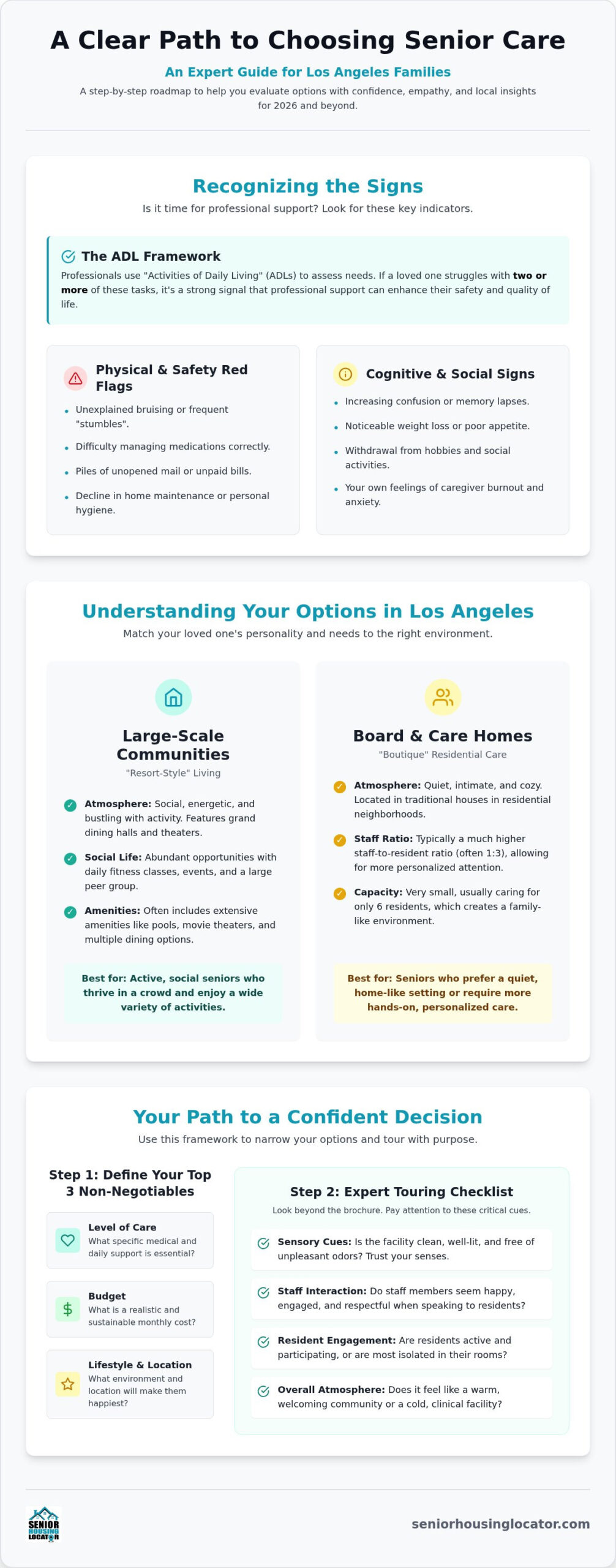
When you’re considering choosing an assisted living facility, it helps to use an objective framework. Professionals use the “Activities of Daily Living” (ADLs) to assess needs. These include tasks like bathing, dressing, and managing medication. If your loved one is struggling with more than two of these tasks, professional support can prevent a crisis before it happens. It’s about finding the right balance between staying independent and staying safe.
The Physical and Safety Red Flags
Safety is often the primary driver for families in the San Fernando Valley looking at care options. You might notice unexplained bruising or realize they’ve had frequent “stumbles” they didn’t report. Difficulty managing medications is another critical sign; missed doses can lead to serious health complications. Take a look around the house. Are there piles of unopened mail? Is the laundry piling up? When hygiene or household maintenance standards slip, it’s often because the physical effort required is simply too much to manage alone.
The Cognitive and Social Warning Signs
Cognitive changes often show up in subtle ways before they become obvious. You might see increasing confusion during daily tasks or memory lapses that go beyond normal aging. Weight loss is a common red flag, often caused by “forgetting” to eat or an inability to cook safely. Socially, pay attention if they withdraw from hobbies or stop attending family gatherings. Isolation is dangerous for seniors. It can lead to rapid cognitive decline and depression, making the social atmosphere of a community vital for their well-being.
Don’t forget to check in on yourself, too. Caregiver burnout is a heavy burden that affects the whole family. If you feel constantly overwhelmed or anxious about their safety, you aren’t alone. Choosing an assisted living facility isn’t about passing off a responsibility. It’s about ensuring your loved one has the best possible care while you return to your role as a supportive family member. This shift often improves the relationship for everyone involved.
Understanding Your Options in Los Angeles and the San Fernando Valley
Los Angeles offers a diverse landscape of care that often surprises families. When you begin choosing an assisted living facility, you’ll find options ranging from high-rise luxury apartments to quiet residential homes. Understanding these differences helps you match your loved one’s personality to the right environment. It’s about finding a place where they feel comfortable, safe, and truly at home.
The journey usually follows a specific spectrum of support. It starts with Independent Living for those who want to shed the burden of home maintenance. It then moves to Assisted Living and eventually Skilled Nursing for more intensive medical needs. The National Institute on Aging on long-term care options provides a helpful breakdown of these clinical differences. In our local community, we see two primary models that dominate the market.
Large-scale assisted living communities offer a social, resort-style atmosphere. They feature grand dining halls, movie theaters, and daily fitness classes. On the other end, the Residential Board and Care home is a unique Southern California staple. These are traditional houses in residential neighborhoods that have been converted to care for a small group of residents, usually six. They offer a quiet, intimate setting that feels like a real home rather than a facility.
Assisted Living vs. Board and Care Homes
The choice between a large community and a board and care often comes down to social needs and staffing. Large facilities provide endless social opportunities, which is perfect for active seniors who love a crowd. However, board and care homes often have better staff-to-resident ratios. This means more personalized attention in a cozy, familiar environment. Whether you prefer the energy of Sherman Oaks or the tranquility of a residential street in Woodland Hills, location plays a huge role in your ability to visit often.
Memory Care: Specialized Support for Dementia
Sometimes, a standard environment isn’t enough for those with progressive cognitive changes. If your loved one is prone to wandering or experiences high levels of agitation, they may need specialized memory care. These secured environments offer programming designed specifically for cognitive health and safety. You can find more detail in our guide on Memory Care Placement in San Fernando Valley. These communities focus on dignity, safety, and specialized communication techniques.
When choosing an assisted living facility, the goal is to match the care level to your parent’s current condition and future needs. If you’re feeling stuck between these two paths, our team at Senior Housing Locator can help you weigh the pros and cons based on your family’s specific situation.
Defining Your Priorities: Care, Budget, and Lifestyle
Before you start touring, it’s helpful to narrow your focus by creating your “Rule of Three.” These are your three absolute non-negotiables that will guide your search. For most families, these priorities include a specific level of medical support, a maximum monthly budget, and a social atmosphere that matches their loved one’s personality. By defining these early, choosing an assisted living facility becomes a much more manageable process. It keeps you from getting distracted by beautiful chandeliers when what you really need is high staff-to-resident ratios.
Location is a factor that directly impacts care quality. If you live in Burbank or Encino, picking a community nearby is about more than just a short commute. It’s about being able to drop in for a quick Tuesday lunch or an evening visit. When family members are present and visible, the quality of care often stays higher because the staff knows you’re an active part of your parent’s life. This proximity turns a facility into a true extension of your family home.
Don’t forget to consider the “cultural fit” of a community. Does your parent prefer a quiet, library-like atmosphere, or do they thrive in a busy, high-energy environment? Some communities are formal and structured, while others feel like a casual neighborhood bistro. Finding a place that matches their personality ensures they feel like a resident, not just a patient.
The Financial Picture in Southern California
Understanding the price tag is often the most stressful part of the journey. In 2026, most Los Angeles communities use a two-part pricing structure: a base rate for room and board, plus a separate fee for care levels. This means the price can change as your loved one’s needs increase. You can find a detailed breakdown of these numbers in our guide to Assisted Living Costs in Los Angeles. Beyond private pay, it’s worth exploring long-term care insurance or VA benefits, which can significantly lower your out-of-pocket expenses.
Lifestyle and Social Preferences
A vibrant lifestyle is the best medicine for senior health. When you look at activity calendars, ask if the programs are intellectually stimulating or just “busy work.” A great community offers a mix of three things: physical movement, social connection, and creative expression. Look for dining options that offer variety, from formal sit-down meals to grab-and-go kitchenettes. Finally, if your parent has a furry friend, prioritize communities with clear pet policies and easy outdoor access. These small lifestyle details are what truly make a community feel like home.
Walking through the door of a community for the first time can be sensory overload. You need to look past the fresh flowers and expensive furniture to see the reality of daily life. Start with your nose. The “Smell Test” is the most honest indicator of cleanliness and care when choosing an assisted living facility. A building shouldn’t smell like heavy perfumes or harsh cleaning chemicals, nor should it have unpleasant odors. It should just smell clean. Pay close attention to how staff interact with the people living there. Do they call residents by their preferred names? Do they make eye contact and smile? These small human connections are the foundation of a good life.
Ask the tour guide how long the caregivers have been with the company. High staff turnover is a red flag that often leads to inconsistent care and missed details. You want a team that knows your parent’s favorite tea or exactly how they like their pillows. Longevity suggests a healthy workplace where staff are valued, which translates directly to better care for your loved one. We always recommend that you schedule your visit during a mealtime to see the true social dynamic and the quality of the food being served.
Critical Questions for the Administration
The administrative team holds the keys to the facility’s safety standards. Ask them exactly what the process is for a “change in condition.” If your parent becomes more confused or loses mobility, how does their care plan adapt? You also need to know how they handle medical emergencies or hospital discharges. Finally, ask to see the most recent state inspection report. A transparent facility will have no problem sharing this document with you. If you’re feeling unsure about what you’re seeing, contact Senior Housing Locator to have a local ally help you vet these communities before you even step foot inside.
The Resident Experience Check
Take a moment to look at the residents themselves. Do they look well-groomed, engaged, and happy? Observe whether people are sitting alone in their rooms or gathered in common areas. The building itself should be well-lit and easy to navigate, with clear signage and no tripping hazards. If you see another family member visiting, don’t be afraid to ask them about their experience. Their “insider” perspective is often the most valuable part of the tour. This firsthand feedback helps you confirm that the community’s promises match the actual daily experience of the families who live there.
Navigating the Transition with a Trusted Local Ally
The final steps of this journey often feel like the heaviest. You’ve done the research and visited the communities, but the emotional weight of making the final call can still cause hesitation. This is where having a Senior Living Advisor in Los Angeles makes all the difference. We don’t just provide a list of addresses; we act as a compassionate guide who has walked this path with hundreds of other families. Our goal is to move you from a state of uncertainty to a place of total confidence on move-in day.
One of the biggest hurdles in choosing an assisted living facility is the sheer volume of data you have to process. When you work with a local ally, you gain access to a pre-vetted list of communities throughout the San Fernando Valley. We know which facilities have stable leadership and which ones have recently updated their memory care wings. This local “insider” knowledge saves you dozens of hours of frustrating research and ensures you only spend time touring the homes that truly fit your criteria.
Our placement service is completely free for families. We handle the initial intake, coordinate the tours, and help you review the necessary paperwork. This full-service approach removes the administrative burden so you can focus on the emotional well-being of your parent. Having a professional by your side during the final decision provides an extra layer of security, making sure no detail is overlooked before the lease is signed.
The Senior Housing Locator Advantage
We take pride in our deep roots across Woodland Hills, Santa Monica, and the surrounding Greater Los Angeles areas. We aren’t a distant corporate call center; we’re your neighbors who understand the local care landscape. Our commitment to integrity means we never push a specific facility. Instead, we focus on matching your loved one’s care needs and budget with precision. We stay involved from the first phone call until your parent is safely settled in their new home, providing a steady hand through every transition.
Taking the First Step Today
Starting the conversation with your parent about moving is often the hardest part of the process. It helps to approach the topic with curiosity rather than a list of demands. Ask them what they value most in their daily life and use those answers to narrow down your top three options. When you’re ready for expert guidance, we’re here to help you filter through the noise. We invite you to schedule a free consultation to simplify your search and find the clarity you need. Let us help you find the perfect home for your loved one.
Your Path to a Brighter Future Starts Here
Finding the right home for your parent is about more than just checking boxes; it’s about restoring their joy and your peace of mind. We’ve explored how to recognize the signs of need, the unique benefits of Los Angeles board and care homes, and how to use the “Rule of Three” to stay focused. Choosing an assisted living facility doesn’t have to be a lonely or overwhelming process when you have the right roadmap. You’ve already taken the most important step by educating yourself on what to look for during this transition.
You don’t have to navigate the complexities of 2026 care levels alone. Our team provides compassionate, local support from Woodland Hills to Pasadena, drawing on our expert knowledge of over 500 Los Angeles facilities. We offer a 100% free referral service for families to ensure you find a community that matches your budget and care needs perfectly. Take a deep breath and let us handle the heavy lifting of research and vetting.
Schedule your free personalized care consultation today and take the first step toward a safe, happy future for your loved one. You’ve got this, and we’re here to help every step of the way.
Frequently Asked Questions
What is the average cost of assisted living in Los Angeles in 2026?
In 2026, facility costs in Los Angeles are influenced by the recent increase in the California minimum wage to $16.90 per hour. This change has impacted operational expenses for communities in areas like Santa Monica and Pasadena. Generally, you’ll see a two-part fee structure consisting of a monthly base rate for your apartment and a separate charge for your specific care level. Prices vary significantly based on the neighborhood and amenities provided.
How do I know if my parent needs assisted living or a nursing home?
The main difference lies in the level of medical care required. Assisted living provides help with daily tasks like bathing and medication management while encouraging social independence. Nursing homes, or skilled nursing facilities, offer 24/7 medical supervision for seniors with complex health conditions or those recovering from surgery. If your loved one is still socially active but needs a helping hand, choosing an assisted living facility is usually the more appropriate and less clinical option.
Are board and care homes safer than large assisted living communities?
Both options are safe and regulated by the state, but they offer different environments. Board and care homes in the San Fernando Valley provide a higher staff-to-resident ratio in a quiet, residential setting. This is often better for seniors who need closer supervision or get overwhelmed by crowds. Large communities offer more robust safety technology, like AI fall detection. The safer choice depends entirely on your parent’s specific physical and cognitive needs.
Can I use Medicare to pay for an assisted living facility?
Medicare generally does not cover the costs of an assisted living facility. It is designed to pay for short-term medical care, such as rehabilitation after a hospital stay or limited skilled nursing services. For long-term residency, families typically rely on private funds, long-term care insurance, or VA benefits. In 2026, California’s Medi-Cal asset limits have changed to $130,000 for individuals, which may help more families qualify for the Assisted Living Waiver program.
What happens if my parent’s care needs increase after they move in?
Most communities use a tiered care system to handle changing needs. When a resident requires more help with mobility or memory, the facility conducts a new assessment and adjusts the care plan and monthly fee accordingly. Some facilities also offer specialized memory care wings on-site. This allows your parent to stay in a familiar environment even as their health evolves. It’s one of the most important questions to ask during your initial tour.
How long does the placement process usually take in the San Fernando Valley?
The timeline for placement in the San Fernando Valley can range from a few days to several weeks. If you are in a crisis situation, a local advisor can often expedite the process by identifying immediate openings in pre-vetted homes. For families who aren’t in a rush, we recommend taking at least two to three weeks. This gives you enough time to tour multiple options in Encino or Sherman Oaks and complete the necessary medical evaluations.
Is there a free service that helps find senior housing in Woodland Hills?
Yes, Senior Housing Locator provides a 100% free placement referral service for families throughout Woodland Hills and the surrounding areas. We are compensated by the care providers, which allows us to offer expert guidance at no cost to you. Our team helps you filter through hundreds of options to find the perfect match for your budget and care requirements. We handle the research and scheduling so you can focus on your family’s emotional needs.
What are the common red flags to watch for during a facility tour?
Watch for staff who seem rushed or fail to greet residents by name. Unpleasant odors are a major red flag, as they often indicate poor hygiene or maintenance standards. Also, look at the residents’ appearances; if they seem unkempt or disengaged, the facility may be understaffed. Choosing an assisted living facility requires a sharp eye for these sensory details. If the administration is hesitant to show you their latest state inspection report, consider it a warning sign.