Choosing the largest, most expensive senior living facility in the Valley isn’t always the best way to ensure your parent receives the highest level of attention. It’s natural to feel a heavy weight of guilt when you realize a loved one can no longer live alone. You want them to be safe, but you also want them to feel at home rather than placed in a clinical institution. Many families find that board and care homes Woodland Hills offer the perfect middle ground by providing professional support within a quiet, residential neighborhood.
You’ll discover how these intimate, six-bed residential care facilities provide personalized care that larger complexes often cannot match. We’ll break down the latest California safety regulations, explain the unique 6-bed model, and give you the exact questions to ask during your next tour. By the end of this guide, you’ll feel confident in finding a licensed, comfortable home that prioritizes your parent’s well-being, safety, and dignity.
Key Takeaways
- Understand the 6-bed residential care model and how it provides a “home-away-from-home” experience in local neighborhoods.
- Learn why the high staff-to-resident ratio in board and care homes Woodland Hills ensures more personalized attention for your loved one.
- Identify the core differences between intimate family-style dining and the large-scale restaurant environments of assisted living facilities.
- Get a practical checklist for your tours, focusing on essential safety features, home maintenance, and resident interactions.
- Discover how a local referral service can help you find high-quality, licensed homes that are often overlooked on national search sites.
What is a Board and Care Home in Woodland Hills?
Imagine walking down a quiet, tree-lined street in the San Fernando Valley. You pass a beautiful ranch-style house with a manicured lawn and a welcoming front porch. From the outside, it looks like any other family residence. However, inside, it functions as a professional care environment. This is the essence of board and care homes Woodland Hills. These Residential care settings offer a smaller, more intimate alternative to the massive senior living complexes often seen near Ventura Boulevard.
Most of these homes follow a specific 6-bed residential model. This small scale isn’t accidental; it’s designed to provide a high staff-to-resident ratio that larger facilities simply can’t match. In these settings, caregivers provide 24/7 supervision, prepare fresh meals, and manage medication schedules. They also assist with activities of daily living, such as bathing and dressing. Because the environment is a converted private home, the atmosphere stays warm, familiar, and distinctly un-clinical.
The Legal Framework: California RCFE Licensing
While these homes feel like private residences, they’re strictly regulated by the state. Every location must be licensed as a Residential Care Facility for the Elderly (RCFE). The California Department of Social Services (CDSS) oversees these homes through its Community Care Licensing Division. They conduct mandatory inspections and enforce safety standards that every home must meet. As of January 2025, new regulations require updated dementia-aware practices and resident reappraisals at least once every 12 months. These rules ensure a high baseline of professional care, even in a small neighborhood setting.
Who is Board and Care Best For?
Not every senior thrives in a “resort-style” community with hundreds of neighbors. For many, large facilities are physically exhausting to navigate and emotionally overwhelming. Board and care homes Woodland Hills are often the best choice for seniors who prefer a predictable routine. They’re especially helpful for those who:
- Find large dining halls or long hallways difficult to manage physically.
- Live with mild to moderate dementia and need a calm, low-stimulation environment.
- Value a familial social experience where they eat at a kitchen table with the same few friends every day.
- Require more frequent one-on-one attention from caregivers who know their personal habits.
This model is about simplicity and peace of mind. It removes the stress of a large institution and replaces it with the comfort of a real home. It’s a supportive solution for families who want professional care without the institutional feel. For seniors who are more independent and don’t yet need daily assistance, exploring independent living communities in Woodland Hills may be a more appropriate starting point before transitioning to a higher level of care.
Whether you are looking for senior care or specialized disability care, finding a provider that prioritizes individual needs is key; you can check out WithCare Support Services to learn more about high-quality professional support models.
The Benefits of Choosing an Intimate Care Setting
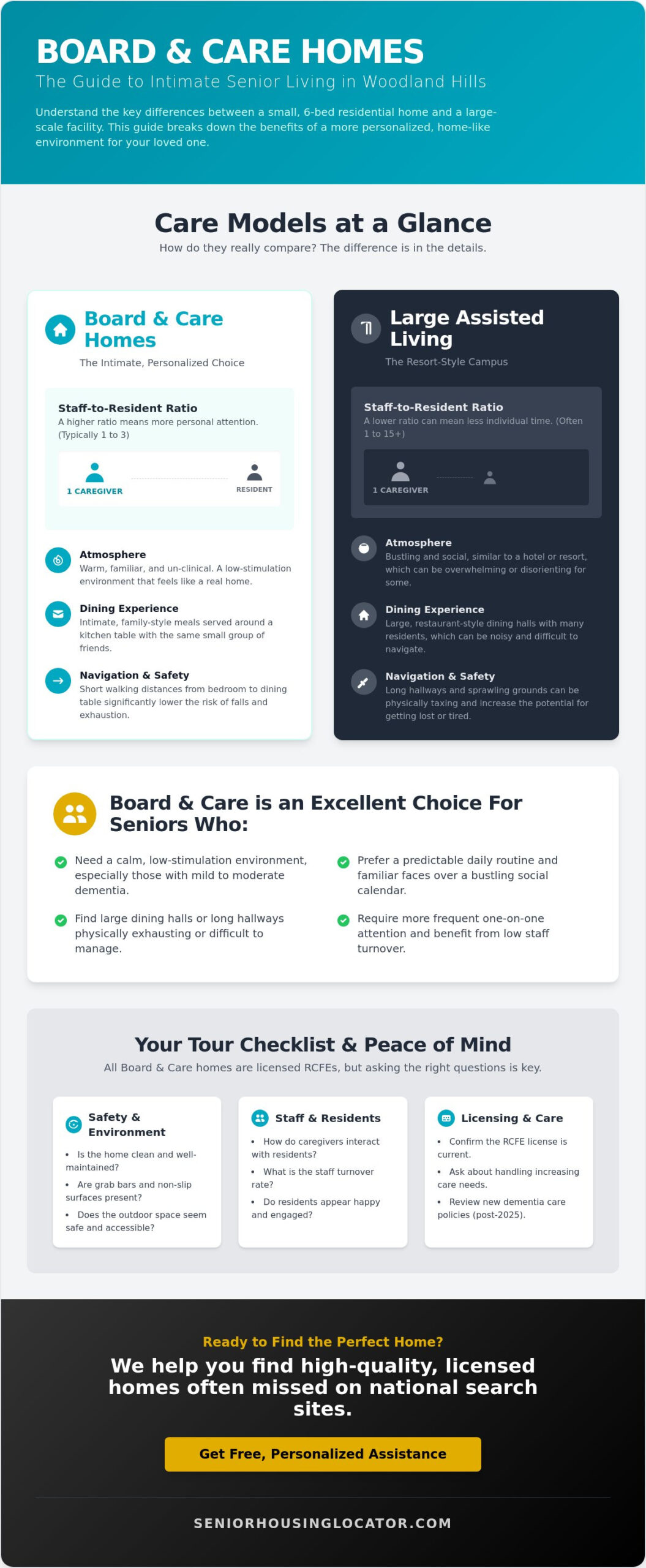
Large senior living campuses often boast about their massive acreage and endless activity calendars. While those amenities appeal to some, many seniors find those sprawling environments physically taxing and socially overwhelming. The primary advantage of board and care homes Woodland Hills is the intimate scale. In a typical home, the staff-to-resident ratio is often 1 to 3. This is a stark contrast to larger facilities where a single caregiver might be responsible for 15 or 20 residents at once. This high level of attention means that help is always just a few steps away.
Shorter walking distances also play a critical role in daily safety. When the dining table is only ten feet from the bedroom, the risk of exhaustion or a fall is significantly lower. This compact layout allows residents to maintain their independence longer because their environment isn’t a physical obstacle course. These homes also excel at supporting the concept of “aging in place.” Because each location is a state-licensed community care facility, many are equipped to handle increasing care needs over time. With the use of hospice waivers and home health partnerships, a resident can often stay in the same familiar room even as their medical requirements grow more complex.
Personalized Attention and Continuity of Care
In a small home, caregivers don’t just see a resident as a room number. They learn the small details that make a big difference, like how someone prefers their morning coffee or which chair is their favorite for reading. Family-run homes in the area often experience much lower staff turnover than corporate chains. This stability creates a bond of trust between the senior and their provider. Continuity of care is the primary driver of resident wellness because it ensures that subtle changes in health are noticed and addressed immediately.
A Familiar Neighborhood Atmosphere
There’s a unique psychological comfort in living on a quiet residential street in the San Fernando Valley. Instead of a sterile lobby with a front desk, residents enjoy a shared living room and a sunny backyard patio. This familiar setting reduces the “transfer trauma” often associated with moving out of a family home. It also makes visiting much easier for relatives. You aren’t navigating a parking garage or a maze of elevators; you’re simply walking into a neighborly home to see your loved one. If the search feels overwhelming, a local board and care home referral can help you find a hidden gem in your preferred neighborhood.
Board and Care vs. Assisted Living: Making the Right Choice
How do you decide between a grand senior living community and a residential home? It often comes down to the rhythm of daily life and the specific level of support your loved one needs. While both options provide help with daily tasks, the experience of living in them is vastly different. A large assisted living facility might house 100 to 200 residents, offering a bustling, hotel-like atmosphere. In contrast, board and care homes Woodland Hills typically serve just six residents at a time. This smaller scale changes everything from the noise level in the hallways to the speed of care when a resident needs help. For a thorough breakdown of how these two options compare across California’s updated 2026 care standards, our guide on board and care home vs assisted living walks you through every key difference to help your family make a confident decision.
The social environment is another major differentiator. In a large community, meals are served in grand, restaurant-style dining halls with various menu options and waitstaff. While this feels luxurious, it can be intimidating for seniors who struggle with social anxiety or mobility issues. Residential homes offer intimate, family-style meals at a shared kitchen table. This creates a sense of belonging and ensures that caregivers can monitor exactly how much a resident is eating and drinking. Cost structures also tend to be simpler in a residential setting. Most small homes use a predictable, inclusive flat fee rather than the complex “levels of care” billing systems found in larger facilities. Families who are still evaluating whether their loved one needs this level of support, or might be better suited to a more active lifestyle, should also review the Woodland Hills independent living communities 2026 comparison guide to understand the full spectrum of local options.
Evaluating the Care Intensity
Many seniors “graduate” to a board and care setting when their physical needs become too heavy for a large facility to manage efficiently. If a resident requires total assistance with incontinence care or needs two people to help them transfer from a bed to a chair, the high staffing ratios of a small home are often safer. You can explore the differences in larger settings through our guide on assisted living placement Woodland Hills. Generally, if safety and frequent hands-on help are the priorities, the residential model is the superior choice.
Social Engagement and Activity Levels
Large facilities are famous for their “active” calendars, featuring bus trips, guest lecturers, and large-scale holiday parties. For an extroverted senior, this is a dream. However, for many others, this environment leads to overstimulation and exhaustion. Introverted seniors or those living with cognitive decline often thrive in the smaller social circles of board and care homes Woodland Hills. Instead of crowded ballrooms, they enjoy quiet puzzles, light gardening in the backyard, or simply chatting with a few familiar friends in a cozy living room. This low-stress environment promotes a sense of peace that larger complexes often struggle to replicate.
What to Look for When Touring Woodland Hills Homes
Walking into a potential home for your parent is an emotional experience. You aren’t just looking for a building; you’re looking for a sanctuary. When you visit board and care homes Woodland Hills, start with the basics of home maintenance. Check that the floors are clean, the lighting is bright, and grab bars are securely installed in every bathroom. A well-maintained home usually reflects a well-managed care team. Don’t be afraid to look at the corners or check the condition of the furniture. A high standard of cleanliness is a non-negotiable sign of respect for the residents.
Try to schedule your visit during a mealtime. This is the best way to see how the home functions during a busy part of the day. Are the meals fresh and nutritious? Do the caregivers sit with the residents and encourage conversation? You want to see a family-style atmosphere where residents are actually enjoying their food. While you’re there, ask to see the most recent “Statement of Deficiencies” from the California Department of Social Services. Every licensed home must have this document on file. It shows you exactly where the home has been cited in the past and how they corrected those issues. Transparency is a hallmark of a trustworthy provider.
Interviewing the manager or owner is just as important as meeting the caregivers. Ask about their background and how long they’ve operated in the San Fernando Valley. You want a leader who is present, involved, and easy to reach. If you feel overwhelmed by the number of options in the neighborhood, our board and care home referral service can narrow down the list to homes that meet our strict quality standards.
The “Vibe” Check: Intuition and Observation
Trust your gut when you walk through the door. Look at the residents who already live there. Do they look clean, groomed, and engaged? If they’re all sitting silently in front of a television, it might not be the active environment your loved one needs. Pay attention to your nose, too. A quality home should smell fresh or like home-cooked food. Be cautious if you notice heavy perfumes or floral sprays; these are often used to mask unpleasant odors. The interaction between staff and residents should always feel warm, patient, and neighborly.
Practical Logistics: Private Rooms and Accessibility
In Woodland Hills, you’ll find a mix of private and shared rooms. Private rooms offer more dignity and space for personal belongings, while shared rooms can be a more budget-friendly option. If securing a personal sanctuary is a top priority for your loved one, our detailed guide on finding a board and care home with private rooms in Los Angeles walks you through the latest market trends and what to look for county-wide. Check the layout for wheelchair accessibility, even if your parent doesn’t need one yet. Bathrooms should have walk-in showers and plenty of space for a caregiver to assist if needed. Finally, step outside. A safe, fenced backyard with a patio or walking path is essential for fresh air and sunshine. These small physical details turn a house into a functional, professional care environment.
How Senior Housing Locator Simplifies Your Search
Finding the right care shouldn’t feel like a second full-time job. Families often spend hours scrolling through national websites only to find outdated information or generic listings that don’t capture the true “vibe” of a home. We act as your local guide to board and care homes Woodland Hills, offering a helping hand when you need it most. Our service is a free local referral resource dedicated to families throughout the San Fernando Valley. We’ve done the hard work of visiting these homes, meeting the owners, and checking the licenses so you don’t have to.
Many of the best residential homes in our community are “hidden gems.” These are small, high-quality residences that don’t have massive marketing budgets or listings on major national portals. Because we’re deeply rooted in the local area, we know which homes have the best reputations and which caregivers provide the most compassionate support. We only refer families to licensed, vetted facilities that meet our strict standards for safety and integrity. You deserve transparency and honesty during this process.
Our matching process is designed to be simple and effective. We focus on three main pillars: your loved one’s specific care needs, your family’s budget, and your preferred neighborhood location. This personalized approach ensures that the homes we suggest are actually a good fit for your unique situation. We aim to remove the guesswork and replace it with professional reliability.
Expert Local Advice in the San Fernando Valley
Trying to understand the local market on your own is difficult and often overwhelming. A senior living advisor Los Angeles provides the “boots-on-the-ground” experience you need to make a confident choice. We visit these homes personally and stay updated on the latest state regulations and staffing changes. We see ourselves as a compassionate facilitator, helping you lower the emotional stakes of this transition by providing clear, straightforward solutions.
Your Next Steps: Let Us Do the Heavy Lifting
We’re ready to help you move from uncertainty toward a clear resolution. The process is straightforward and methodical. First, we’ll have an initial consultation to understand your needs. Second, we’ll provide a curated list of top-tier board and care homes Woodland Hills. Finally, we’ll help you arrange guided tours of the locations that feel like the best fit for your family.
Our services are 100% free for families. We’re here to streamline the process, remove the burden of research, and ensure your parent finds a safe, licensed home. Contact us today for a personalized consultation and let us help you find the peace of mind your family deserves.
Secure a Brighter Future for Your Loved One
Deciding on the next step for a parent is a journey filled with emotion and complexity. You’ve learned how board and care homes Woodland Hills provide a safe, intimate alternative to large institutions by focusing on high caregiver ratios and familiar residential settings. These homes turn professional care into a neighborly experience, ensuring your loved one feels seen and supported every single day. You now have the checklist and the confidence to find a setting that prioritizes dignity over grand amenities.
You don’t have to manage this search by yourself. We offer a 100% free personalized placement service with a deep commitment to integrity and vetted care options. Our team has the boots-on-the-ground knowledge of every residential home in the San Fernando Valley to help you find the perfect match. Contact Senior Housing Locator for a free consultation and let us handle the heavy lifting for you. Taking this first step is a profound act of love, and a peaceful, supportive environment for your parent is just around the corner.
Frequently Asked Questions
What is the average cost of board and care homes in Woodland Hills?
Monthly rates for board and care homes Woodland Hills depend on whether you choose a private or shared room and the specific level of care required. Generally, these homes use a simple, all-inclusive fee structure that covers room, board, and daily assistance. This makes it easier for families to plan their budgets without worrying about the complex add-on charges often found in larger assisted living communities.
Do board and care homes provide private rooms?
Yes, most homes offer both private and shared room options to fit different preferences and budgets. Private rooms are highly sought after because they offer more personal space and dignity for the resident. Shared rooms can be a great choice for seniors who enjoy constant companionship or for families looking for a more cost-effective care solution. For a deeper look at how to evaluate and secure a private room across the broader Los Angeles market, our guide on board and care homes with private rooms in Los Angeles provides comprehensive 2026 guidance.
Are board and care homes in California licensed and regulated?
Every home must be licensed and regulated as a Residential Care Facility for the Elderly (RCFE). The California Department of Social Services conducts regular, unannounced inspections to check for safety, cleanliness, and proper care. These strict state standards ensure that even the smallest neighborhood home provides a high level of professional service and accountability for your loved one.
What is the difference between a board and care home and a nursing home?
The primary difference is the level of medical supervision provided. Nursing homes are clinical environments that offer 24-hour skilled nursing and medical oversight for complex health issues. Board and care homes are residential settings designed for seniors who need help with daily tasks like bathing and dressing but don’t require constant medical intervention. It’s the difference between a hospital-stay and a home-like experience. Families weighing all available options can find a detailed side-by-side analysis in our comprehensive guide on board and care home vs assisted living in 2026, which also covers the latest California Medi-Cal and dementia care regulation updates.
Can a resident with dementia stay in a board and care home?
Most board and care homes Woodland Hills are specifically licensed to support seniors with memory loss. As of January 2025, California requires updated dementia-aware training for staff and regular resident reappraisals to ensure safety. For families navigating a diagnosis and unsure where to begin, our guide on memory care placement San Fernando Valley provides a comprehensive roadmap for finding the right licensed environment. These small, low-stimulation environments are often much safer and more comfortable for residents with cognitive decline than large, bustling facilities with hundreds of residents.
Do board and care homes provide medical care or doctors?
These facilities are non-medical and don’t have doctors or nurses on-site. Instead, they focus on medication management and daily personal care. If a resident needs medical attention, the home coordinates with visiting physicians or home health agencies. This allows your loved one to receive professional medical treatments while remaining in the comfort of their own residential bedroom.
How many residents typically live in a Woodland Hills board and care home?
The vast majority of homes in local residential neighborhoods are licensed for exactly six residents. This specific size is a cornerstone of the residential care experience. It ensures that caregivers aren’t overwhelmed and can provide immediate attention to every resident. With only six people in the home, the atmosphere stays quiet, calm, and manageable for seniors who value their peace.
Is there a limit to the level of care a board and care home can provide?
There isn’t a strict limit as long as the resident’s needs can be safely met in a non-medical setting. Many homes utilize hospice and home health waivers to provide advanced care as a resident’s health declines. This allows many seniors to stay in the same familiar home through the end of life rather than moving to a clinical nursing facility.