
Imagine sitting at a kitchen table in the San Fernando Valley, staring at a list of fifty different facilities and feeling completely lost. Finding reliable senior care transition help Los Angeles families can trust often feels like a full-time job you never applied for. You want the very best for your parents, yet the sheer volume of options and confusing pricing structures can leave you feeling paralyzed. It’s natural to worry about making the wrong choice or feeling exhausted by family disagreements during such a high-stakes time.
This guide provides a clear, step-by-step roadmap to move your family from uncertainty to a confident decision. You’ll gain the tools to vet local options, understand new 2026 transparency regulations, and find the right level of care without the guesswork. We’ll walk through the entire process, from the first conversation to the day of the move, so you can focus on being a family again. By the end of this article, you’ll have a manageable plan that prioritizes your loved one’s safety, dignity, and comfort.
Key Takeaways
- Master a five-step roadmap that simplifies the move from the initial care assessment to the final transition day.
- Learn how to access professional senior care transition help Los Angeles families rely on to navigate the city’s complex landscape of facilities and neighborhoods.
- Identify the core differences between assisted living, memory care, and board and care homes to ensure your loved one receives the appropriate level of support.
- Discover practical strategies for managing family disagreements and overcoming the emotional “guilt” often associated with senior placement.
- Understand the vital role of a local advisor in vetting facility quality and ensuring compliance with California’s latest transparency and safety regulations.
Understanding Senior Care Transitions in Los Angeles
A senior care transition is far more than just a change of address. It’s a significant life shift that involves emotional, social, and physical adjustments for the whole family. In a city as sprawling as ours, finding senior care transition help Los Angeles residents can rely on is essential because of the sheer complexity of the local market. With over 533,000 seniors living in the city, the options range from high-rise luxury on the Westside to cozy residential homes in the Valley. Moving a loved one isn’t just about finding a bed; it’s about matching their unique life story to a community that feels like home.
The 2026 landscape in Southern California has shifted toward specialized, transparent care. New state laws now require facilities to provide clear disclosures about staffing ratios and pricing history before you sign a contract. This evolution makes it easier to compare options, but the volume of choices remains overwhelming. Whether you’re planning ahead or facing an urgent need after a hospital stay, understanding the local environment is the first step toward peace of mind. A planned transition allows for a calm search, while an urgent placement often happens under the pressure of a 48-hour hospital discharge window.
When is it Time for Transition Help?
Identifying the right moment to seek help often comes down to “tipping point” signs. These might include frequent falls, missed medications, or a fridge full of expired food. A helpful framework for understanding elderly care options involves looking at Activities of Daily Living (ADLs). Can your loved one still manage bathing, dressing, and meal preparation safely? Waiting for a medical crisis usually limits your choices and increases stress. Seeking senior care transition help Los Angeles experts provide can help you spot these signs early, ensuring you make a choice based on quality rather than desperation.
The Local LA Context: San Fernando Valley vs. Westside
Geography plays a massive role in your daily experience. In Los Angeles, traffic is a legitimate factor in how often you’ll visit. Choosing a facility in Woodland Hills when you live in Santa Monica can turn a quick check-in into a two-hour ordeal. You should consider three main factors when picking a location:
- The Vibe: Neighborhoods like Sherman Oaks offer a suburban feel with many smaller “board and care” homes, while the Westside often features resort-style high-rises.
- The Proximity: Staying within a 15-minute radius of the primary family caregiver is the best predictor of long-term success and frequent visits.
- The Cost: Pricing varies significantly by zip code, with coastal areas typically commanding a premium over eastern Los Angeles or the San Fernando Valley.
By focusing on these local nuances, you can find a community that fits both your loved one’s needs and your family’s lifestyle. It’s about creating a sustainable situation where everyone feels supported and connected.
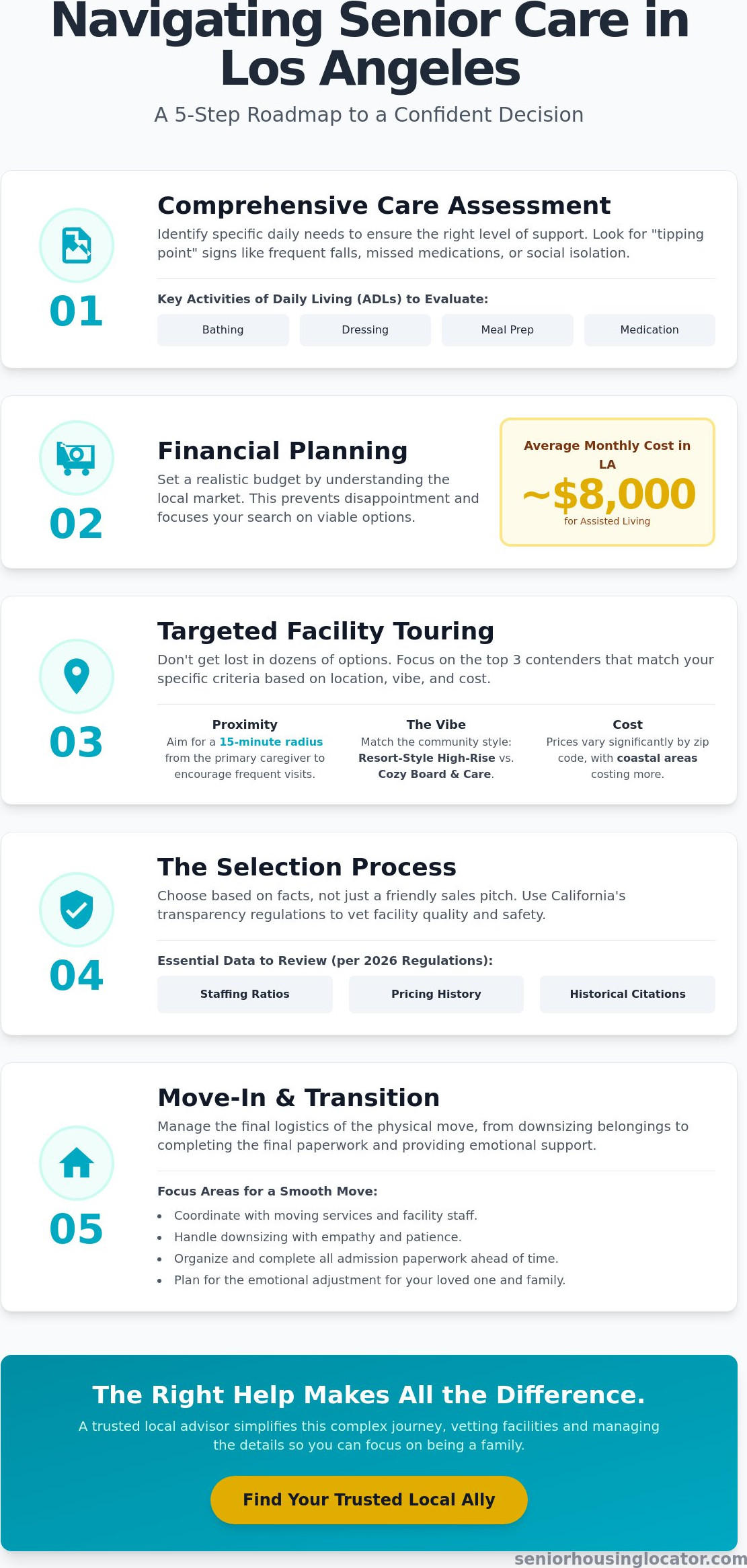
5 Steps to a Successful Senior Care Move
Organizing a move for an aging parent is a major project with many moving parts. It’s easy to feel scattered when you’re juggling tours, medical records, and varying family opinions. A structured roadmap turns a chaotic process into a series of manageable tasks. By following these five steps, you can secure the senior care transition help Los Angeles families rely on to find a safe and happy new home.
- Step 1: Comprehensive Care Assessment. Understand exactly what help is needed for daily safety and well-being.
- Step 2: Financial Planning. Setting a realistic budget is crucial since assisted living in Los Angeles can average nearly $8,000 per month. Knowing these local rates early prevents heartbreak later in the process, and some families explore Hunting Land Brokerage to help liquidate rural assets in the Midwest to fund these costs.
- Step 3: Targeted Touring. Finding expert senior care transition help Los Angeles residents trust means only visiting the top three contenders that actually meet your specific criteria.
- Step 4: The Selection Process. Use the 2026 transparency disclosures to compare staffing ratios and historical citations. This data ensures you choose a facility based on facts, not just a friendly sales pitch.
- Step 5: Move-In Day Logistics. Managing the physical move, downsizing belongings, and completing the final mountain of paperwork.
Conducting a Care Assessment
A professional care assessment is the vital foundation of any successful placement. It isn’t just about a doctor’s diagnosis; it involves family members and medical professionals looking at a loved one’s daily life. You need to distinguish between medical requirements and social preferences. While a senior might need help with medication, they might also desperately want a community with a gardening club or a bridge group. You can explore California Department of Aging programs to see how state resources might support these specific needs and help you define the right level of care.
The Art of the Facility Tour
When you visit a community, look past the fresh paint and the grand piano in the lobby. The “happiness factor” of current residents is your best indicator of quality. Watch how the staff interacts with people in the hallways. Are they using residents’ names? Is the atmosphere calm or rushed? Ask direct questions about staff turnover rates and how many people are on duty during the night shift. These details matter more than granite countertops or fancy amenities. If you’re feeling stuck during this stage, working with a local placement advisor can help you filter the noise and focus on high-quality options that truly fit your family’s needs.
Evaluating Los Angeles Senior Living Options
Choosing a new home for a parent is a deeply personal decision that requires a balance of logic and heart. In a city as large as ours, the variety of choices can feel like a double-edged sword. While it’s great to have options, the sheer volume can make it hard to know where to start. Finding reliable senior care transition help Los Angeles families trust means looking beyond the glossy brochures and understanding the specific care models available in your neighborhood.
- Assisted Living: These communities are ideal for active seniors who need a little extra help with daily tasks but still want a vibrant social life.
- Independent Living: This option focuses on autonomy and community, offering a built-in social network without the burden of home maintenance.
- Memory Care: These are secure environments designed specifically for those living with Alzheimer’s or other forms of dementia.
- Board and Care Homes: Often located in quiet residential streets, these homes offer a smaller, more intimate setting for personalized care.
Board and Care vs. Assisted Living
One of the most common questions families ask is whether to choose a large, resort-style facility or a smaller residential home. Large assisted living communities often feel like upscale hotels, complete with amenities like movie theaters and fitness centers. However, for seniors who need high-touch, frequent attention, the 6-bed residential model can be a better fit. These “hidden gems” are particularly common in the San Fernando Valley, offering a higher caregiver-to-resident ratio in a familiar, home-like environment. You can find more detail in our guide to Board and Care Homes in Woodland Hills. For broader resources on local support, the Los Angeles County Aging & Disabilities Department provides excellent oversight and community services.
Specialized Memory Care in the SFV
When a loved one struggles with memory loss, their needs change significantly. Standard assisted living may not always provide the “wander-management” systems or the specialized staffing required for safety. Memory care units in Los Angeles are architecturally designed to reduce confusion and prevent elopement. Staff members receive specific training to manage the unique behavioral and cognitive challenges associated with dementia. When seeking senior care transition help Los Angeles experts provide, ensure they vet facilities for these specialized safety protocols. To dive deeper into local options, explore our resource on Memory Care Placement in San Fernando Valley. This specialized care ensures your loved one is safe, engaged, and treated with the dignity they deserve.
Managing the Emotional and Logistical Hurdles
Deciding to move a parent into professional care is rarely a purely logical choice. It is a heart-heavy decision that often brings up a deep sense of guilt. You might feel like you are breaking a promise or “giving up,” but it is important to reframe this transition. Moving a loved one into a specialized community is an act of protection, not a failure of love. In Los Angeles, nearly one in five Medicare beneficiaries are re-hospitalized within a month of discharge. Choosing a professional setting ensures they have the 24-hour support necessary to stay safe and healthy.
Family disagreements are another common hurdle during this time. Siblings often have different views on care levels, budgets, or locations. These tensions are natural because everyone is processing grief in their own way. To keep the process moving, focus on the facts of the care assessment and the safety of your loved one. If the emotional stakes feel too high, seeking senior care transition help Los Angeles experts provide can offer a neutral, professional perspective that brings the family back into alignment.
Communicating with Your Loved One
How do you have “The Talk” without causing defensiveness? Start the conversation early and focus on social opportunities rather than a loss of independence. Instead of talking about what they can’t do, talk about the chef-prepared meals, the local outings, and the relief of not having to manage home repairs. If the conversation becomes a stalemate, involving a neutral third party can help. A local advisor can answer questions about specific Los Angeles neighborhoods or facilities without the emotional baggage that often exists between parents and children.
The Logistics of the Move
The physical transition requires a methodical approach to prevent burnout. Downsizing a family home of forty years is a massive task that should be broken into small phases. You can make the process smoother by following three simple steps:
- Hire Senior-Specific Movers: Use companies that specialize in senior relocations. They understand how to handle sentimental items with care and patience.
- Coordinate Medical Records: Ensure all prescriptions and physician orders are transferred to the new facility’s nursing staff at least 48 hours before the move.
- Prioritize the “First 30 Days”: Set up the new room with familiar photos, a favorite chair, and a well-known quilt to make the space feel like home immediately.
Remember that the first month is an adjustment period for everyone. Stay involved, visit often, and give the community staff time to learn your loved one’s unique preferences and routines. This patience pays off in long-term peace of mind. Families navigating a sudden health event in the western San Fernando Valley will find our dedicated guide on planning senior care transitions in Woodland Hills especially helpful for understanding the local options and steps involved.
Finding Your Trusted Local Ally for Care Placement
You don’t have to walk this path alone. While the steps we’ve covered provide a solid foundation, the actual search for a facility can still feel like a full-time job. This is where a Senior Living Advisor becomes your most valuable resource. Think of an advisor as a knowledgeable neighbor who has already done the heavy lifting for you. They offer more than just a list of names; they provide clarity, confidence, and comfort during a high-stress time. Expert senior care transition help Los Angeles families deserve should always feel like a partnership focused on your loved one’s unique well-being.
Many families worry about the cost of professional placement assistance. It’s helpful to understand that this service follows a “Free to Families” referral model. Local advisors are compensated by the senior living communities, much like a real estate agent is paid by a seller. This means you receive personalized guidance, facility tours, and expert vetting without any out-of-pocket expense. This transparent approach removes the financial burden from your family, allowing you to focus entirely on choosing the right level of care. It is a service-oriented model designed to streamline complex tasks and provide the senior care transition help Los Angeles residents need to make an informed choice.
Why Local Expertise Wins
A national call center can give you a spreadsheet of facilities, but they can’t tell you if a home’s quality has slipped after a recent change in management. Local expertise is the only way to ensure true quality control. Our advisors personally walk the hallways of the homes they recommend, checking for cleanliness, staff engagement, and the overall “vibe” of the community. We know which San Fernando Valley board and care homes have the best caregiver-to-resident ratios and which Westside communities offer the most robust social calendars. Families searching for senior living placement in Encino will find that this kind of neighborhood-level knowledge makes all the difference in identifying a community that truly lives up to its promises. You can learn more about the benefits of this local approach in our article on Why Use a Senior Placement Agency in Los Angeles?
Your Next Steps with Senior Housing Locator
Starting the search for a new home is a brave first step. At Senior Housing Locator, we are committed to integrity, transparency, and efficiency. We don’t just send you a list; we listen to your story, assess your needs, and stand by your side until move-in day. We’ve already done the hard work of vetting the options so you can feel cared for and well-advised. When you’re ready to move from uncertainty toward a clear resolution, we are here to help. Schedule your free senior living consultation today, and let’s find the perfect community for your loved one together.
Moving Forward with Confidence and Peace of Mind
Navigating a parent’s move is a journey best taken with a clear plan and a supportive partner. You now have a roadmap to handle the financial planning, the emotional conversations, and the logistical details of move-in day. Choosing a specialized community is an act of love that prioritizes your family’s safety and long-term happiness. By focusing on local expertise and professional vetting, you can avoid the common pitfalls of the sprawling Los Angeles care market and ensure your loved one thrives in their new home.
Our team offers a personalized, full-service approach that takes the burden off your shoulders. As local experts in Woodland Hills and the San Fernando Valley, we personally visit the homes we recommend to ensure they meet our high standards. Because we operate as a free referral service for families, you can access professional guidance without adding to your expenses. If you’re ready to secure the senior care transition help Los Angeles families trust, we’re standing by to assist. Get Expert Senior Care Transition Help in Los Angeles Today. You’ve done the hard work of starting this process, and a brighter, more supported future for your loved one is just around the corner.
Frequently Asked Questions
Is there a cost for using a senior care transition service in Los Angeles?
There is no cost to your family for using our placement services. We operate on a referral model where the senior living communities compensate us for finding the right match. This allows us to provide a high level of support, vetting, and touring assistance without adding a financial burden to your budget. You get a local ally who knows the Los Angeles market inside and out at no direct cost to you.
What is the average cost of assisted living in Los Angeles for 2026?
The projected median cost for a private room in a Los Angeles assisted living facility is approximately $6,281 per month in 2026. It is important to note that location significantly impacts these rates. Families looking in coastal areas like West LA or Santa Monica often see costs ranging from $8,000 to $12,000. In contrast, options in the San Fernando Valley or eastern Los Angeles may offer more budget-friendly rates.
How long does the senior care transition process usually take?
A senior care transition can take anywhere from a few days to several months. A planned transition is ideal as it allows your family to tour multiple communities and settle on a choice without pressure. However, we often help families who need to find a safe environment within 24 to 48 hours. The timeline usually depends on your loved one’s health status and the urgency of their current living situation.
Can you help with urgent placements if my parent is being discharged from the hospital?
Yes, we specialize in helping families manage urgent hospital discharges. When a senior is being sent home or to a new facility on short notice, the pressure can be overwhelming. We step in immediately to find senior care transition help Los Angeles hospitals and families can rely on for a safe move. Our goal is to prevent the one-in-five chance of re-hospitalization by ensuring the new setting provides proper medical and social support.
What is the difference between a board and care home and assisted living?
The primary difference is the size and environment of the community. Board and care homes are usually residential houses in quiet neighborhoods that serve up to six residents, offering a high caregiver-to-resident ratio. Assisted living facilities are much larger, resort-style communities with extensive social calendars and amenities like movie theaters. Both provide help with daily tasks, but the “vibe” and level of personal attention differ greatly.
How do I know if a facility in the San Fernando Valley is high quality?
To ensure quality in the San Fernando Valley, you should review the written disclosures required by California law effective July 2026. These documents reveal staffing ratios, three-year rate increase histories, and any state regulatory citations. We personally visit homes in neighborhoods like Woodland Hills and Sherman Oaks to verify these facts. Seeing the “happiness factor” of current residents firsthand is often the most reliable way to gauge a facility’s true quality.
Do you provide help with senior home care as well as placement?
We certainly do provide assistance with senior home care in addition to facility placement. If your loved one prefers to age in place, we can help you find reliable options that allow them to stay in their own home safely. We understand that every family’s needs are unique, so we offer senior care transition help Los Angeles residents can use to explore both in-home and community-based care models.
Which areas of Los Angeles do you serve for senior placement?
We serve the greater Los Angeles area with a deep focus on the San Fernando Valley. Our local expertise is strongest in communities like Woodland Hills, Sherman Oaks, Encino, and Tarzana. We also assist families throughout West Los Angeles and the coastal areas. By focusing on these specific neighborhoods, we can provide detailed insights into local management changes and neighborhood-specific pricing that national call centers simply cannot offer. Families in Encino can explore our dedicated resource on senior living placement in Encino for expert local advice tailored to that community. Those in the western Valley can also visit our comprehensive guide on senior care transition Woodland Hills families rely on for step-by-step local guidance.