Imagine receiving a phone call on a Tuesday afternoon that suddenly changes everything about your parent’s safety at home. You want the best for them, but the weight of choosing the right facility can feel paralyzing. It’s completely normal to feel a mix of urgency, confusion, and deep emotional guilt. You’re likely worried about the different levels of care, the quality of local facilities, and how to handle a senior care transition Woodland Hills families often face after a sudden health event.
We understand these challenges because we’re your neighbors here in the San Fernando Valley. With one in four Californians expected to be over the age of 60 by 2030, more families are seeking reliable guidance than ever before. Our goal is to replace your uncertainty with a clear plan, a sense of order, and genuine peace of mind. We believe every senior deserves to be safe, supported, and connected to their community.
This guide provides a step-by-step roadmap to help you move forward. We’ll walk you through managing the emotional hurdles, understanding your care options, and selecting a high-quality home with total confidence. You’ll gain the local expertise needed to make an informed choice that prioritizes your parent’s well-being and your family’s comfort.
Key Takeaways
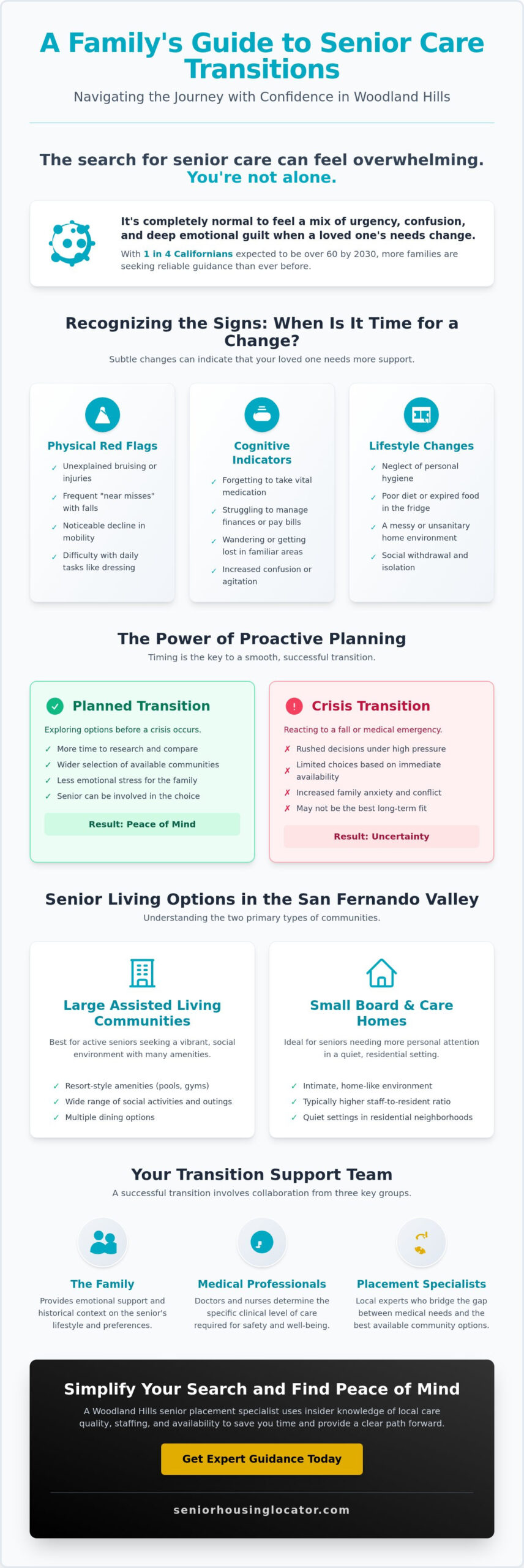
- Identify the physical red flags, cognitive indicators, and lifestyle changes that signal your loved one needs extra support.
- Compare the unique benefits of large assisted living communities versus small, home-like board and care settings in the San Fernando Valley.
- Follow a step-by-step roadmap for a senior care transition Woodland Hills that balances clinical needs, budget, and personal lifestyle.
- Learn how a local placement specialist uses insider knowledge of care quality and staffing to simplify your search, save you time, and provide peace of mind.
What is a Senior Care Transition in Woodland Hills?
A senior care transition Woodland Hills is much more than a simple change of address. It’s a holistic process that begins the moment a family realizes their loved one needs more help than they can safely receive at home. This journey moves a senior from independent living into a structured, supportive environment designed to enhance their quality of life. While it involves physical logistics, it’s also a deeply emotional experience. Many San Fernando Valley families struggle with the weight of this decision, often feeling a sense of guilt or loss. In reality, a well-managed transition is a proactive act of love. It ensures safety, fosters social connection, and provides professional support that family members often cannot provide alone.
The difference between a successful move and a stressful one often comes down to timing. Proactive planning allows you to explore options with a clear head. When families wait for a fall or a medical emergency to act, their choices are often limited by what’s available that very day. A planned senior care transition Woodland Hills gives you the luxury of time to compare staffing levels, check regulatory histories, and find a community that truly feels like home.
The Scope of Care Transitions
Transitions aren’t always permanent. They can be temporary, such as a short stay in a skilled nursing facility for rehabilitation after a surgery. However, many families eventually look toward permanent solutions like assisted living or memory care. This complex journey typically involves three key groups to ensure success:
- The Family: They provide the emotional foundation and historical context for the senior’s preferences.
- Medical Professionals: Doctors and nurses determine the specific clinical level of care required.
- Placement Specialists: These local experts bridge the gap between medical needs and available community options.
Woodland Hills has become a premier destination for Elderly care in Los Angeles. The area offers a diverse range of settings, from large, resort-style campuses near the Warner Center to intimate board and care homes tucked away in quiet residential streets.
Why a Local Approach Matters
Choosing a facility based on online photos or national rankings is risky. A local approach is vital because every neighborhood in the San Fernando Valley has its own pace and personality. Woodland Hills offers a unique blend of suburban peace and urban convenience, but the “right” fit depends on your parent’s specific lifestyle. Local expertise also helps you navigate California’s evolving regulations. For instance, new transparency requirements effective July 2026 now mandate that facilities provide detailed fee disclosures and staffing ratios before you sign a contract. Knowing these local details ensures you aren’t surprised by hidden costs. Visiting these homes in person allows you to feel the atmosphere and see how staff interact with residents, something a glossy brochure can never capture.
Recognizing the Signs It’s Time for a Care Transition
Deciding when to begin a senior care transition Woodland Hills is rarely a single, clear event. It’s usually a series of subtle changes that eventually reach a tipping point. You might notice your parent is wearing the same clothes several days in a row or that the refrigerator is filled with expired food. These are small red flags that suggest daily tasks are becoming overwhelming. Physical safety is often the most urgent concern. Unexplained bruising or frequent “near misses” with falls indicate that the current living situation is no longer secure. This is particularly concerning given that 1 in 10 adults over the age of 60 experiences some form of abuse or neglect each year, often because they lack the necessary support systems. While home modifications like grab bars or ramps help, they have limits. When mobility declines significantly, these fixes can’t replace the 24/7 supervision found in a professional setting.
Cognitive changes are equally critical. If your loved one is missing doses of vital medication or struggling to manage their finances, their health and security are at risk. Wandering is another serious indicator. Getting lost in familiar Woodland Hills neighborhoods is a frightening experience for both the senior and the family. Research on Planning and Decision Making for Care Transitions emphasizes that recognizing these signs early prevents crises. Waiting for a major health event often leaves families with fewer choices and more stress.
Physical and Safety Indicators
Aging in place sounds ideal, but it often leads to hidden dangers. A senior care transition help Los Angeles professional can provide an objective eye to evaluate home safety. They look beyond the surface to see if a home truly supports a senior’s current needs. Safety is non-negotiable. If a home requires constant supervision to prevent accidents, a transition is likely the most compassionate path forward.
The Emotional and Social Toll
We often focus on physical health, but emotional well-being is just as vital. Many Woodland Hills seniors live in large, multi-story homes that become “islands” of isolation. Loneliness is a significant health risk that can lead to depression and rapid cognitive decline. In contrast, a senior living community offers daily social engagement, planned activities, and a sense of belonging. It’s also important to look at the health of the family. Caregiver burnout is a state of physical and emotional exhaustion that occurs when the demands of care exceed your capacity. It is a primary and valid reason for seeking professional placement. You aren’t “giving up” on your parent; you’re ensuring they get the professional support they deserve while you return to being their son or daughter. If you’re feeling overwhelmed, reaching out for expert guidance can help you find a sustainable solution for everyone involved.
Navigating Senior Living Options in the San Fernando Valley
Once you’ve recognized the need for a senior care transition Woodland Hills, the next step is finding the right environment. The San Fernando Valley offers a wide spectrum of choices. Each option provides a different level of clinical support and social engagement. Understanding these differences helps you match a community to your parent’s unique personality and medical requirements. You aren’t just looking for a room; you’re looking for a lifestyle that supports their health and happiness.
Most facilities in our area fall under the category of Residential Care Facilities for the Elderly (RCFE). This broad label includes both large assisted living communities and small board and care homes. For seniors who are still fully independent but tired of home maintenance, Independent Living offers a resort-style lifestyle. It provides meals, housekeeping, and social clubs without the clinical care of a medical facility. Conversely, Memory Care provides a secure, specialized setting for those with advanced cognitive needs. Choosing the right fit requires a balance of three factors: medical necessity, social preference, and budget.
Assisted Living vs. Board and Care Homes
Assisted Living communities are typically larger facilities. They offer private apartments, grand dining rooms, and a calendar full of social events. They’re great for seniors who enjoy being around many people and want a “hotel-like” experience. In contrast, Woodland Hills board and care homes are actual houses in residential neighborhoods. They usually serve only six residents at a time. This smaller scale allows for a much higher caregiver-to-resident ratio. It’s often the better choice for seniors who feel overwhelmed by large groups or need more one-on-one physical assistance. Think about your parent’s daily life. Do they prefer a quiet afternoon in a cozy living room, or would they rather join a large group for a movie night?
Memory Care and Specialized Placements
Cognitive decline requires a specific approach to safety and engagement. Memory care units in the San Fernando Valley feature secured perimeters to prevent wandering and specialized programming to help residents stay connected to their past. If you’re considering this path, remember that memory care placement San Fernando Valley requires specific medical documentation. This includes a physician’s report that confirms a dementia diagnosis and outlines specific care needs. We recommend starting this paperwork early to avoid delays. Transitioning a loved one with memory loss is a delicate process. It requires a staff that understands “sundowning” and behavioral changes with patience and empathy. Finding a facility with a stable, well-trained team is the best way to ensure your parent feels safe and understood.
Step-by-Step Guide to a Smooth Care Transition
Moving from a long-time home into a care community is a significant life event. Breaking the process into manageable phases helps reduce the emotional burden on both you and your parent. A successful senior care transition Woodland Hills families can trust starts with a clear assessment of both medical needs and financial resources. This initial step ensures you don’t waste time touring facilities that aren’t a clinical or budgetary fit. Once you have a clear picture of the requirements, the journey becomes a series of organized steps toward a safer, more supportive lifestyle.
Planning ahead is the best way to avoid a crisis-driven decision. We recommend starting the process before a major health event occurs. This gives your loved one a voice in the decision and allows for a more gradual adjustment. Downsizing a long-time family home is a major part of the senior care transition Woodland Hills process, and it’s much easier to manage when you aren’t rushed by a hospital discharge deadline. If you are preparing a residence for sale or simply ensuring it remains comfortable during the transition, you can learn more about Nice and Cool Inc. for professional guidance on residential cooling systems in Los Angeles.
The Touring and Selection Process
Touring is where the transition starts to feel real. It’s your opportunity to look beyond the lobby decor and observe the actual quality of care. We recommend seeing at least three different communities to make a valid comparison. When you visit, keep a close eye on these three areas:
- Staff Engagement: Do the caregivers look residents in the eye? Are they calm and patient, or do they seem rushed?
- Environmental Cleanliness: Pay attention to smells and general maintenance, especially in the dining rooms and resident bathrooms.
- Food Quality: If possible, visit during a meal. The quality and variety of the menu significantly impact a senior’s daily happiness.
Evaluating these factors on your own can be exhausting. Working with a senior living advisor Los Angeles families trust allows you to skip the guesswork. They pre-screen facilities based on recent state inspections and staffing history, saving you hours of research and unnecessary tours.
Managing the Logistics and Emotions
The practical side of a move involves transferring medical records and finalizing legal paperwork, such as a Physician’s Report. Simultaneously, you must navigate the emotional task of downsizing. For many Woodland Hills residents, this means sorting through decades of memories in a family home. Approach these conversations with empathy rather than logic. Instead of focusing on the “move,” talk about the “support” and “safety” the new community provides. Use “we” and “us” to show your parent they aren’t doing this alone. On move-in day, prioritize comfort by setting up their new room with familiar items like favorite photos and their own bedding. The first 30 days are an adjustment period, not a permanent state of unhappiness. Most seniors need a few weeks to find their rhythm and make new friends. If you need help organizing these steps, reach out to a local placement specialist who can guide you through every detail.
How a Woodland Hills Senior Placement Specialist Simplifies the Move
Organizing a senior care transition Woodland Hills involves hundreds of tiny details that most families only encounter once in a lifetime. It’s a steep learning curve during an already emotional time. A local senior placement specialist acts as your trusted ally, bringing clarity to a process that can otherwise feel chaotic. They don’t just provide a list of addresses; they offer deep insight into the daily operations of local homes. This includes knowing which facilities have stable leadership and which have recently struggled with staffing turnover. By handling the heavy lifting of research and vetting, they allow you to focus on supporting your parent emotionally. An advisor remains a long-term resource for your family, checking in after the move to ensure the care remains high-quality and the transition is successful.
Family dynamics can also become complicated when siblings have different views on care. An advisor serves as a compassionate, objective third party who helps keep the focus on the senior’s clinical needs and safety. This professional guidance often lowers the emotional temperature of the room. It turns a potential conflict into a collaborative effort to find the best possible home. Having an expert explain the “why” behind a specific care level can provide the validation family members need to move forward without guilt.
The Value of Free Referral Services
Many families are surprised to learn that professional placement assistance is typically provided at no cost to them. The business model is straightforward: senior living communities pay the advisor a referral fee once a successful move occurs. This ensures you receive expert advocacy without adding another financial burden to your plate. When you compare a senior placement agency vs doing it yourself, the choice becomes clear. A specialist has already done the legwork, checked the state citations, and toured the buildings. You get the benefit of their years of experience and local connections for free, ensuring a higher standard of care than you might find on your own.
Urgent Placements and Crisis Management
Sometimes, you don’t have weeks to plan. If a parent is being discharged from a hospital in the San Fernando Valley and cannot safely return home, you may need an urgent assisted living placement Los Angeles families can rely on. In these high-pressure moments, a local expert is invaluable. They know which high-quality board and care homes in Woodland Hills have an immediate opening. They can often secure a safe, licensed bed within 24 to 48 hours. This rapid response prevents “revolving door” hospital readmissions and ensures your loved one moves directly into a supportive environment. Ready to start the conversation? Contact Senior Housing Locator for a free consultation.
Finding Your Path Forward with Confidence
Planning a successful senior care transition Woodland Hills families can trust doesn’t have to be an overwhelming burden. By recognizing the early signs of need and understanding the diverse care options in the San Fernando Valley, you can make a choice that truly honors your parent’s lifestyle. Whether you prefer the social energy of a large community or the quiet comfort of a residential board and care home, your family deserves a solution that provides safety, dignity, and joy.
We’re here to serve as your trusted local ally through every logical and emotional step. Our placement services are completely free for families. We provide expert knowledge of Woodland Hills facilities and personalized matching based on your specific care, social, and budget needs. You don’t have to navigate these complex decisions alone. Start Your Free Senior Care Consultation Today and take the first step toward a brighter, more secure future for your loved one. We’re ready to help you find the peace of mind you’ve been looking for.
Frequently Asked Questions
How much does a senior living transition cost in Woodland Hills?
Costs for a senior care transition Woodland Hills depend on the specific community and care level required. Since July 1, 2026, California law requires facilities to provide written disclosures of all fees and their three year rate increase history before you sign a contract. This transparency helps you plan your budget without surprises. We recommend reviewing these state mandated disclosures carefully to understand what is included in the base rate versus what costs extra for specialized services.
Is there a difference between a senior placement agency and a home care agency?
Yes, the roles are very different. A home care agency sends professional caregivers into your parent’s current house to help with daily tasks like bathing or meal prep. In contrast, a senior placement agency helps you find and move into a supportive community, such as assisted living or memory care. We focus on the placement side, guiding you through the selection and move-in process when staying at home is no longer the safest option.
What happens if my parent refuses to move?
Resistance is a normal part of the process. we suggest shifting the conversation away from “leaving home” and toward “gaining support.” It often helps to bring in a neutral third party, such as a doctor or a local advisor, to discuss safety concerns objectively. Sometimes, a trial stay at a local community can help your parent see the social benefits and safety features without feeling like the move is an immediate, permanent change.
Can a senior living advisor help with urgent placements after a hospital discharge?
Absolutely. Crisis management is a key part of our service. If your loved one is at a hospital or rehab center and cannot safely return home, we use our real time knowledge of Woodland Hills vacancies to help. We can often identify appropriate openings and coordinate a move within 24 to 48 hours. This speed ensures your parent moves directly into a safe environment rather than staying in a hospital longer than necessary.
Are there board and care homes in Woodland Hills with private rooms?
Yes, many board and care homes in our area offer private rooms. These residential settings usually house only six residents, providing a cozy atmosphere with a very high caregiver-to-resident ratio. While a private room typically carries a higher monthly cost than a shared room, it provides the personal space and dignity many seniors prefer. We can help you identify which local homes currently have private suites available and fit your budget.
How do I know if a facility in the San Fernando Valley is high quality?
High quality is measured by more than just a nice lobby. You should look at the facility’s history of state regulatory citations, their current staff-to-resident ratios, and their eviction policies. Since early 2026, California has also increased penalties for elder abuse, making it even more vital to choose licensed, reputable providers. We pre-screen facilities using these data points to ensure we only recommend homes with a proven track record of safety and transparency.
Does Medicare pay for assisted living transitions?
No, Medicare does not typically cover the cost of a senior care transition Woodland Hills. Medicare is designed to pay for medical expenses, hospital stays, and short term rehabilitation in a skilled nursing facility. It doesn’t pay for the room and board or custodial care provided in assisted living or board and care homes. Most families use private funds, long term care insurance, or specific veterans’ benefits to cover these monthly costs.
What is the first step in the senior care transition process?
The first step is a thorough clinical and financial assessment. You need to know exactly how much physical or cognitive help your parent requires before you start looking at buildings. Simultaneously, understanding your long term budget ensures you only tour communities that are financially sustainable. This dual assessment creates a narrow, focused search. It prevents you from feeling overwhelmed by too many choices that don’t actually fit your family’s specific needs.