
What if the support your parent needs isn’t a loss of independence, but a proactive step to keep them safe in the city they love? You might notice the mail piling up on the kitchen counter or realize a prescription was missed for the third time this week. It’s natural to feel a heavy mix of guilt and worry when you see a parent struggle. You want to be there 24/7, but the reality of work and family often makes that impossible. Recognizing the specific signs parent needs assisted living is the first step toward reclaiming your peace of mind and ensuring their well-being.
We understand how overwhelming this transition feels. You aren’t alone in this journey, and your concerns are valid. This 2026 guide provides a clear checklist of physical, cognitive, and emotional red flags to help you make an informed decision. We’ll also explain how new California transparency laws regarding fee disclosures and staffing ratios can help you vet communities with confidence. You’ll learn how to spot subtle changes in behavior, navigate the latest state regulations, and discover practical next steps to find a community where your parent can truly thrive.
Key Takeaways
- Learn to distinguish between natural aging and safety-critical decline to prevent medical crises before they happen.
- Discover how to spot the physical signs parent needs assisted living, including neglected hygiene and hidden bruises from silent falls.
- Identify cognitive red flags like social isolation and confusion while navigating familiar Los Angeles neighborhoods.
- Validate your feelings of caregiver burnout and understand why seeking professional support is a responsible choice for the whole family.
- Get a clear roadmap for evaluating local senior living options based on care levels and your parent’s specific needs.
Is It Just Aging? Understanding the Signs Your Parent Needs Assisted Living
It’s easy to dismiss a messy kitchen or a forgotten appointment as a simple “senior moment.” We often tell ourselves that Mom is just slowing down or Dad is naturally getting a bit more forgetful. However, there’s a clear line between the typical aging process and a safety-critical decline that requires intervention. Recognizing the signs parent needs assisted living early can prevent a minor mishap from becoming a life-altering injury.
To clarify your options, it’s useful to look at what assisted living is and how it functions. Assisted living is a supportive environment that bridges the gap between independent living and 24/7 medical care.
In a sprawling city like Los Angeles, the “wait and see” approach is particularly dangerous. If a parent falls or has a medical emergency while living alone, the distance between family members often means help doesn’t arrive for hours. These preventable ER visits frequently lead to a rapid loss of independence that might’ve been avoided with a little extra daily support. Industry experts use Activities of Daily Living (ADLs) as the standard benchmark to determine when this transition should happen.
The Threshold of Care: When Support Becomes Necessary
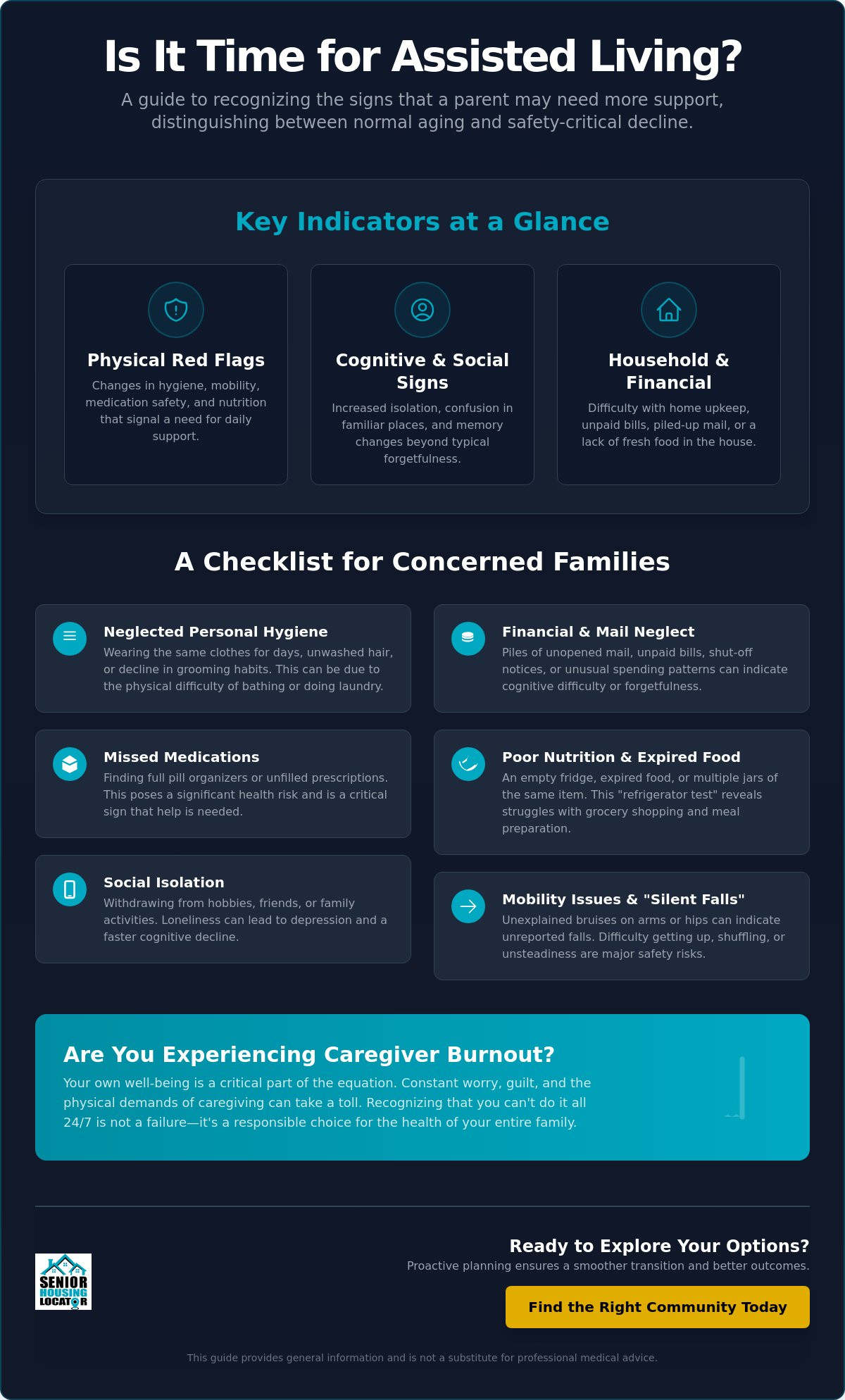
Professional care managers look at two main categories: Activities of Daily Living (ADLs) and Instrumental Activities of Daily Living (IADLs). ADLs are basic self-care tasks like bathing, dressing, and eating. IADLs are more complex but just as vital for maintaining a home. Watch for these red flags:
- Difficulty managing medications or missing doses.
- Unpaid bills, shut-off notices, or unusual spending patterns.
- An empty fridge or a lack of fresh, nutritious food.
When “occasional forgetfulness” turns into a pattern of risk, it’s no longer just aging. It’s a sign that your role is shifting from being a child to becoming a care manager. This transition is emotionally taxing, but acknowledging it is the first step toward a safer future for everyone involved.
Why Proactive Planning Matters in 2026
The landscape of senior housing is changing, especially in high-demand areas like the San Fernando Valley. Availability for premium placements is currently tight, and waiting for a crisis to occur often means you’ll have fewer choices. In 2026, many families find that making a “crisis move” after a hospital discharge forces them to settle for whatever bed is available immediately rather than the community they actually prefer.
Identifying the signs parent needs assisted living before an emergency happens allows for a much smoother transition. Early intervention improves longevity by reducing the risks of malnutrition and social isolation. When a parent has access to consistent support, they can focus on enjoying their life rather than just struggling to manage the basic tasks of daily survival.
Physical Red Flags: Hygiene, Mobility, and Medication Safety
Have you noticed Mom wearing the same outfit three days in a row? Maybe Dad’s hair looks unwashed or he’s stopped shaving regularly. These subtle changes in personal grooming are often the first visible signs parent needs assisted living. It’s rarely about a lack of effort. Instead, it’s usually because the physical demands of stepping into a tub, reaching for towels, or managing a laundry basket have become too much to handle alone.
When you visit, pay close attention to their skin and general appearance. Unexplained bruises on the arms or hips often point to “silent falls.” Many seniors hide these incidents because they don’t want to worry their children or lose their independence. The National Institute on Aging offers a helpful guide on signs an aging parent might need help, which highlights how these physical markers often signal a deeper need for daily support. Identifying these signs parent needs assisted living allows you to act while they still have a say in their future.
The “refrigerator test” is another reliable way to check on their well-being. Open the fridge and look for expired milk, moldy produce, or multiple jars of the same condiment. This often suggests they’re struggling to grocery shop or forgetting what they already have. Medication safety is equally critical. If you find pill organizers that are half-full or prescriptions that haven’t been refilled, the risk of a medical emergency increases significantly. Missing a dose of blood pressure medication or doubling up on a sedative can have immediate, dangerous consequences.
Mobility and Fall Risks in the Home
Watch how your parent moves through the house. Do they use tables, chairs, or walls for balance? This is called “furniture walking,” and it’s a major red flag for an impending fall. Many older Los Angeles homes, particularly those charming Spanish-style bungalows, feature narrow hallways, steep front steps, or high bathtub ledges. These architectural details become dangerous obstacles as mobility declines. A single fall can lead to a permanent loss of mobility, so addressing these risks early is vital for their long-term health.
Nutritional Decline and Weight Loss
Many seniors slip into a “tea and toast” diet. Cooking a full meal feels like a chore, so they survive on simple, low-nutrient snacks. This lack of protein and vitamins leads to muscle weakness and increased confusion. Assisted living dining programs solve this “failure to thrive” cycle by providing three nutritious, chef-prepared meals every day. If you’re seeing these physical changes, talking to a local placement expert can help you explore safer living arrangements before a crisis occurs.
Cognitive and Social Signs: Isolation and Memory Changes
In a city as sprawling as Los Angeles, independence is often tied directly to a set of car keys. When a parent stops driving, their world can shrink almost overnight. This “Driving Dilemma” is one of the most significant signs parent needs assisted living. In car-dependent neighborhoods like Woodland Hills or across the San Fernando Valley, where walking to the grocery store is rarely an option, losing the ability to drive leads to rapid isolation. If Mom or Dad mentions they’ve started getting lost on familiar routes, it’s a clear signal that their cognitive load is becoming too heavy to manage alone.
Sometimes, families try to address safety concerns by focusing on the car itself; for instance, if poor visibility at night is a concern, you might visit Renovation-de-phares.fr to explore how professional headlight restoration can help, though even a well-maintained vehicle cannot compensate for the cognitive changes that often signal a need for more support.
Social withdrawal is another subtle red flag. You might notice they’ve stopped attending their long-standing bridge club, skipped church services, or started making excuses to avoid family gatherings. Often, this isn’t a loss of interest. It’s a defense mechanism. Many seniors feel embarrassed by their memory lapses or find the effort of following a conversation too exhausting. They choose to stay home where they feel “safe,” but this retreat often accelerates cognitive decline.
Financial mismanagement is a concrete indicator that shouldn’t be ignored. Look for piles of unopened mail on the entry table or an unusual number of “thank you” letters from charities they’ve never mentioned before. Seniors are also frequent targets for sophisticated phone scams. If your parent is struggling to distinguish between a legitimate bill and a fraudulent request, they likely need the protective environment that professional senior living provides.
The Danger of Social Isolation
Loneliness is more than just a sad feeling. It’s a genuine medical risk. Research has indicated that social isolation can be as damaging to a person’s health as smoking 15 cigarettes a day. The geographic spread of the San Fernando Valley makes this isolation worse. When neighbors are separated by wide boulevards and heavy traffic, seniors can go days without a meaningful face-to-face conversation. Community living acts as a “Social Anchor,” providing built-in opportunities for connection that keep the mind engaged and the spirit high.
Early Indicators of Dementia or Memory Impairment
Memory loss often begins with small, repetitive behaviors. You might hear the same story three times during a single visit, or they may ask the same question just minutes after you’ve answered it. Look for signs of neglect in their surroundings, such as an empty pet bowl or a garden that was once a source of pride but is now overgrown. These lapses suggest that the mental energy required for daily maintenance is slipping away. If memory loss is the primary concern, it may be time to specifically explore memory care placement in San Fernando Valley to ensure they receive dementia-informed support.
Caregiver Burnout: When Your Health Is at Risk
Sometimes the most telling signs parent needs assisted living aren’t found in your parent’s home, but in your own mirror. Burnout isn’t a failure. It’s a signal. If you’re experiencing insomnia, sudden weight changes, or chronic irritability, your body is telling you that the current situation is unsustainable. Many Los Angeles families belong to the “Sandwich Generation,” caught in a high-pressure cycle of managing demanding careers, raising children, and rushing across town to care for aging parents. When you’re constantly stuck in traffic on the 405 or the 101 just to check a medication log, your own well-being often takes a backseat.
There’s also a significant safety risk to consider. A sleep-deprived caregiver is more likely to make a mistake. This might mean misreading a prescription label, forgetting a stove is on, or even injuring yourself while trying to help your parent stand. You were meant to be their daughter or son, not their housekeeper or an unskilled nurse. When you spend every visit scrubbing floors or organizing pill bottles, you lose the chance to simply enjoy each other’s company. If you’re feeling the weight of these responsibilities, reach out to a local placement specialist today for a helping hand.
Signs You Are Reaching Your Breaking Point
Burnout often creeps up slowly. You might start feeling a deep sense of resentment toward siblings who don’t help enough or even toward your parent. Perhaps you’ve started neglecting your own medical appointments or pulling away from personal relationships because you’re just too tired to engage. Choosing assisted living is an act of love that preserves the family bond. It allows you to return to your role as a supportive child while professionals handle the heavy lifting of daily care.
How to Start the Conversation Without Conflict
Discussing a move can feel like a minefield, but a structured approach helps lower the emotional temperature. Start by using “I” statements to focus on your own feelings. Instead of saying “You can’t live alone,” try “I feel worried every time I see you struggle with the stairs.” This keeps them from feeling attacked. Next, focus on “What if” scenarios to highlight specific safety concerns, such as what would happen during a power outage or a minor fall.
Finally, introduce the idea of a “trial stay” rather than a permanent move. Many families find success by suggesting a tour of a board and care home in Woodland Hills or a nearby community. This makes the transition feel like a choice they are making for their own comfort, rather than a decision being forced upon them.
Next Steps: Finding the Right Senior Living in Los Angeles
Once you’ve identified the signs parent needs assisted living, the next phase is finding a place where they’ll feel safe and respected. Los Angeles is home to hundreds of options, ranging from high-rise luxury apartments to quiet residential homes. How do you know which setting will actually feel like home? It’s often helpful to start by evaluating assisted living costs in Los Angeles based on the specific level of care your parent needs. Understanding the budget early helps narrow the field so you can focus on quality and location. Staying close to familiar neighborhoods like Sherman Oaks or Burbank allows your parent to keep their existing doctors and social circles, which is vital for their emotional well-being.
Many families find that using a local advisor is far more effective than clicking through national referral websites. National sites often sell your contact information to dozens of facilities, leading to a flood of unwanted sales calls. A local ally works differently. We focus on the specific nuances of the Los Angeles market, providing a personalized “helping hand” to guide you through the noise. We’ve done the legwork of visiting these communities, checking their reputations, and understanding their unique cultures.
Assisted Living vs. Board and Care Homes
There are two primary models for senior living in Southern California. Large assisted living communities offer a “resort-style” atmosphere with multiple dining rooms, movie theaters, and a busy calendar of social events. These are excellent for seniors who crave social interaction but need help with daily tasks. Conversely, board and care homes are residential houses licensed for six residents. This boutique model provides a much higher staff-to-resident ratio, making it ideal for those with more significant physical needs or memory impairment. If you’re still weighing these options against staying at home, our guide on assisted living vs. home care can help you decide which path is right for your family.
How a Senior Living Advisor Streamlines the Search
Our goal is to make this process as stress-free as possible. We operate on a “Free Referral” model, which means our services are paid for by the facilities, not by your family. This allows us to provide expert guidance without adding to your financial burden. We take safety seriously by monitoring state licensing reports for all Los Angeles facilities, ensuring we only recommend communities with a track record of high-quality care. We’re here to help you navigate the signs parent needs assisted living with confidence and clarity. Ready to explore your options? Speak with a local Senior Living Advisor in Los Angeles today.
Taking the First Step Toward a Safer Future
Recognizing the signs parent needs assisted living is a journey that requires both observation and heart. Whether you’ve noticed subtle changes in their hygiene, a pattern of missed medications, or the quiet weight of social isolation, these indicators are your guide to making a proactive choice. By acting now, you move away from the stress of a medical crisis and toward a lifestyle that prioritizes your parent’s safety and your own peace of mind. It’s about ensuring they have the support they deserve while you regain your role as a loving daughter or son.
You don’t have to navigate the complex world of Los Angeles senior living alone. Our team provides a personalized, full-service approach to help you find the right fit in Woodland Hills, the San Fernando Valley, and beyond. We offer expert local knowledge and deep familiarity with state licensing reports at zero cost to your family. Find the perfect senior living community with our free local placement service. You’ve already done the hard work of noticing the signs; let us help you find the solution that brings comfort back to your family.
Frequently Asked Questions
What is the most common sign that a parent can no longer live alone?
One of the most common signs parent needs assisted living is a steady struggle with Activities of Daily Living, such as bathing, dressing, or safely managing medications. While occasional forgetfulness is normal, a pattern of safety-critical lapses often indicates that living alone is no longer viable. You might notice unwashed clothes, an empty refrigerator, or unexplained bruises that suggest silent falls are occurring behind closed doors.
Is assisted living the same as a nursing home?
Assisted living is not the same as a nursing home. Assisted living provides a supportive residential environment for seniors who need help with daily tasks but don’t require 24/7 clinical supervision. Nursing homes, or skilled nursing facilities, are designed for individuals with complex medical conditions who need around the clock nursing care. Assisted living focuses more on maintaining independence, social engagement, and a high quality of life.
How do I handle a parent who refuses to consider assisted living?
Start by listening to their fears without judgment and use “I” statements to express your own worry. Many seniors fear losing their autonomy, so it helps to frame the move as a way to stay independent longer by removing the burdens of home maintenance. You might suggest a short-term trial stay or a simple tour of a local community to lower the emotional stakes and let them see the environment firsthand.
What are the first steps to take when I notice these signs?
Begin by documenting the specific signs parent needs assisted living that you’ve observed over the last few weeks. Next, have a transparent conversation about finances and look into the 2026 California disclosure laws regarding facility fees and staffing ratios. Consulting a local senior living advisor can help you filter options quickly, ensuring you find a community that matches their medical needs and personal preferences without the stress of cold-calling facilities yourself.
Does Medicare pay for assisted living in California?
Medicare generally doesn’t cover the room and board costs of assisted living in California. It typically only pays for short-term stays in skilled nursing facilities or specific medical services. However, for those who are Medi-Cal eligible, the Assisted Living Waiver may help cover some costs in participating facilities. It’s important to review your parent’s long-term care insurance or personal savings to plan for these monthly expenses as part of your research.
What is the average cost of assisted living in the San Fernando Valley?
In 2026, the projected median cost of assisted living in the Los Angeles area is $6,281 per month. Prices in the San Fernando Valley can vary based on the specific neighborhood and the level of care required. While luxury communities in affluent areas may cost more, there are various options available that provide high-quality support. Always ask for the written disclosures required by California law to see a three-year history of rate increases before signing any contracts.
Can my parent stay in assisted living if their health declines further?
Most residents can remain in their community as their needs increase through tiered care levels. Facilities perform regular resident reappraisals, a process strictly enforced under 2026 Title 22 regulation updates, to ensure the staff can still meet the resident’s safety requirements. If a parent develops significant memory issues or requires hospice care, they can often receive those services within the same community or transition to a specialized wing designed for higher care needs.
What is a “Board and Care” home, and how does it differ from assisted living?
A board and care home is a standard residential house licensed to care for a small group, typically six seniors. Unlike large assisted living communities that feel like hotels or resorts, board and care homes offer a quiet, family-like setting with a much higher staff-to-resident ratio. This model is often preferred for seniors who find large buildings overwhelming or those who need more frequent, hands-on attention from a consistent group of caregivers throughout the day.