
Imagine sitting at your parent’s kitchen table, noticing the mail is piling up or the garden is becoming a bit too much to manage. You want them to stay active, yet you worry about their safety when you aren’t there. It’s a heavy realization that often leads to a confusing search for independent living vs assisted living. You might feel a pang of guilt or fear that you’ll pick a level of care that’s either too restrictive or simply not enough. These feelings are common, and they’re a sign of how much you care.
We believe that finding the right home should bring peace of mind, not more stress. This guide offers clear guidance on the differences in care, lifestyle, and the latest 2026 regulations to help you choose with total confidence. We’ll explain how new California transparency laws, effective July 2026, protect your family by requiring clear fee disclosures before you sign a contract. You’ll gain a clear understanding of your options, a way to start the conversation with your loved ones, and a reliable path toward a local resource that can help you tour facilities nearby.
Key Takeaways
- Understand the fundamental shift from managing a home to managing wellness by comparing independent living vs assisted living services.
- Learn how California’s Physician’s Report (RCFE) determines exactly which level of daily support is right for your parent’s health needs.
- Navigate the financial landscape of Los Angeles with a clear breakdown of “Base Rent + Care Tier” models versus traditional entrance fees.
- Use our simple “Refrigerator Test” and decision checklist to objectively evaluate if your loved one’s current nutrition and safety needs are being met.
- Discover how to find the perfect community “vibe” by exploring the unique mix of large campuses and residential homes in the San Fernando Valley.
Independent Living vs. Assisted Living: The Core Differences Explained
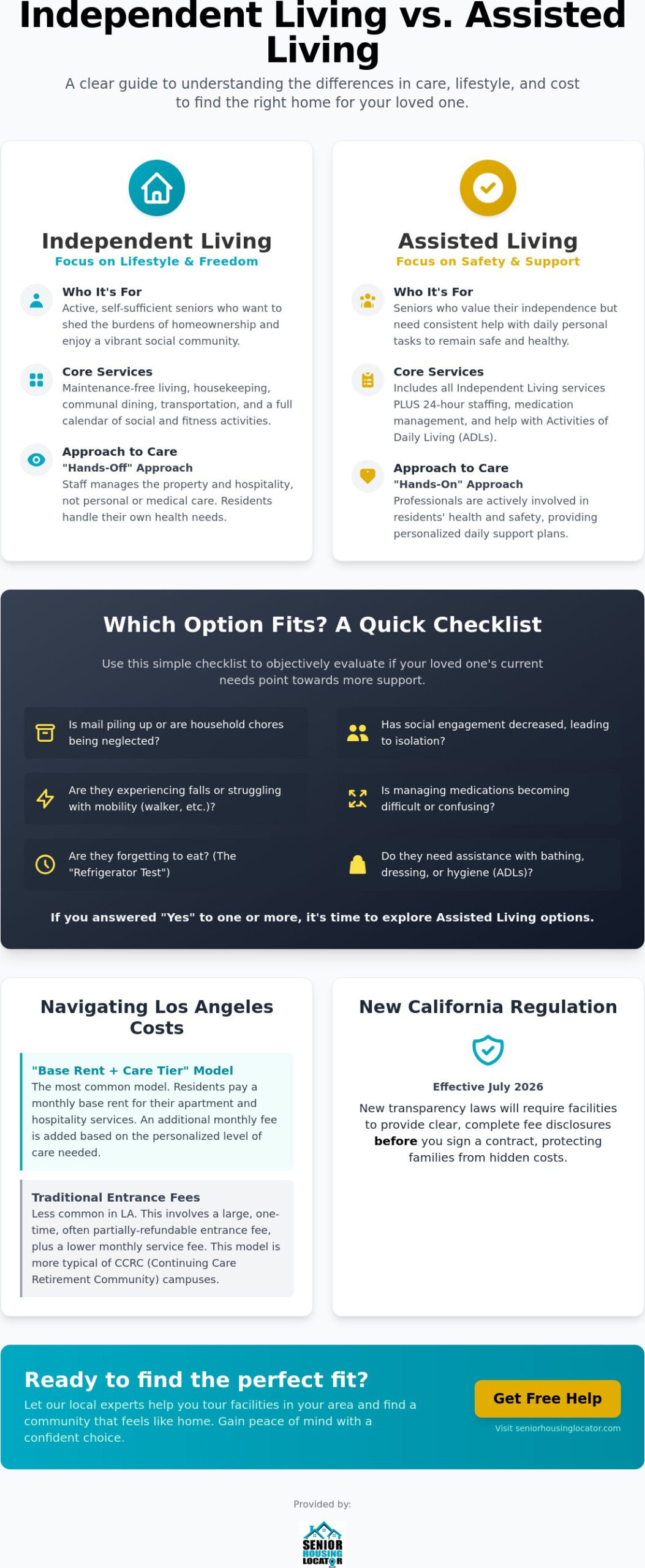
Choosing between independent living vs assisted living often feels like trying to predict the future. It’s a transition from “managing a home” to “managing wellness.” You can think of the difference as a “Hands-Off” versus a “Hands-On” approach to daily support. In an independent setting, the staff is “Hands-Off” regarding your personal care but very active in providing a maintenance-free lifestyle. In contrast, assisted living is “Hands-On,” where professionals are actively involved in your health and safety every single day. The primary differentiator between these two paths is the requirement for assistance with Activities of Daily Living (ADLs).
Many families worry about what happens if a parent starts in an independent community but needs more help later. This is where the concept of “aging in place” becomes vital. Modern senior living campuses often offer both levels of care on one site. This means your parent can start with a maintenance-free apartment and transition to a care-focused plan without the trauma of moving to a new neighborhood. It’s about building a safety net that grows as they do, ensuring they never feel like they’ve outgrown their home.
What is Independent Living?
Independent living is designed for active seniors who are tired of the burdens of homeownership but don’t need help with personal care. The focus here is on social engagement, fitness, and luxury-style amenities. Imagine a life where landscaping, roof repairs, and heavy cleaning are things of the past. Residents typically live in private apartments or cottages and enjoy communal dining, local transportation, and a packed calendar of events. It’s the ideal choice for those who want to downsize and spend their time on hobbies rather than chores. If you’re ready to explore your options, our step-by-step guide to finding independent living for seniors walks you through exactly how to evaluate communities and understand local costs.
What is Assisted Living?
Assisted living places a much higher emphasis on safety and daily support. To understand the broader industry standard, you can review this overview of What is Assisted Living? which highlights how these communities bridge the gap between home care and skilled nursing. These facilities provide 24-hour staffing and professional medication management. Support includes help with ADLs like bathing, dressing, and mobility. It’s a balanced approach that maintains a resident’s independence while providing the necessary help to stay healthy. You get the privacy of an apartment with the peace of mind that help is always just a button-push away.
Care Levels and Daily Support: Finding the Right Balance
Choosing the right path starts with an honest look at your parent’s daily routine. In California, this process is formal and structured. Facilities require a Physician’s Report, often called an RCFE assessment, before a resident can move in. This report isn’t just paperwork. It’s a professional evaluation that determines if your loved one’s needs match the facility’s license. It ensures that the safety measures in place are actually enough to protect them. Understanding the key differences between the two helps you interpret this report with a clearer perspective on your family’s future.
The core of the independent living vs assisted living debate is the distinction between “hospitality services” and “care services.” Independent living focuses on hospitality. It provides gourmet meals, housekeeping, and transportation to the grocery store. Assisted living includes all of that plus “care services” like help with hygiene or managing chronic conditions. While both settings prioritize social programming to prevent cognitive decline, the level of active supervision varies significantly. If your parent is forgetting to eat or struggling with their walker, the hospitality of independent living won’t be enough to keep them safe.
The physical environment also tells a story about the intended resident. In an assisted living community, you’ll see emergency pull cords in every bathroom, wider doorways for mobility aids, and specialized lighting to prevent falls. Independent living units usually look like standard, high-end apartments. They offer comfort and style but lack the built-in clinical safety features found in care-focused settings. If you’re unsure which assessment fits your situation, speaking with a local placement expert can help clarify the next steps.
Medical Support and ADLs in Assisted Living
Assisted living is built around support for the six primary Activities of Daily Living (ADLs). These include bathing, dressing, toileting, transferring, continence, and feeding. Staffing is available 24 hours a day to assist with these tasks. A critical difference here is medication administration. In these communities, licensed staff can actually handle and give the medication to the resident. This is much safer than simple “medication reminders,” where a staff member only tells a resident it’s time to take their pills without verifying they did so correctly.
Maintenance-Free Living in Independent Communities
The philosophy of independent living senior living is often compared to a permanent vacation. Residents enjoy concierge services, fitness centers, and planned excursions to local theaters or parks. Longevity is fostered through deep social connections rather than medical intervention. For families who want the lifestyle but need a tiny bit of help, many independent communities allow third-party home care agencies to visit. This lets your parent enjoy the resort-style perks while receiving private assistance with minor tasks.
Analyzing Costs: Financial Realities in Los Angeles
The cost of senior living in Southern California is often the biggest hurdle for families. When comparing independent living vs assisted living, it’s helpful to view the expenses through the lens of the local real estate market. In Los Angeles, pricing isn’t just about the room. It’s about the location, the amenities, and the level of professional oversight provided. Unlike national averages that might mislead you, assisted living costs Los Angeles families see are deeply influenced by the city’s high cost of living and the quality of specialized care available.
Most assisted living communities use a “Base Rent + Care Tier” model. This means you pay a flat rate for the apartment and a separate, variable fee for the actual care services. This structure ensures you only pay for what your parent actually needs. Understanding the key differences between independent and assisted living financial models is essential before signing any contracts. Effective July 1, 2026, California law requires facilities to provide written disclosures of all fees and a three-year history of rate increases. This gives your family much-needed transparency during a high-stakes decision.
How Independent Living Fees Work
Independent living typically operates on an all-inclusive monthly fee. This single check usually covers your utilities, daily meals, and housekeeping. It’s designed to be simple and predictable. In the San Fernando Valley, you’ll find a mix of “buy-in” models, which require a large upfront entrance fee, and month-to-month rental models. While the rental model offers more flexibility, the buy-in model can sometimes lower the ongoing monthly cost. It’s important to remember that personal care, like help with bathing or medication, is almost never included in these fees. If those needs arise, you’ll likely pay extra for third-party help.
Understanding Assisted Living Service Tiers
Assisted living communities often use a “point system” to determine your care tier. During the initial assessment, a nurse assigns points for every task your parent needs help with, such as dressing or mobility. These points add up to a specific care level on your bill. While this might seem complex, it’s often more cost-efficient than hiring 24/7 in-home care. For families looking for a more intimate setting with a predictable bill, board and care homes in Woodland Hills are a popular alternative. These smaller residential homes often provide a more fixed-cost approach. This makes long-term financial planning much easier for your family.
Decision Checklist: Which Option Fits Your Situation?
Deciding between independent living vs assisted living isn’t just about comparing floor plans. It is about an honest look at your parent’s daily life. We often suggest families start with a simple “Refrigerator Test” during their next visit. Open the fridge and look for three things: expired food, multiple duplicates of the same item, or a total lack of fresh produce. These small clues often reveal more about a senior’s well-being than a phone conversation ever could. If you see five jars of mayonnaise but no vegetables, it may be a sign that grocery shopping and meal prep have become overwhelming tasks.
Many families encounter the “Not Ready Yet” objection. It’s a natural reaction rooted in the fear of losing independence. However, waiting for a medical crisis usually means you lose the power to choose. A reactive move following a fall or a hospital stay is often rushed and stressful. Choosing a path early allows your parent to be part of the decision. For those struggling with the emotional transition, resources like Hope Therapy Center can provide the therapeutic support necessary to manage these life changes. As we often tell our neighbors, the best time to choose a community is when you still have the energy to enjoy its amenities.
5 Signs You Are Ready for Independent Living
- Home maintenance is a burden: Tasks like mowing the lawn, fixing leaky faucets, or managing property taxes feel like a heavy weight.
- Social circles are shrinking: Your parent spends most of their time alone, which can lead to loneliness or a decline in mood.
- Driving is a stressor: Navigating Los Angeles traffic is no longer enjoyable, but they still want to attend local events and museums.
- Desire for community: They want to live among peers and have easy access to fitness classes, book clubs, and group dining.
- Safety is a growing thought: While they don’t need help with personal care, the idea of having staff nearby “just in case” provides comfort.
5 Signs It Is Time for Assisted Living Support
- Recent “near misses”: There have been minor falls, stumbles, or moments of confusion that could have resulted in an injury.
- Medication confusion: You notice missed doses, expired prescriptions, or difficulty keeping track of a complex pill schedule.
- Hygiene changes: There is a noticeable decline in personal grooming, or the house has become uncharacteristically cluttered and untidy.
- Nutritional gaps: Weight loss is evident, or they are relying mostly on frozen meals and snacks instead of balanced nutrition.
- Chronic condition struggles: Managing issues like diabetes or mobility limitations has become a full-time job for family caregivers.
If these signs feel familiar, it might be time to explore your local options more closely. You don’t have to make this choice alone. You can contact a local senior living advisor to help you navigate these service levels and find the right fit for your family’s unique needs.
Finding the Perfect Fit in Woodland Hills and the San Fernando Valley
The San Fernando Valley offers a unique landscape for senior care that you won’t find in many other parts of the country. Our local area features a diverse blend of expansive, resort-style campuses and intimate, six-bed residential homes. This variety is a benefit, but it can also make the independent living vs assisted living choice feel more complex. How do you know if your parent would thrive in a bustling community with 200 neighbors or a quiet, specialized house on a tree-lined street in Woodland Hills? The answer usually comes down to the “vibe” of the community.
We always suggest that families tour at least three different independent living communities Woodland Hills before making a final decision. You need to see the daily rhythm for yourself. Are the residents active in the common areas? Is the dining room full of conversation? Does the staff greet everyone by name? These small, human details tell you more about the quality of life than any glossy brochure ever could. Seeing these interactions firsthand helps lower the emotional stakes and gives you the confidence that your parent will be truly happy. For a broader framework on how to approach this search, our complete guide to finding the best independent living for seniors offers a proven methodology for evaluating communities across the San Fernando Valley.
Why Local Expertise Matters in Los Angeles
Navigating the senior living market in Los Angeles requires more than just a search engine. It requires an understanding of the 405 and 101 traffic patterns to ensure family visits remain easy and frequent. Local expertise also means knowing which communities in Encino or Sherman Oaks specialize in specific needs, such as high-acuity physical support or culturally specific dining. We also stay current with state inspection reports from the Department of Social Services (DSS). This ensures the facilities we recommend maintain the highest standards of safety, cleanliness, and resident rights.
How Senior Housing Locator Simplifies Your Search
We act as a “Compassionate Facilitator” to help you filter out the noise and focus on what matters most. Our process is designed to be methodical and stress-free. We follow a simple, three-step path: we conduct a deep-dive intake, filter the best local options, and coordinate your tours. Working with a senior living advisor Los Angeles can save your family over 20 hours of frustrating research and cold calls.
Best of all, our placement service is completely free for families. We are compensated by the communities, which removes any financial pressure from your decision-making process. Our commitment is to integrity and finding the “right-fit” home, not just any home. We’ve done the hard work of vetting the options so you can focus on being a supportive son or daughter during this important transition.
Take the Next Step Toward Peace of Mind
Deciding between independent living vs assisted living is a significant milestone for your family. It is the moment you stop worrying about household repairs and start focusing on your parent’s daily wellness. You now have the tools to spot the signs of needing support, an understanding of how California’s 2026 transparency laws protect your finances, and a clearer picture of the unique community “vibe” in the San Fernando Valley. You don’t have to navigate these complex service levels or high-stakes contracts on your own.
We are here to act as your trusted local ally. Our expert team offers a personalized placement service at zero cost to your family. We provide full-service support from your very first search through move-in day. With deep knowledge of Woodland Hills and San Fernando Valley senior communities, we help you filter out the noise and find the right home with efficiency. Schedule a free consultation with a local Senior Living Advisor today. You deserve the comfort of knowing your loved one is in a safe, vibrant, and supportive environment. We are ready to help you make this transition with confidence and ease.
Frequently Asked Questions
Is independent living cheaper than assisted living?
Independent living is typically more affordable because it doesn’t include the cost of professional care staff. When comparing independent living vs assisted living, the price gap reflects the level of daily supervision provided. While you save on care costs, remember that you’ll still pay for a lifestyle that includes dining, housekeeping, and social events. It’s a choice between paying for a maintenance-free life or a care-focused one.
Can a couple live together if one needs assisted living and the other does not?
Yes, most communities allow couples to share an apartment even if their care needs are different. This arrangement allows one spouse to receive help with tasks like medication or dressing while the other enjoys an active, independent lifestyle. You’ll typically pay the base rent for the apartment plus a separate care fee for the individual who needs support. It’s a wonderful way to stay together without the burden of caregiving.
What happens if my parent starts in independent living but their health declines?
If health declines, your parent can often stay in their current community by bringing in third-party home care. Many campuses also offer a “continuum of care,” allowing for a smooth transition to an assisted living wing without leaving the friends they’ve made. This approach prevents the trauma of a major move during a difficult time. It’s always best to ask about these transition policies before you sign a lease.
Does Medicare pay for independent or assisted living in California?
Medicare generally doesn’t cover the monthly rent or personal care costs of independent living vs assisted living in California. While it pays for doctor visits, hospital stays, and some medical equipment, the residential costs are considered private-pay. Families often use long-term care insurance, Veterans benefits, or the proceeds from a home sale to cover these expenses. We can help you explore which local financial resources might apply to your situation.
What is the best age to move into an independent living community?
There isn’t a “perfect” age, but many seniors find that their late 70s or early 80s is an ideal time to transition. Moving while you’re still active allows you to build a social network and enjoy the fitness centers and local excursions. It’s about being proactive. Many residents tell us they wish they’d moved sooner to enjoy the amenities before a health change made the move feel more urgent.
How is assisted living different from a nursing home?
Assisted living is a residential model for those who need help with daily tasks but don’t require 24/7 clinical medical supervision. Nursing homes, or skilled nursing facilities, provide high-level medical care for complex conditions in a more clinical setting. Think of assisted living as a home with help, and a nursing home as a medical facility for those with serious, ongoing health needs.
Can I bring my own furniture to an independent or assisted living apartment?
Absolutely, and we highly encourage it to make the new space feel like home. Residents bring their own beds, favorite chairs, and family photos to personalize their private apartments. Most units are provided unfurnished to allow you to recreate the look and feel of your current house. Bringing cherished items helps ease the transition and makes the new environment feel familiar and safe right away.
How do I know if a community in the San Fernando Valley is high quality?
You can gauge quality by checking the facility’s recent state inspection reports and observing the interaction between staff and residents. High-quality communities in the San Fernando Valley often have long-tenured employees and a transparent approach to their fee disclosures. Touring during mealtime or an activity is a great way to see if the residents are happy and engaged. A “vibe check” is just as important as the paperwork.