
Imagine getting a call at 3:00 PM on a Tuesday stating your mother is being discharged from the hospital tomorrow morning and needs 24-hour medical care. For many families, this is the moment they first search for skilled nursing facilities los angeles, only to feel overwhelmed by hundreds of options and a ticking clock. You aren’t alone in this sudden rush; with 339 facilities in the county, finding the right fit while under pressure feels like an impossible task.
It’s completely normal to feel a mix of confusion and fear, especially when you’re trying to distinguish between a nursing home and assisted living while worrying about your loved one’s safety. We’re here to help you slow down and find clarity so you can secure the high-quality medical supervision your family deserves. This 2026 guide explains how to evaluate staffing ratios, understand the latest Medi-Cal asset limits, and ensure a smooth transition from the hospital to a local facility.
Key Takeaways
- Understand how 24/7 medical supervision differs from other care types to ensure your loved one gets the right level of support.
- Learn to evaluate skilled nursing facilities los angeles by looking at staffing ratios, cleanliness, and medical oversight.
- Navigate the complexities of Medicare coverage, including the 100-day limit and potential out-of-pocket costs for 2026.
- Discover how a local referral expert can help you find a high-quality facility quickly, even during a stressful hospital discharge.
Understanding Skilled Nursing Facilities in Los Angeles
Choosing the right care for a parent or spouse is a heavy responsibility. You might feel a bit lost among the different options available in Southern California. To start, let’s look at What is a Skilled Nursing Facility? In short, these are places where your loved one receives 24/7 medical care and monitoring from licensed health professionals. Unlike other senior living options, skilled nursing facilities los angeles operate with a clinical focus. They provide intensive medical support that goes far beyond what a typical home environment can offer.
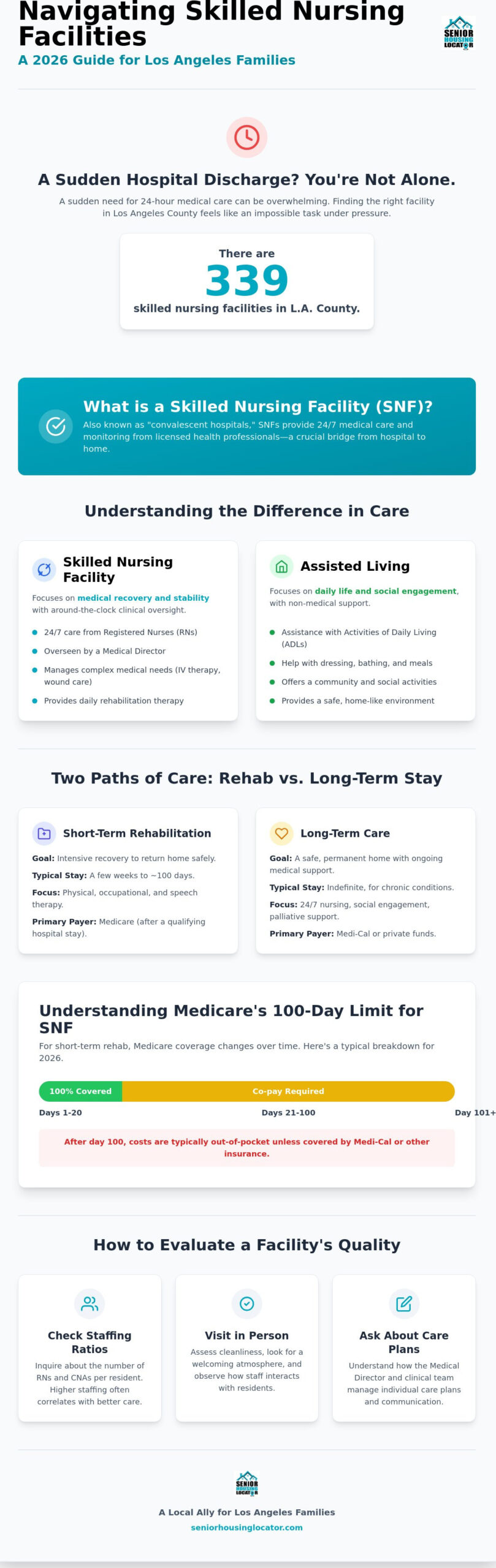
You might wonder how these facilities differ from assisted living or board and care homes. The distinction is simple: assisted living focuses on daily life, while skilled nursing focuses on medical recovery. In a SNF, a Medical Director oversees the clinical plan, and Registered Nurses are on-site around the clock. They manage complex tasks like wound care, IV therapy, and medication management. This level of care ensures three vital things: safety, medical stability, and professional oversight.
When is it Time for Skilled Nursing?
It’s often time for a SNF when a doctor decides that your loved one’s medical needs are too complex for home care or assisted living. You might notice signs like frequent falls, unmanaged chronic conditions, or the need for daily rehabilitation therapy. While assisted living helps with “activities of daily living” like dressing or bathing, a SNF handles “skilled medical needs” that require a nurse’s expertise. A SNF serves as a vital medical bridge between a hospital stay and a safe return home.
Los Angeles Terminology: SNF vs. Nursing Home
If you’re driving through neighborhoods like Pasadena or Santa Monica, you’ll see signs for “convalescent hospitals.” This is just an older term for what we now call skilled nursing facilities los angeles. While many people still use the phrase “nursing home,” the state of California uses the SNF label to reflect the high level of medical skill provided. New 2026 standards in California now require these facilities to be more transparent about their staffing and clinical records. This change gives your family more power to choose a facility based on facts rather than just a nice lobby.
Short-Term Rehabilitation vs. Long-Term Care
Not every stay at skilled nursing facilities los angeles is meant to be permanent. Some residents are there to regain their strength after a medical event, while others require a safe, supportive place to live indefinitely. Distinguishing between these two paths is the first step in planning for your family’s future. Each path has different goals, different daily routines, and very different insurance rules.
Medicare typically handles the short-term rehab side. It pays for those first critical weeks of recovery after a qualifying hospital stay of at least three days. Medi-Cal, however, is the primary source for long-term custodial care once a senior meets the 2026 California asset limits. You can research local options using Medicare’s Care Compare tool to see how facilities rank for both short-term recovery and long-term stays. This data helps you see which locations excel at getting patients home versus those that provide a high quality of life for permanent residents.
When a loved one is at a major hospital like Cedars-Sinai or UCLA Health, the “discharge planning” process begins almost immediately. This is the bridge between the hospital and the rehab center. A good plan ensures the new facility has the right equipment, medications, and therapy orders ready before your loved one arrives. It’s a fast-paced process, but getting it right prevents unnecessary readmissions to the hospital.
The Goal of Short-Term Rehab in the San Fernando Valley
Many families in the Valley look for facilities near Northridge Hospital Medical Center or West Hills Hospital to keep their loved ones close. The focus here is intensive recovery. You should expect a busy schedule involving physical, occupational, and speech therapy. In the first 20 days, Medicare usually covers the full cost, making this a focused window for making progress. Success is measured by your loved one’s ability to walk, eat, or communicate safely enough to transition back home.
Long-Term Skilled Care: A New Place to Call Home
When a full recovery isn’t the primary goal, the focus shifts to long-term stability. Long-term care provides 24/7 bedside nursing for chronic conditions that home care or assisted living can no longer manage. It’s about finding a community that offers social engagement, palliative support, and consistent medical monitoring. While the care is clinical, the atmosphere should still feel neighborly and warm. Understanding the financial side is vital for long-term planning, so you may want to review Assisted Living vs. Nursing Home: Understanding the Costs to see how these long-term expenses compare. If you’re feeling overwhelmed by these choices, reaching out to a local placement expert can help you find the right balance of care and comfort for your budget.
How to Evaluate Skilled Nursing Quality in Los Angeles
Walking into a facility for the first time can feel overwhelming. You’re looking for clinical excellence, but you also want a place that feels like a community. With approximately 360 skilled nursing facilities los angeles to choose from, you need a reliable way to separate the high-quality locations from the rest. The California Department of Aging guide to skilled nursing facilities is a great starting point for understanding state requirements, but your personal evaluation is what will ultimately bring you peace of mind.
Staffing ratios are the single most important indicator of care quality. When there are enough Registered Nurses (RNs) and Licensed Vocational Nurses (LVNs), residents get their medications on time and medical changes are caught early. Because 94% of nursing homes reported staffing shortages in early 2025, you should look for facilities that prioritize hiring and retention. Beyond the numbers, trust your senses during a visit. Does the facility pass the “smell test”? Is it clean, well-lit, and quiet? A high-quality facility will feel organized and calm, not chaotic or neglected.
You should also check the Five-Star Quality Ratings from the Centers for Medicare & Medicaid Services (CMS). These ratings look at health inspections, staffing levels, and specific medical quality measures. While a five-star rating is the goal, look deeper into the social atmosphere. Observe the residents in the common areas. Are they engaged in activities, or are they sitting alone in their rooms? A vibrant social calendar and active residents often signal a facility that cares about the whole person, not just their medical chart.
Critical Questions for Los Angeles Facility Administrators
When you meet with an administrator, don’t be afraid to ask direct questions. Their transparency is a sign of a well-run home. Be sure to cover these points:
- How do you handle emergency transfers back to a hospital like Cedars-Sinai or Kaiser Permanente?
- What is your current staff turnover rate for Certified Nursing Assistants (CNAs)?
- Do you have specialized programs on-site for wound care or IV therapy?
You should also ask specifically about the staffing levels for the night shift to ensure your loved one is safe 24 hours a day.
Reviewing State Inspection Reports (CDPH)
California provides a public database called “Cal Health Find” through the California Department of Public Health (CDPH). This tool lets you see the specific “deficiencies” or citations a facility has received. Keep in mind that the severity of a citation matters more than the total number. For context, 232 nursing homes in California currently have serious deficiencies. If you feel stuck or have concerns about a specific location, you can contact the Long-Term Care Ombudsman in Los Angeles County. They are independent advocates who help families resolve issues and ensure residents are treated with dignity.
Navigating Costs and Logistics for LA Families
Understanding the financial side of care is often the most stressful part of the journey. In Southern California, the cost of care at skilled nursing facilities los angeles reflects the high level of medical expertise provided. While these expenses can feel daunting, most families use a combination of Medicare, Medi-Cal, or private funds to cover the stay. Knowing which bucket your situation falls into will help you plan with confidence rather than fear.
Medicare is designed for recovery, not long-term living. It typically covers 100% of the cost for the first 20 days of a stay. From day 21 to day 100, you’ll likely face a daily co-pay, provided your loved one continues to show medical progress. If care is needed beyond that 100-day window, you’ll need to look at other options. For many in Los Angeles, this means qualifying for Medi-Cal. As of January 1, 2026, California has specific asset limits for eligibility. An individual can now have up to $130,000 in countable assets, while a couple can have up to $195,000. Keep in mind that California also uses a 30-month “look-back” period for asset transfers, so early planning is essential.
Location Matters: Proximity to Family and Doctors
When you’re searching for a facility, it’s tempting to look across the entire county. However, choosing a location near Woodland Hills, Sherman Oaks, or your own neighborhood is a strategic move for health. Frequent family visits are proven to improve resident outcomes and keep spirits high. You also have to consider the “Los Angeles factor.” A facility that is only five miles away can easily become a 45-minute barrier during rush hour. Staying local ensures you can attend care meetings, check in on your loved one’s progress, and coordinate easily with their existing specialist physicians in the San Fernando Valley.
The Hospital-to-SNF Transition Process
The transition from a hospital bed to a skilled nursing facility happens fast. You’ll work closely with hospital social workers and case managers who handle the paperwork and medical records. Because high-quality beds fill up quickly, you should have two or three preferred facilities ready before the “discharge” call even comes. This prevents you from being forced into a location that doesn’t feel right simply because it was the only one with an open bed. If you’re feeling rushed by the hospital’s timeline, a Senior Living Advisor Los Angeles can help you filter options and find a match in hours instead of days.
Planning for these logistics ahead of time is the best way to protect your peace of mind. If you need help comparing local options or understanding which facilities currently have openings, you can contact a local placement expert for personalized guidance at no cost to your family.
Finding the Right Fit with a Local Los Angeles Ally
Finding the right place for a loved one shouldn’t feel like a solo mission. You’ve already learned about the costs and the medical requirements for skilled nursing facilities los angeles, but the final choice often comes down to the details you won’t find in a brochure. This is where a local ally makes the difference. At Senior Housing Locator, we’ve walked the hallways of these facilities ourselves. We’ve met the administrators and seen the therapy gyms in action. This hands-on knowledge allows us to guide you toward a home that fits your loved one’s personality and your family’s logistical needs.
Our process is simple and designed to lower your stress. It starts with a conversation. We listen to your specific care needs, whether that’s intensive wound care or a specific type of rehabilitation. Then, we look at your budget and location preferences to create a curated list of recommendations. Because our service is funded by the providers, it’s completely free for families in Woodland Hills and throughout the greater Los Angeles area. You get the benefit of an expert guide without any added financial burden during an already expensive transition.
Beyond the Brochure: Our Local Expertise
We focus on the nuances that clinical data points alone can’t capture. For instance, we know which skilled nursing facilities los angeles have the most robust rehab departments in the San Fernando Valley. We also understand the “personality” of different homes. Some facilities are bustling and social, while others offer a quieter, more clinical environment. Whether you need a location in Encino that’s close to your office or a facility in Santa Monica with a specific medical specialty, we provide personalized support to narrow down your search quickly.
Your Compassionate Facilitator in a Time of Crisis
When a hospital discharge is looming, you shouldn’t have to spend hours cold-calling dozens of facilities. We take that burden off your shoulders. We check current availability, verify insurance compatibility, and schedule tours on your behalf. We also help you understand the broader landscape of care. Sometimes, a senior might be better suited for Board and Care Homes rather than a traditional skilled nursing environment. We’ll help you navigate these distinctions so you can make an informed, confident decision.
Taking the first step is as easy as a phone call. We’re here to offer a helping hand and a listening ear during this difficult time. Ready to find the right fit? Contact Senior Housing Locator for a free consultation today and let us help you secure the peace of mind your family deserves.
Moving Forward with Confidence and Clarity
Finding the right skilled nursing facilities los angeles is about more than just medical care; it’s about finding a place where your loved one feels safe and respected. We’ve explored how to evaluate staffing ratios, navigate the 2026 Medi-Cal asset limits, and prepare for a smooth hospital discharge. While the process is complex, you now have the tools to move forward with confidence. You don’t have to manage these high-stakes decisions on your own.
Our team provides personalized local expertise across Woodland Hills and the San Fernando Valley to help you find the perfect match. We offer an integrity-driven placement service that is completely free for families, ensuring your choices are tailored to your specific budget and care needs. We’ve already done the hard work of touring facilities and vetting quality standards so you can focus on being there for your family.
Let us help you find the right care; speak with a local Los Angeles advisor for free. Taking this first step will lower the emotional burden of caregiving and provide the clarity you need. You’re doing a great job navigating this transition, and we’re here to help you every step of the way.
Frequently Asked Questions
Does Medicare pay for long-term skilled nursing in Los Angeles?
No, Medicare does not cover long-term custodial care in any setting. It only pays for short-term rehabilitation stays, up to 100 days, following a qualifying hospital stay of at least three nights. For long-term stays, families typically use Medi-Cal, private savings, or long-term care insurance to cover the costs of 24-hour medical supervision.
What is the difference between assisted living and skilled nursing?
The main difference is the level of medical care provided on-site. Assisted living focuses on helping seniors with daily tasks like bathing, dressing, and meal preparation in a social, residential environment. In contrast, skilled nursing facilities los angeles provide 24/7 clinical care by licensed nurses for patients with complex medical needs or those recovering from major surgery.
Can I choose which skilled nursing facility my parent goes to after a hospital stay?
Yes, you have the legal right to choose any facility that has an available bed and accepts your insurance. While hospital case managers provide a list of nearby options, you aren’t required to pick the first one they suggest. Having a pre-vetted list of your top choices helps you act quickly when the hospital issues a discharge order.
How much does skilled nursing cost per month in Los Angeles in 2026?
Costs depend on the facility’s location and whether your loved one requires a private or semi-private room. Average monthly rates for a semi-private room in Los Angeles are approximately $11,695, while private rooms often cost more than $15,000. These figures reflect the intensive staffing and specialized medical equipment necessary to provide around-the-clock clinical care in Southern California.
What should I bring for a short-term rehab stay in Los Angeles?
Pack for comfort and physical activity. You should bring several sets of loose-fitting clothes for therapy sessions, sturdy non-slip sneakers, and basic personal toiletries. It’s also helpful to bring a list of current medications and a few small personal items, like family photos or a favorite blanket, to help the transition feel more comfortable and less clinical.
Are there skilled nursing facilities in the San Fernando Valley that accept Medi-Cal?
Yes, many skilled nursing facilities los angeles located throughout the San Fernando Valley accept Medi-Cal for long-term care. Because these beds are often in high demand, availability can change from one day to the next. You may need to contact several facilities in neighborhoods like Northridge, Van Nuys, or Reseda to find a current opening that matches your needs.
How do I check the safety record of a nursing home in Los Angeles?
You can verify a facility’s history by visiting the California Department of Public Health’s “Cal Health Find” website. This database lists every inspection report, complaint, and citation issued to a facility. You should also check the federal Care Compare tool to see how a location ranks in terms of staffing levels and specific medical quality metrics.
What happens if my parent runs out of money while in a skilled nursing facility?
Most residents apply for Medi-Cal once their private funds and assets are depleted to the state’s 2026 eligibility limits. If the facility is Medi-Cal certified, your loved one can typically remain in the same building while the payment source changes. It’s important to discuss this possibility with the facility’s admissions department early on to ensure they have “Medi-Cal beds” available.