
What if the hardest conversation you ever have with your mom or dad didn’t have to end in tears or a heavy sense of betrayal? Finding the right senior housing for aging parents in a sprawling, expensive market like Los Angeles often feels like an impossible puzzle. You want them to be safe, you want them to be social, and you want them to be well cared for. It’s completely natural to feel guilty about moving them from their family home, especially when you’re also trying to figure out if they need assisted living or a smaller board and care environment.
We understand that you are looking for more than just a facility; you are looking for a new community where they can truly thrive. This guide provides a clear, compassionate framework designed to help you find the perfect home in the San Fernando Valley. We promise to simplify the local care landscape, clear up the confusion around different housing types, and show you how to manage the high costs of the Los Angeles market. You will learn how to compare local options, understand new 2026 tenant protections, and follow a streamlined process that reduces family conflict while keeping your parent’s happiness at the center of every decision.
Key Takeaways
- Learn how to choose the right senior housing for aging parents by viewing support as a way to maintain, not lose, their independence.
- Identify the critical red flags in the home, such as missed medications or poor hygiene, that indicate your parent needs a safer living situation.
- Compare the four primary types of care in Los Angeles and learn how to use Activities of Daily Living (ADLs) to find the perfect match.
- Use our step-by-step search strategy for the San Fernando Valley, including the best times of day to visit potential communities for an honest look.
- Discover how a local placement ally can remove the research burden and connect your family with pre-vetted, high-quality care providers at no cost to you.
Understanding Senior Housing Options for Aging Parents
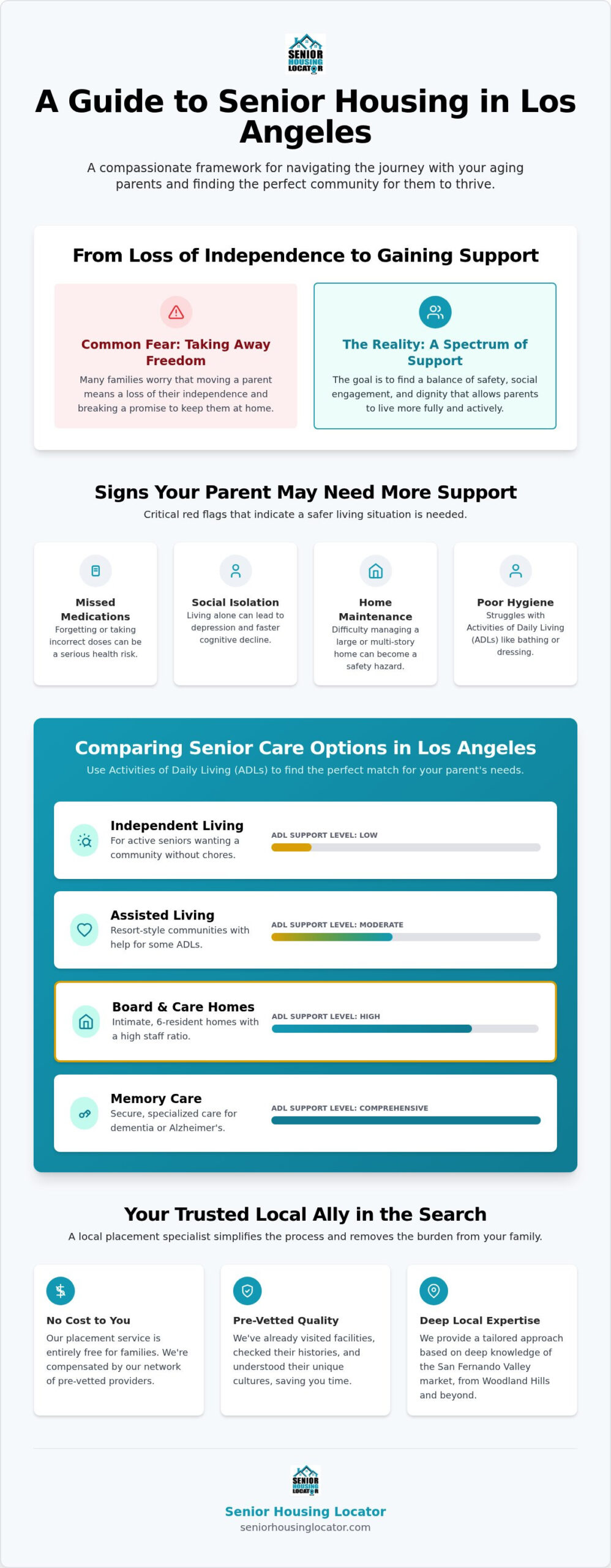
The decision to move a parent into a new environment is one of the heaviest choices a family can face. You might feel like you’re taking away their freedom or breaking a promise to keep them at home. It’s a common worry. However, it helps to reframe this transition. Choosing senior housing for aging parents isn’t about a loss of independence; it is about choosing a spectrum of support that allows them to live more fully. The core goal is to find a balance between safety, social engagement, and personal dignity. We see ourselves as a “Compassionate Facilitator” in this journey, helping you move from a place of high-stress uncertainty toward a clear, organized resolution.
Aging in Place vs. Senior Living Communities
Many families initially try to keep their parents at home through modifications like grab bars or by hiring in-home caregivers. While this works for a time, there often comes a point where the family home becomes a barrier rather than a sanctuary. Large, multi-story houses can be difficult to navigate and even more difficult to maintain. Beyond physical safety, there is the hidden cost of social isolation. Living alone in a large house often leads to depression and faster cognitive decline. Senior living communities offer a built-in social network that home care simply cannot replicate. They provide daily opportunities for connection, shared meals, and group activities that keep the mind sharp and the spirit high.
The Role of a Senior Living Advisor in Los Angeles
The Los Angeles market is vast and incredibly complex. From the quiet suburbs of Woodland Hills to the diverse neighborhoods across the San Fernando Valley, the options are endless. This is where a local placement specialist becomes your “Trusted Local Ally.” We act as a buffer for family stress, handling the initial research and vetting so you can focus on your parent’s emotional well-being. We help you understand what assisted living is and how it differs from a board and care home.
Our placement service is entirely free to families. We are supported by a network of pre-vetted providers who pay a referral fee, which means our expertise doesn’t add to your expenses. This model allows us to provide a tailored approach that considers your parent’s psychological, social, and budget needs without any high-pressure sales tactics. We have already done the hard work of visiting these facilities, checking their histories, and understanding their unique “vibes,” allowing you to feel well-advised and cared for throughout the process.
Comparing Care: Independent Living to Memory Care
Choosing the right senior housing for aging parents starts with understanding the specific level of support they need. In Los Angeles, the care landscape is generally divided into four categories: Independent Living, Assisted Living, Memory Care, and Board and Care homes. To find the right fit, we look at “Activities of Daily Living” (ADLs). These are the basic tasks your parent does every day, such as bathing, dressing, managing medications, and moving around safely. If your parent is mostly independent but wants to skip the chores, Independent Living is a great choice. However, if they need help with a few ADLs, it is time to look at more supportive environments.
For families who need help exploring these choices, Los Angeles County’s official senior services provide a wealth of local information. Having a clear picture of what is available helps you start the conversation with confidence.
Assisted Living vs. Board and Care Homes
Many families are surprised to learn about the diversity of senior housing for aging parents in our area. Assisted living communities are often large, resort-style buildings. They offer a wide range of amenities like movie theaters, gyms, and multiple dining rooms. These are fantastic for extroverted parents who enjoy being surrounded by people. But for a parent who prefers a quiet, familiar setting, these large buildings can feel overwhelming.
This is where the California “Board and Care” model shines. These are Residential Care Facilities for the Elderly (RCFEs) that operate out of traditional houses in residential neighborhoods. As detailed in our guide to Board and Care Homes in Woodland Hills, these homes typically serve only six residents at a time. This small scale allows for a very high staff-to-resident ratio and a much more intimate, family-like atmosphere. It is often the best choice for parents who need more hands-on attention or who find large groups stressful.
Memory Care and Specialized Dementia Support
Memory care is a distinct type of housing designed for those living with Alzheimer’s or other forms of dementia. While it shares some traits with assisted living, it includes vital security features like “wander guards” and secured outdoor courtyards. The layout of these communities is often circular to prevent confusion and frustration. Beyond physical safety, the social programming is built around cognitive health. Activities are tailored to stimulate memory and reduce the anxiety that often comes with cognitive decline. If you are noticing your parent is becoming increasingly confused or prone to wandering, our Memory Care Placement in San Fernando Valley resource offers a deeper look at how these specialized environments provide peace of mind for the whole family.
If you’re still unsure which path is right for your family, we can help you find a local care provider that fits your parent’s unique personality and physical needs.
Identifying the Right Time: Signs Your Parents Need More Support
Deciding when to look for senior housing for aging parents is rarely a single, dramatic moment. It is often a series of small, quiet realizations that something has changed. Many families go through a “denial phase” where they ignore these shifts because the alternative feels too painful. Parents want to keep their familiar surroundings, and adult children want to believe their parents are still invincible. However, waiting for a medical crisis usually limits your choices and increases family stress. Planning ahead is an act of love that protects your parent’s safety, dignity, and future happiness.
Physical and Cognitive Warning Signs
Start looking for specific red flags during your regular visits. Frequent falls or unexplained bruising are critical turning points that suggest the home is no longer a safe environment. We often suggest the “Refrigerator Test.” Open the fridge and check for spoiled food, a lack of fresh items, or a diet consisting only of frozen meals. This simple check reveals if they are eating well or if they are still able to manage the grocery store. You might also notice unopened mail, late payment notices, or sudden confusion with basic household technology. These are signs that the mental load of running a home is becoming too heavy to handle alone.
The Social and Emotional Decline
In a car-dependent city like Los Angeles, losing the ability to drive is a major blow to a senior’s independence. If your parent has stopped attending their usual social groups, religious services, or hobbies, they may be struggling with the logistics of getting around. This isolation often leads to increased anxiety or irritability. Watch for a withdrawal from long-term friendships or a sudden lack of interest in the news and local events. When social withdrawal is paired with poor personal hygiene or a messy home, it is a clear signal that they need a more supportive, social environment.
Finally, pay attention to your own health and stress levels. Caregiver burnout is a clear indicator that the current situation is no longer sustainable for the family. If you are exhausted, losing sleep, or constantly worried, you cannot provide the high-quality support your parent needs. Exploring senior housing for aging parents allows you to step back from the role of a full-time caregiver and return to being a supportive son or daughter. It restores the family balance while ensuring your parent is in a place where they can truly thrive.
The Search Process: Evaluating Senior Living in Los Angeles
Finding the right senior housing for aging parents in a place as large as the San Fernando Valley requires a structured approach. You aren’t just looking for a room; you’re looking for a neighborhood that matches your parent’s lifestyle. For instance, communities in Sherman Oaks often offer a more vibrant, urban energy with proximity to shops and cafes. In contrast, locations in Encino might provide a quieter, tree-lined residential feel. We recommend visiting at least three different communities to get a true sense of the local variety and what feels like home.
One of the best ways to see the reality of a facility is to visit at different times of day. A scheduled tour at 10:00 AM on a Tuesday will always show the “best” version of a community. Try dropping by on a Saturday afternoon or during a weekday dinner service. This allows you to observe real staffing levels and see how residents interact when the marketing team isn’t leading the way. Don’t be afraid to ask non-obvious questions. Ask the director about staff turnover rates, or how they handle a resident whose care needs suddenly increase. These details reveal the true stability of the environment.
What to Look for During a Facility Tour
When you walk through the doors, pay close attention to the atmosphere. Are the staff members greeting residents by name with a warm smile, or does the interaction feel clinical and rushed? Cleanliness is another major factor. We suggest the “Smell Test.” While the lobby might be pristine, take a walk through the side hallways and common areas to ensure the entire building is well-maintained. Finally, look at the dining menu. A high-quality community will offer a variety of fresh, nutritious options rather than a repetitive list of processed meals. Ask if you can stay for a meal to taste the quality for yourself.
Understanding the Total Cost of Care
In the Los Angeles market, pricing can be a major source of confusion for families. Most communities use a two-part pricing structure: a base rent for the apartment and additional “levels of care” fees. These care fees are based on the ADLs we discussed earlier, such as help with bathing or medication management. It is also important to factor in the local real estate trends, as Los Angeles costs are often higher than national averages. To help you plan your budget, we have created an Assisted Living Costs in Los Angeles guide that breaks down the 2026 pricing landscape in detail.
If you feel overwhelmed by the search, our team can help you narrow down your options based on your specific neighborhood preferences and budget.
Why Families Choose Local Placement Specialists
Choosing senior housing for aging parents shouldn’t feel like a cold, corporate transaction. When you work with us, you aren’t just getting a computer-generated list of facilities. You’re gaining a Neighborly Ally who lives and works right here in the San Fernando Valley. We’ve visited the communities, met the directors, and tasted the food. We know which homes have a vibrant social life and which ones provide the quiet, attentive care an introverted parent might prefer. Our pre-vetted network ensures that every recommendation we make meets high standards of safety and service, allowing you to move forward with peace of mind.
We believe that local expertise is the only way to truly understand a market as diverse as Los Angeles. A website can tell you the square footage of a room, but it can’t tell you if the staff treats residents like family. We do the heavy lifting by pre-screening facilities for regulatory compliance and quality of care. This saves you dozens of hours of research and prevents the frustration of visiting homes that don’t meet your standards or budget.
The Advantage of a Personalized, Full-Service Approach
We take the stress off your shoulders so you can focus on being a supportive son or daughter. Instead of spending your weekends on hold or getting lost in a sea of confusing websites, we handle the legwork for you. Our process is built on simplicity and order, moving you through these three vital steps:
- Curated Selection: We provide a shortlist of homes that match your parent’s specific physical needs and social personality.
- Tour Coordination: We schedule visits at times that work for your family, including those off-peak hours that reveal the true character of a community.
- Paperwork Support: We help you understand the residency agreements and what to expect during the move-in process.
Our goal is to act as your Senior Living Advisor Los Angeles, providing human-guided selection that respects your parent’s history and your family’s unique dynamics.
Our Commitment to Integrity and Core Values
Our service is entirely free to families because we believe everyone deserves access to expert guidance during this high-stress time. Since our referral fees are paid by the providers, our only priority is finding the right fit for your loved one. We’ve helped hundreds of families in Woodland Hills, Pasadena, and throughout the Greater LA area find a place where their parents can truly thrive. These success stories remind us that the right environment doesn’t just provide safety; it restores joy and connection for the whole family. If you’re ready to find a supportive, social environment for your parent, Contact Senior Housing Locator today for a free consultation.
Starting a New Chapter with Confidence
Finding the right senior housing for aging parents is a journey that requires patience, clarity, and local knowledge. You now have the tools to recognize red flags in the home and understand the differences between large communities and intimate board and care options. By focusing on your parent’s social personality and physical needs, you can turn a high-stress decision into a positive transition for the entire family. It is about moving toward a future where they are safe, social, and well-supported.
You don’t have to navigate the complex Los Angeles market alone. We specialize in Woodland Hills and San Fernando Valley care, providing a 100% free placement service for families. Our team offers compassionate, personalized support every step of the way to ensure your loved one finds a place where they can truly thrive. Let our local experts find the perfect home for your parent; start your free search now. We are here to help you regain your peace of mind and focus on being a family again. You’ve done the hard work of starting this process; let us help you finish it with confidence.
Frequently Asked Questions
How do I know if my parent needs assisted living or just home care?
You should consider assisted living when your parent’s safety is at risk or when their social isolation leads to depression. Home care is often a good bridge, but it doesn’t provide the 24/7 emergency response or the built-in community found in senior housing for aging parents. If you notice weight loss, missed medications, or a house that is no longer clean, a supportive community in the San Fernando Valley may offer a more sustainable solution.
Is there a difference between a board and care home and assisted living?
Yes, the primary difference is the scale and the environment. Assisted living communities are typically large, resort-style facilities with many amenities and social groups. Board and care homes are smaller, residential houses that usually care for only six residents. These homes in neighborhoods like Woodland Hills or Northridge offer a higher staff-to-resident ratio, making them a great fit for seniors who need more personalized, one-on-one attention in a familiar setting.
How much does senior housing for aging parents cost in Los Angeles?
Costs in Los Angeles vary significantly based on the neighborhood, the level of care required, and the type of room selected. Areas like Santa Monica or Pasadena often have higher price points compared to parts of the San Fernando Valley. Most communities charge a base monthly rent plus additional fees for specific help with daily tasks. We recommend looking at total monthly expenses, including utilities and meals, to get an accurate comparison of different housing options.
Can I move my parent to senior living if they have dementia?
Absolutely, but you should look specifically for memory care placement. These specialized wings or standalone buildings are designed for residents with cognitive impairments. They feature secured outdoor spaces, wander-prevention technology, and staff trained in dementia care. Whether in Encino or Burbank, these communities focus on reducing anxiety through structured routines and cognitive activities, ensuring your parent stays safe while maintaining the highest possible quality of life during their transition.
What happens if my parent refuses to move to senior housing?
It is very common for parents to resist leaving their family home. We suggest starting the conversation early and focusing on their safety rather than their “need for care.” Sometimes, a trial stay or a visit for a meal can help lower their defenses. If the situation is becoming unsafe, involving a neutral third party, like a local placement specialist, can reduce family conflict and help your parent feel like they are part of the decision-making process.
Is your senior placement service really free for families?
Yes, our placement and referral services are 100% free for families. We generate revenue through referral commissions paid by the senior living facilities and care providers after a successful placement is made. This model allows us to act as your “Trusted Local Ally” without adding any financial burden to your search. Our priority is always finding the right fit for your parent’s care requirements, budget, and preferred location in the greater Los Angeles area.
How long does the placement process usually take in the San Fernando Valley?
The timeline depends on the urgency of your situation. In an emergency, we can often help families find a suitable board and care or assisted living community within 24 to 48 hours. For families planning ahead, the process usually takes two to four weeks. This allows time for multiple tours in neighborhoods like Sherman Oaks or Granada Hills, medical assessments, and the coordination of the actual move to ensure a smooth transition.
What are the most important questions to ask during a tour?
Focus on the quality of life and the stability of the care. Ask about the staff-to-resident ratio during the night shift and the average staff turnover rate. You should also ask how the community handles changes in care needs; will your parent have to move rooms if they need more help? Finally, inquire about the specific social programming available to ensure it matches your parent’s hobbies, whether they enjoy gardening, music, or group outings in the local community.