
What if the term “retirement home” didn’t mean losing independence, but actually gaining a vibrant community and a higher quality of life? Most families feel a mix of confusion over industry jargon and a heavy weight of guilt when they start this search. It’s natural to worry about the high cost of care in Los Angeles or wonder if your loved one will truly feel at home. You aren’t alone in these feelings. Your desire to keep your family safe, social, and supported is exactly what matters most.
We’ve created this guide to replace your anxiety with a sense of order. You’ll discover the different levels of care, learn how to evaluate various senior living options, and see how new 2026 California transparency laws protect your family. We’ll walk through the specific costs across the San Fernando Valley and Greater Los Angeles so you can plan with confidence. This article provides a clear roadmap to find a place that offers professional care, meaningful connections, and true peace of mind.
Key Takeaways
- Discover how the modern retirement home has evolved into a vibrant, lifestyle-oriented community that prioritizes social connection and well-being.
- Learn to distinguish between independent and assisted living to ensure your loved one receives the exact level of support they need.
- Master the “Scent and Sight” test to evaluate the true quality of a facility beyond the initial marketing impression.
- Gain clarity on how senior living costs vary by neighborhood across Los Angeles and the San Fernando Valley.
- Find out how a local advisor simplifies the search process and provides up-to-date, community-specific insights for free.
Understanding the Modern Retirement Home: Beyond the Stereotypes
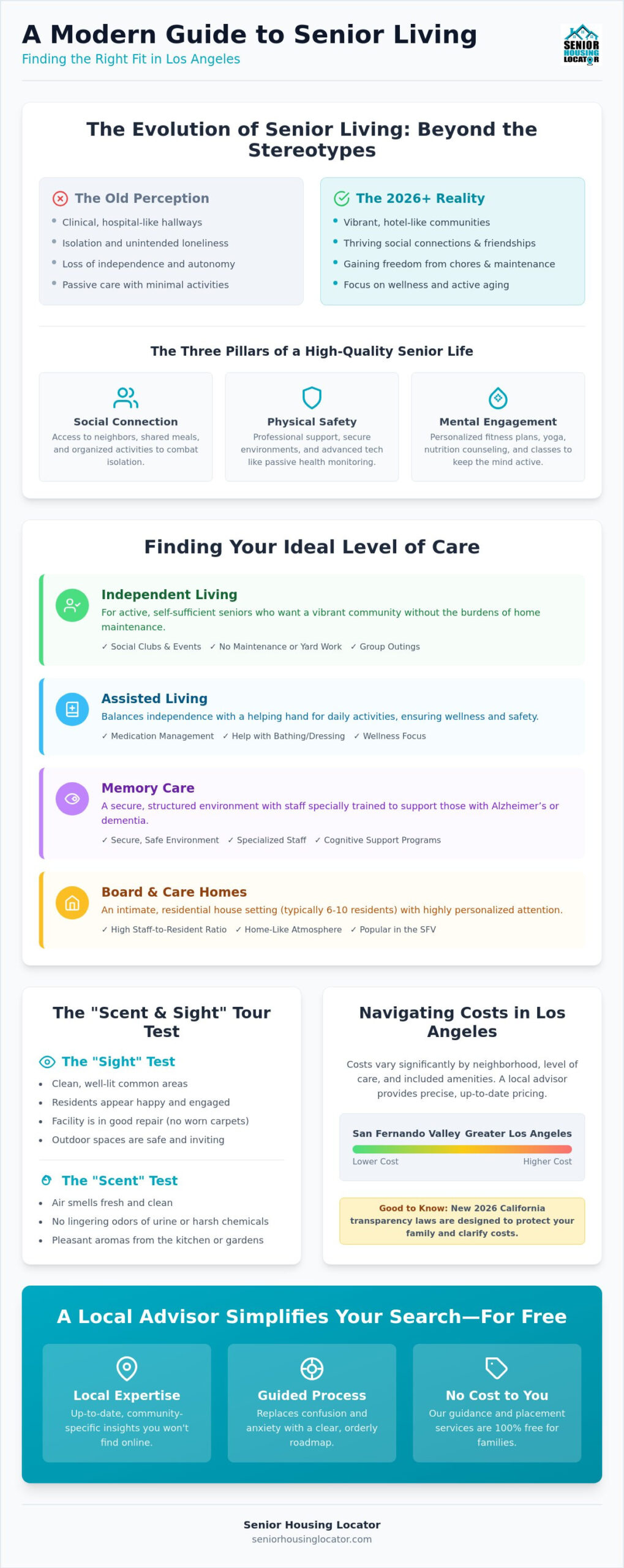
A retirement home is much more than just a place to live. In 2026, these communities act as residential hubs where seniors find a balance of privacy and support. For many families, the term still brings up images of clinical hallways and hospital beds. However, the industry has undergone a massive transformation. Today, a modern community feels more like a boutique hotel or a well-appointed apartment complex than a medical facility. It’s a place where life continues to be lived fully and vibrantly.
Why has this shift happened? It’s because we’ve learned that quality of life depends on three main pillars: social connection, physical safety, and mental engagement. While staying in a long-time family home sounds ideal, it often leads to unintended isolation. Many seniors find themselves alone for long stretches, which can impact their emotional health. Moving to a community provides immediate access to neighbors, shared meals, and organized activities. It’s about trading the burdens of home maintenance for the freedom to enjoy life, whether that means exploring local parks or planning a dream trip with South Louisiana Redfishing.
The Shift Toward Lifestyle and Wellness
Modern communities now prioritize active aging. Instead of passive care, they offer personalized fitness plans, yoga classes, and nutrition counseling. You’ll often see demonstration kitchens and high-quality recreational amenities that rival luxury resorts or the sophisticated atmosphere of premier Hollywood event spaces like Serra On Vine. By 2026, many facilities have integrated advanced technology like smart home devices and passive health monitoring. This tech ensures residents stay safe while maintaining their privacy. Staying at home without these supports can sometimes lead to a shrinking social circle. In a community, that circle expands again.
Common Misconceptions About Senior Living
The biggest myth is that moving to a retirement home means losing your independence. In reality, it’s often the opposite. When you don’t have to worry about cooking, cleaning, or yard work, you have more energy for the things you actually love. Residents maintain a high degree of autonomy. They keep their own schedules, host guests, and often bring their beloved pets along. It isn’t about being tucked away. It’s about choosing a lifestyle that offers a helping hand exactly when it’s needed. This support allows seniors to focus on their well-being rather than their chores.
Even for those not yet ready for a move, outsourcing difficult outdoor tasks is a great middle ground; for instance, homeowners in regions like Central Texas can discover We Love Trees to see how professional arborist services keep a property safe and well-maintained.
Similarly, for those in Southern California looking to age in place comfortably, installing premium, low-maintenance outdoor structures from Elite L.A. Patios can transform a backyard into a safe and inviting space for family gatherings and relaxation.
Additionally, maintaining a secure environment is crucial for peace of mind at any age; you can discover Broadway Security Services to see how professional guarding solutions support safety for California businesses and residential facilities alike.
The Spectrum of Senior Living: Finding Your Ideal Care Level
Choosing the right environment for your loved one starts with understanding the full spectrum of senior living options. It’s common to feel overwhelmed by the choices. You might be looking for a vibrant social scene, or perhaps your parent needs a little extra help with their morning routine. Each type of community offers a different balance of freedom and support. Identifying the right fit ensures that the move to a retirement home feels like a positive step forward rather than a compromise.
Independent living is designed for active seniors who want to say goodbye to home maintenance and cooking. These communities offer private apartments, social clubs, and group outings. Moving to a retirement home doesn’t have to mean slowing down; it’s often about opening up new opportunities for engagement. On the other hand, assisted living provides the same social benefits but adds a layer of personal care. This includes help with bathing, dressing, or managing medications. For those facing Alzheimer’s or dementia, memory care offers a secure, structured environment with staff specifically trained in cognitive support.
Independent vs. Assisted Living: What’s the Difference?
The main distinction lies in the level of daily medical and personal support. Independent living residents are generally self-sufficient. Social programming here often focuses on high-energy activities like fitness classes or travel clubs. In assisted living, the focus shifts slightly toward wellness and safety. You might notice that a transition becomes necessary when a loved one starts skipping meals, forgetting medications, or experiencing frequent falls. If you’re unsure which level is right for your situation, our local advisors can help you assess current needs.
The Board and Care Model in the San Fernando Valley
In the Los Angeles area, many families prefer a more intimate setting. Board and care homes are private residential houses converted into senior living spaces. They usually house six to ten residents. Families in Woodland Hills and Sherman Oaks often choose these because they feel less institutional. One major benefit is the high staff-to-resident ratio. Because the setting is smaller, caregivers can provide highly personalized attention. If you are exploring this option, you can learn more about board and care homes Woodland Hills to see if a residential environment fits your loved one’s personality.
Evaluation Framework: What to Look for When Touring Facilities
Walking into a potential retirement home for the first time can feel overwhelming. It is easy to be dazzled by a grand fireplace or a luxury lobby. However, the most important details often hide in the quiet moments between the tours. To find the right fit, you need to look past the marketing and focus on the daily reality of the residents. This evaluation process is about ensuring your loved one feels seen, heard, and respected in their new environment.
Start with the “Scent and Sight” test. A well-run community should smell fresh and clean, but not like heavy bleach or overwhelming perfumes. Look at the residents in the common areas. Are they dressed for the day and engaged in conversation, or do they seem isolated? Watch the staff interactions closely. Do caregivers use residents’ names? Do they make eye contact and offer a warm smile? These small gestures are the best indicators of a culture built on genuine empathy rather than just professional duty.
Don’t forget to examine the culinary experience and the social calendar. Ask to see a real meal being served, and check if the menu offers variety and nutritional balance. A vibrant social life is also vital for mental health. Look for an activity calendar that includes more than just bingo. In 2026, modern communities should offer diverse options like local outings, fitness classes, and technology workshops; for extra support, 55 Plus Computer Help LLC provides specialized training to help seniors master their personal devices.
Social and Psychological Needs
Every senior has a unique personality that needs to be nurtured. Does the community culture match your parent’s hobbies and temperament? Ask how the facility handles resident feedback. Effective July 1, 2026, California law requires facilities to provide more transparency regarding their operations. Use this to your advantage by asking to see their latest resident satisfaction surveys or community meeting notes. A home that values resident input is one where your loved one will maintain their sense of agency.
Safety and Staffing Standards
Safety is the foundation of your peace of mind. Check for emergency pull cords and grab bars in the private rooms. Ask specific questions about staff-to-resident ratios during the night shift. You should also inquire about staff turnover. Consistent care comes from long-term employees who know your loved one’s preferences and medical history. Finally, ask about their protocol for medical emergencies. You need to know exactly how they coordinate with local hospitals and how quickly you will be notified if a situation arises.
Navigating Retirement Home Costs in Los Angeles and the SFV
Talking about money is often the hardest part of the senior living journey. In a high-cost area like Los Angeles, the numbers can feel intimidating. It’s common to feel a sense of sticker shock when you first look at the price tag of a retirement home. However, understanding how these costs are structured can help you find a path that fits your family budget. Most communities use a two-part pricing model: a base rate for the apartment and a separate fee for the level of care provided. This ensures you only pay for the support your loved one actually needs.
You should also be mindful of hidden costs that aren’t always in the initial quote. Many facilities charge a one-time community fee upon move-in. Others may have separate charges for medication management, specialized diets, or transportation. To help manage these expenses, many families look into financial strategies like long-term care insurance or veterans benefits. Programs like the VA Aid and Attendance benefit can provide significant monthly support for those who qualify. Planning early allows you to explore these options without the pressure of an immediate crisis.
Comparing Costs Across Care Levels
The type of care you choose has the biggest impact on your monthly bill. Independent living is generally the most affordable option because it doesn’t include medical or personal care. In contrast, memory care is the most expensive due to higher staffing requirements and specialized programming. If you’re looking for a more predictable budget, board and care homes often use an all-inclusive model. This makes it easier to track your spending compared to larger communities with complex add-on fees. For a deeper dive into local market averages, see our assisted living costs Los Angeles guide.
Local Pricing Trends in 2026
Location plays a massive role in what you’ll pay. Los Angeles real estate prices directly influence the cost of senior housing. Coastal neighborhoods like Santa Monica or West LA command premium rates, while the San Fernando Valley often offers more manageable options. Areas like Granada Hills or Northridge are frequently seen as “hidden gems” where you can find high-quality care at a better value. Working with a local advisor is the best way to uncover these opportunities. We have “boots on the ground” knowledge of which facilities offer the best balance of care and cost. You can find a senior housing locator to help you compare local rates for free.
Simplifying Your Search with a Local Senior Living Advisor
Searching for the right senior living option is a massive task. Many families start by scrolling through massive online directories. Unfortunately, these lists are often outdated or biased toward whoever pays the most for a listing. You might call a retirement home only to find out they have no vacancies or their pricing has changed since the last update. This leads to wasted time and increased stress during an already emotional period. You don’t have to carry this burden alone.
A local advisor acts as your “boots on the ground” in Los Angeles. We don’t just look at websites; we walk the hallways of these communities regularly. We know which places have stable management and which ones provide the best care for specific medical needs. Because our referral service is free for families, you get expert guidance without adding to your expenses. We handle the heavy lifting of narrowing down choices. This allows you to focus on supporting your loved one rather than managing spreadsheets and endless phone calls.
The transition from the initial search to moving day involves many moving parts. An advisor helps streamline this entire process. We coordinate tours, ask the tough questions you might not think of, and help you review the paperwork. Our goal is to ensure that when you finally choose a community, you feel a sense of total confidence. We want you to know your loved one is moving into a safe, social, and supportive environment.
Why a Local Specialist Matters
Every neighborhood in the San Fernando Valley has its own personality. A facility in Woodland Hills might offer a completely different culture than one in Northridge. A senior living advisor Los Angeles families trust can match your loved one’s hobbies and medical requirements to the right community. We help you look past the fresh paint to see the true quality of care. This personalized approach ensures the transition to a retirement home is smooth and successful for everyone involved.
Next Steps for Your Family
Starting the conversation with a parent or relative is often the hardest hurdle. It helps to approach the topic with curiosity rather than a set plan. Ask them about their worries or what they might enjoy in a new community. Listen to their concerns about independence and safety. Once you are ready to explore, booking a free consultation is the next logical step. We can help you compare care levels and tour the best options in your area. Let us help you find the perfect retirement home for your needs.
Finding Confidence in Your Senior Living Choice
Choosing a retirement home for your family is a journey that starts with clarity and ends with lasting peace of mind. You now have the tools to look past lobby aesthetics and evaluate the true quality of care, staff engagement, and social vibrancy. By understanding the different care levels and localized pricing trends across Los Angeles, you can make a decision rooted in facts rather than fear. This process is deeply personal. It doesn’t have to be a solo burden for you to carry.
Our team offers a free placement service for families, bringing expert local knowledge of the San Fernando Valley to your search. We specialize in creating compassionate, personalized care plans that ensure your loved one feels safe and supported. You can Find the Right Retirement Home Today by scheduling a consultation with our local advisors. Taking this first step replaces uncertainty with a clear, manageable roadmap. You’ve done the hard work of researching; now let us help you find the perfect community where your loved one can truly thrive.
Frequently Asked Questions
What is the average age of residents in a retirement home?
Residents in a retirement home are typically in their early to mid-80s. While many active seniors move in during their late 70s, the average age has trended higher as people stay independent at home for longer. Most communities design their social calendars and fitness programs to support the needs and interests of this age group.
Does Medicare pay for retirement home or assisted living costs?
Medicare does not pay for the monthly room and board costs of a retirement home or assisted living facility. It is strictly designed to cover medical services, hospital stays, and short-term stays in a skilled nursing facility for rehabilitation. Most families use private funds, long-term care insurance, or veterans benefits to cover these residential expenses.
Can I bring my pet to a retirement home in Los Angeles?
Most senior living communities in Los Angeles are pet-friendly and welcome small dogs, cats, or birds. You’ll usually find specific weight limits and breed restrictions, and the facility may require a one-time pet deposit. Having a beloved pet can ease the transition and provide vital emotional support during the move.
What is the difference between a nursing home and a retirement home?
The primary difference is the level of medical supervision. A nursing home is a clinical, hospital-like setting for people with complex medical needs who require 24-hour nursing care. A retirement home is a residential environment that focuses on lifestyle and socialization, offering help with daily tasks like bathing or medication management.
How do I know if my parent is ready for a retirement home?
You might notice signs like frequent falls, missed medications, or a fridge full of expired food. Social isolation and a decline in home maintenance are also common indicators that a change is needed. Starting the conversation early helps ensure the move is a choice made with dignity rather than a reaction to a crisis.
What happens if my loved one’s care needs increase over time?
Most communities offer a continuum of care that allows residents to “age in place” as their needs evolve. If a resident starts in independent living but later requires help with mobility or memory support, they can often transition to a higher care level within the same building. This prevents the emotional stress of moving to an entirely new facility.
Are there retirement homes in Woodland Hills that offer private rooms?
Yes, Woodland Hills features many options with private rooms, from large assisted living communities to smaller, residential board and care homes. Many families in the San Fernando Valley prefer private rooms to ensure their loved ones have a personal sanctuary while still benefiting from 24-hour professional support and social activities.
How long does the placement process typically take?
The placement process can take anywhere from a few days to several weeks depending on the urgency. In an emergency, we can often find a safe and suitable home within 48 to 72 hours. However, a typical search usually lasts two to four weeks to allow for thorough tours, medical assessments, and a relaxed moving schedule.