
Imagine standing in your parent’s sunlit living room, watching them struggle to remember a simple daily task, and feeling a heavy knot of guilt tighten in your chest. You want them to stay in the home they love, but you know their safety now depends on more specialized support than you can provide alone. Finding the right memory care woodland hills offers is a heart-wrenching necessity that nearly 190,300 families across Los Angeles County are facing as dementia rates rise in 2026.
It’s completely normal to feel overwhelmed by the variety of local senior living choices or to worry about whether a community provides enough wandering protection. You want a secure environment that feels like a real home, not a clinical facility. We understand these fears and are here to act as your trusted local ally, helping you remove the burden of researching every option on your own.
Our expert guide provides the clarity you need to navigate this transition with confidence. You’ll learn about the latest local care options, the vital differences between memory care and board and care homes, and professional placement strategies to find the best fit for your family’s unique needs.
Key Takeaways
- Discover why Woodland Hills is a premier location for specialized dementia care and how local regulations protect your loved one in 2026.
- Compare the benefits of large-scale communities and residential board and care homes to find the right memory care woodland hills setting.
- Identify the essential safety features and specialized nutrition programs that prevent wandering and support daily well-being.
- Follow a clear, step-by-step guide to starting the transition conversation and conducting effective surprise tours of local facilities.
- Learn how to access professional placement support to narrow down your choices and handle the logistical heavy lifting for free.
Understanding Memory Care Needs in Woodland Hills
Memory care woodland hills is a specialized form of senior living created specifically for those living with Alzheimer’s or other forms of dementia. It goes far beyond basic assistance. While what is assisted living focuses on helping with dressing or bathing, memory care is built around cognitive safety and engagement. It provides a secure environment where your loved one can navigate their day without the risk of getting lost or feeling overwhelmed by a chaotic layout.
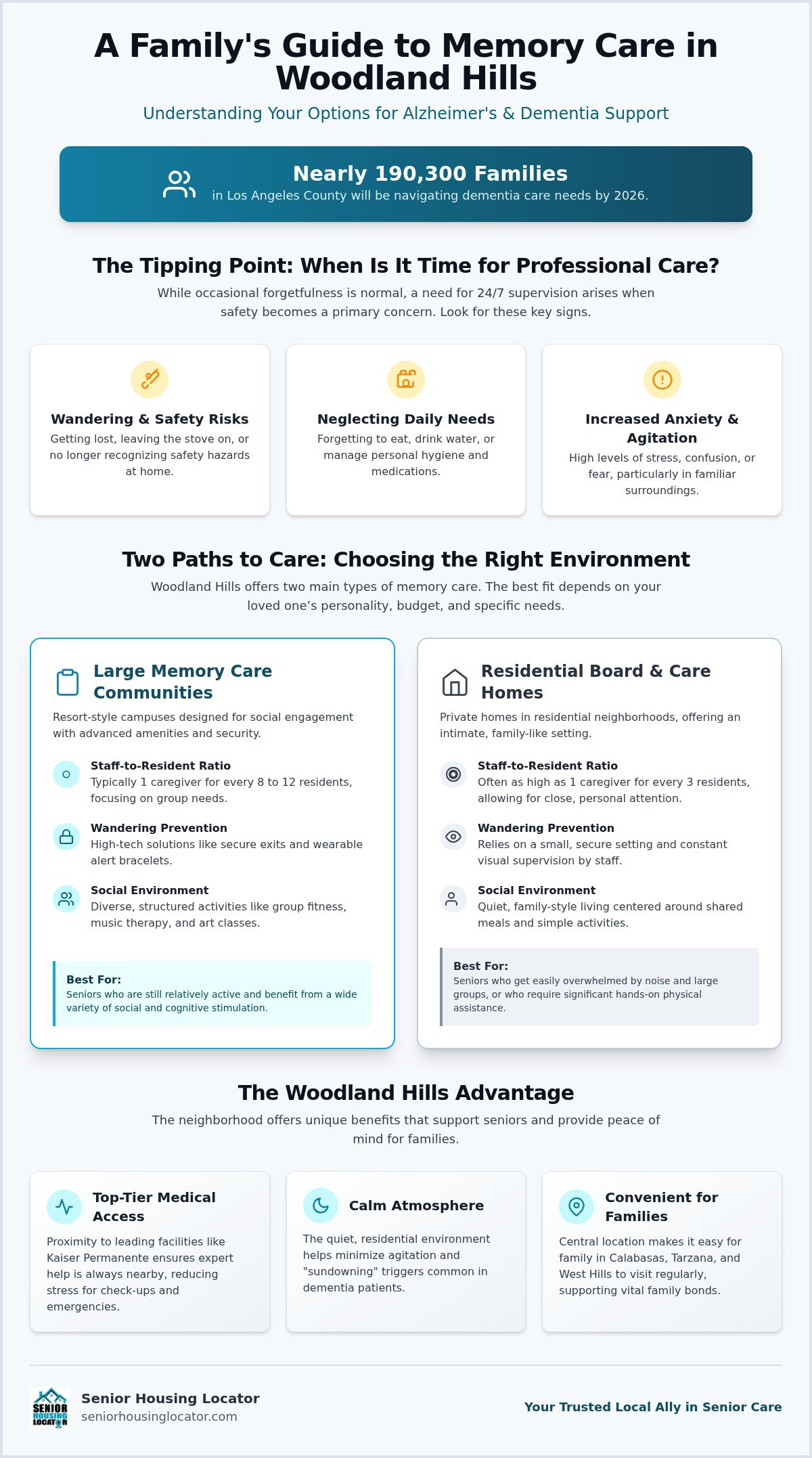
How do you know when it’s time to move beyond home care? The decision often comes down to safety. Occasional forgetfulness is a part of aging, but a need for 24/7 supervision arises when a person can no longer recognize safety hazards. If your parent is wandering, forgetting to eat, or experiencing high levels of anxiety at home, they’ve likely reached the “tipping point.” At this stage, professional intervention ensures they’re protected and cared for by staff trained in dementia-specific behaviors. It’s about moving from a state of constant worry to a structured environment of support.
Dementia vs. Alzheimer’s: What it Means for Care
Families often feel confused by medical terminology. Dementia is a broad term for memory loss, while Alzheimer’s is the most common cause. When you explore memory care vs assisted living, you’ll see that memory care is designed to handle the specific challenges of these conditions. Local facilities use person-centered care models. These programs focus on the resident’s remaining strengths rather than their losses. Caregivers adapt to different stages of cognitive decline, ensuring that a resident in the early stages stays active while someone in the later stages receives the gentle, sensory-based support they need.
Local Benefits of Woodland Hills for Seniors
Woodland Hills is a premier choice for memory care in the San Fernando Valley for several reasons. First, the proximity to top-tier medical facilities like Kaiser Permanente Woodland Hills provides peace of mind for families. If a medical emergency or a routine check-up is needed, expert help is right around the corner. This proximity reduces the stress of long commutes for fragile seniors.
The neighborhood itself offers a quiet, residential atmosphere. This calm environment is essential for reducing “sundowning” triggers, which are the bursts of agitation that many dementia patients experience as the sun sets. Finally, the central location makes it highly accessible. Families living in Calabasas, Tarzana, and West Hills find it easy to maintain regular visits. Frequent visits are vital for the emotional well-being of both the senior and their children, keeping family bonds strong during a difficult season.
Evaluating Local Options: Memory Care Communities vs. Board and Care
Finding the right memory care woodland hills offers often means choosing between two distinct models of care. On one hand, you have large-scale communities that feel like specialized senior resorts. On the other, you have residential board and care homes that look and feel like a standard family house. Both models provide essential safety, but the best choice depends on your loved one’s personality, their budget, and their specific medical needs. It’s a high-stakes decision, but understanding the core differences can bring a sense of order to the process.
The most pressing concern for many families is wandering prevention, also known as “elopement” risk. Large communities typically use high-tech solutions, such as wearable bracelets that alert staff if a resident nears an exit. In contrast, board and care homes rely on their small size and constant visual supervision. Staff-to-resident ratios also vary significantly. In a larger Woodland Hills community, you might see one caregiver for every eight or twelve residents. In a residential board and care home, that ratio often improves to one caregiver for every three residents. This level of attention is often the deciding factor for seniors who need frequent physical assistance or emotional reassurance.
The Benefits of Larger Memory Care Communities
Large-scale communities are designed for active engagement and cognitive stimulation. They offer a robust environment that includes three key pillars of support: professional medical coordination, diverse social programming, and advanced security features. Residents can enjoy secure outdoor courtyards, group fitness classes, and specialized music therapy. These activities are carefully scheduled to reduce the anxiety that often comes with unstructured time. For families looking for more ways to support their loved ones, Alzheimer’s Association caregiving resources offer excellent tips on how these social interactions can improve daily life.
Why Families Choose Board and Care Homes in Woodland Hills
Some seniors find large buildings and long hallways confusing or frightening. A 6-bed residential setting is much easier to navigate and feels familiar. Families choose this model because it offers an intimate atmosphere, home-cooked meals, and a much slower pace of life. It’s a neighborly approach to care where caregivers know every resident’s favorite snack or morning routine. If you want to explore this more personal option, read our detailed guide on board and care homes Woodland Hills. If you’re still feeling stuck between these two choices, speaking with a local senior placement expert can help you weigh the pros and cons for your specific situation.
Key Features of Top Woodland Hills Memory Care Communities
When you begin touring facilities, it’s easy to get distracted by beautiful lobbies or manicured gardens. While aesthetics are nice, the true value of memory care woodland hills lies in the specialized features that support cognitive health and physical safety. High-quality communities prioritize a secure perimeter and advanced monitoring systems that allow residents to move freely without the risk of wandering into unsafe areas. These systems aren’t meant to be restrictive; they’re designed to give your loved one independence within a protected boundary.
Safety is also about the people providing the care. In California, direct-care staff in these facilities must complete at least 6 hours of dementia-specific training during their initial orientation and 8 hours annually thereafter. These California dementia care standards ensure that the team understands how to de-escalate agitation and provide compassionate support during difficult moments. Beyond safety, look for specialized nutrition programs. Many dementia patients face dining challenges like forgetting to eat or getting overwhelmed by too many choices. Top local homes use finger foods, high-contrast plates, and quiet dining rooms to ensure residents maintain proper nutrition.
Engagement is the final piece of the puzzle for memory care woodland hills. Leading communities offer a variety of cognitive therapies that go beyond simple crafts. You might see reminiscence rooms filled with vintage items to spark long-term memories, music therapy sessions to boost mood, or regular visits from therapy animals. These activities are carefully chosen to reduce anxiety and promote a sense of accomplishment. They help residents feel seen and valued, even as their cognitive abilities change.
Architectural Design for Cognitive Support
The physical layout of a building can either cause frustration or provide comfort. Many top-tier Woodland Hills communities use circular hallways to prevent the “dead-end” frustration that can lead to agitation in wanderers. Color-coded wings and personalized shadow boxes outside each room help residents recognize their own space. Additionally, natural lighting plays a vital role in regulating circadian rhythms. This helps reduce the sleep disturbances often associated with dementia, leading to more restful nights and calmer days.
Family Support and Communication
Moving a parent is an emotional journey for you, too. The best facilities offer family support groups and digital portals that provide real-time updates on your loved one’s daily activities. This transparency helps ease the guilt of the transition and keeps you connected to their daily life. If you’re feeling overwhelmed by the technical details of these features, a senior living advisor Los Angeles can help you vet these communities. They ensure the facility meets your high standards for care and communication.
Navigating the Transition: A Step-by-Step Guide for Families
Deciding to move a loved one into memory care woodland hills is a deeply personal choice that often comes with a mix of relief and sadness. This transition is about providing a higher level of safety and engagement than a traditional home can offer. Start the conversation early by focusing on the “we” instead of the “you.” Discussing care options as a family team helps reduce the feeling of being pushed out of a home. When you are ready to visit communities, look past the decor. Pay attention to the residents’ faces, the cleanliness of the common areas, and the general mood of the building.
Vetting for Safety and Integrity
Reliability is the foundation of good care. You can verify a facility’s history by checking the California Department of Social Services (CDSS) for recent citations or inspections. During a tour, observe how the staff interacts with residents who are confused or agitated. Are they patient, empathetic, and calm? You should also ask about the community’s philosophy on “aging in place.” This helps you understand if they can accommodate your loved one as their dementia progresses, or if another move will be required later.
Managing the Financial Burden
Financial clarity is essential for long-term peace of mind. Gaining a clear understanding of assisted living costs Los Angeles is the first step, as memory care typically includes additional premiums for specialized staffing. Many families in the San Fernando Valley fund this care through a combination of long-term care insurance, Veterans Benefits, or the sale of a family home. If you’re currently in the process of selling a house, bridge loans can provide the short-term capital needed for a move-in deposit. Using a free referral service is a smart way to find top-tier memory care woodland hills communities that fit your specific budget without the stress of cold-calling dozens of facilities.
On move-in day, focus on creating a sense of familiarity. Bring cherished items like family photos, a favorite bedspread, or a familiar lamp. These small touches help ground a resident in their new environment and minimize the risk of transfer trauma. Keep your departure brief and follow the facility’s advice on the best way to say goodbye for the day. This structured approach helps your loved one settle in more quickly and gives you the space to begin your own healing process. Stay positive.
How Senior Housing Locator Simplifies Your Local Search
Searching for memory care woodland hills shouldn’t feel like a second full-time job. We act as your “Compassionate Facilitator” to take the weight off your shoulders during this high-stress time. Our goal is to provide a helping hand that prioritizes your peace of mind and your loved one’s comfort. We focus on three main areas: simplifying the search, vetting the quality, and matching your specific budget. Because we are a free service for families, our only priority is finding the right home. The facilities pay our referral fee, so you get expert guidance without any added financial burden.
We believe in a personalized approach. Every senior has a unique story, and their care should reflect that. We tailor our searches based on the required care level, your financial range, and the social needs of your parent. Does your loved one enjoy quiet afternoons in a garden, or do they thrive in a lively environment with music and group activities? We find the specific match that feels like a true home rather than just a facility. By narrowing down the best memory care woodland hills options, we help you move from a state of uncertainty toward a clear, confident resolution.
The Advantage of a Local Advisor
Why does deep local knowledge of the San Fernando Valley matter? Glossy brochures always look perfect, but they often hide the “red flags” that families only discover after moving in. We know which Woodland Hills communities have stable, long-term staff and which ones have recently updated their dementia care certifications. We have already done the heavy lifting of pre-vetting assisted living placement Woodland Hills options. This expertise saves you dozens of hours of research and prevents the frustration of making endless, stressful phone calls to places that don’t fit your needs.
Your Next Steps to Peace of Mind
You don’t have to do this alone. We provide a logical, step-by-step path from uncertainty to a clear resolution. Your journey to finding the right support starts with three simple actions:
- Request a free consultation: We’ll discuss your loved one’s unique medical and social needs in a calm, supportive environment.
- Schedule guided tours: We’ll help you visit the most appropriate local communities so you can see the care in action.
- Join our community: Connect with other families who have successfully navigated this transition and found security for their parents.
We are your trusted local ally, rooted deeply in the Woodland Hills community. Let us handle the complex logistics so you can focus on being a supportive daughter or son. Your peace of mind is just a conversation away.
Finding Confidence in Your Next Step
You now have a clearer understanding of how to distinguish between large-scale communities and intimate board and care homes. You know which safety features to prioritize and how to verify staff training standards. Selecting the right memory care woodland hills provides is a significant decision, but you’ve gained the knowledge needed to choose with clarity and compassion. This transition is about moving from a state of worry to a state of security for your entire family.
Our personalized referral service is designed to handle the heavy lifting at zero cost to your family. We leverage our expert knowledge of San Fernando Valley senior living regulations and our commitment to resident safety to find the best possible match for your budget and care needs. You don’t have to navigate these complex choices without a trusted local ally by your side to vet the options and schedule the tours.
We are here to help you turn a stressful transition into a manageable, structured process. Your parent deserves a secure environment that feels like home, and we’re ready to help you find it. You’ve got this, and we’re ready to help whenever you’re ready to start.
Frequently Asked Questions
What is the average cost of memory care in Woodland Hills for 2026?
Costs for memory care woodland hills vary based on the level of luxury, the size of the room, and the intensity of care required. In 2026, prices in the San Fernando Valley reflect the high demand for specialized dementia staff and secure environments. Generally, these rates are higher than standard assisted living because they include 24-hour supervision and specific cognitive programming tailored to your loved one’s needs.
How is memory care different from standard assisted living?
Memory care provides a higher level of security and specialized programming that standard assisted living does not offer. While both help with daily tasks like bathing and dressing, memory care is housed in a secure wing or building to prevent wandering. Staff also receive specific dementia training to handle behavioral changes, agitation, and communication challenges common in those living with Alzheimer’s or other dementias.
Can my parent stay in a board and care home if they have advanced dementia?
Yes, many residential board and care homes in Woodland Hills are equipped to handle residents with advanced dementia. These homes offer a much smaller staff-to-resident ratio, which allows for more personalized, one-on-one attention. You should verify that the specific home has a dementia care waiver and a secure perimeter to ensure your parent’s safety as their cognitive needs increase over time.
Does Medicare pay for memory care in California?
Medicare does not cover the costs of memory care, assisted living, or other long-term residential care in California. It generally only covers short-term stays in skilled nursing facilities or medical costs like doctor visits and medications. Families often use long-term care insurance, personal savings, or Veterans Benefits to bridge the gap in funding for these essential residential services.
What security features should I look for in a Woodland Hills memory care facility?
You should look for a combination of physical barriers and high-tech monitoring systems to ensure resident safety. Key features include alarmed exits, secure outdoor courtyards, and wearable technology that alerts staff if a resident nears a doorway. It is also helpful to look for “stealth” security, such as keypad entries disguised as bookshelves, which prevents residents from feeling trapped or frustrated.
How do I know if my parent is ready for memory care?
Readiness is usually marked by safety concerns, such as wandering, forgetting to turn off appliances, or experiencing significant weight loss. If you find that 24/7 supervision is necessary to keep them safe, or if your own health is suffering due to caregiver burnout, it is time to consider a move. A professional assessment can help you determine if their cognitive needs have outpaced home care.
Is there a waiting list for the best memory care communities in the San Fernando Valley?
Waiting lists are common for the most reputable memory care woodland hills options, especially for private rooms or specific board and care homes. Availability can change quickly, so it is wise to start your search early. We recommend touring several communities and placing your name on a few lists to ensure you have a secure spot when the transition becomes a physical or emotional necessity.
What happens if my parent wanders or tries to leave the facility?
Facilities use structured protocols and secure environments to manage wandering and prevent “elopement.” If a resident attempts to leave, staff are trained to use gentle redirection and calming techniques to guide them back to a safe area. The physical layout, including circular hallways and secure gardens, allows residents to walk freely without the risk of accidentally exiting the building or getting lost in the neighborhood.