
What if the most beautiful house on the block is actually the wrong choice for your mother’s care? It is easy to be charmed by a freshly painted living room, but true quality lies in the chemistry between caregivers and residents. Knowing the right questions to ask a board and care home is the only way to see past the decor and understand the daily experience of the people living there. We know the weight of this decision feels heavy. It is normal to worry about staff quality or feel confused about how these small homes differ from large facilities. You aren’t alone, and your intuition is your best tool when you have the right information.
This guide provides the list you need to tour with total confidence. You will learn how to navigate California’s 2026 transparency laws, which now require homes to disclose pricing and staffing ratios before you sign any contract. We will walk through twenty-five essential checkpoints, from new dementia care standards to evening staffing levels, to help you find a home where your loved one will thrive. By the end, you will have a concrete list to bring to every tour, ensuring you spot a high-quality home immediately.
Key Takeaways
- Understand why the intimate 1:3 or 1:4 staff-to-resident ratio makes these homes a warm, personalized alternative to large, corporate communities.
- Use our specific questions to ask a board and care home to gain clarity on caregiver experience, overnight staffing, and team stability.
- Learn how to check California licensing records to ensure any home you consider meets the highest standards for safety and integrity.
- Protect your family budget by identifying hidden charges for supplies or medication management before you sign a residency contract.
- Discover how to spot high-quality care through personalized menus, engaging daily activities, and necessary home safety modifications.
What is a Board and Care Home and How Does it Differ?
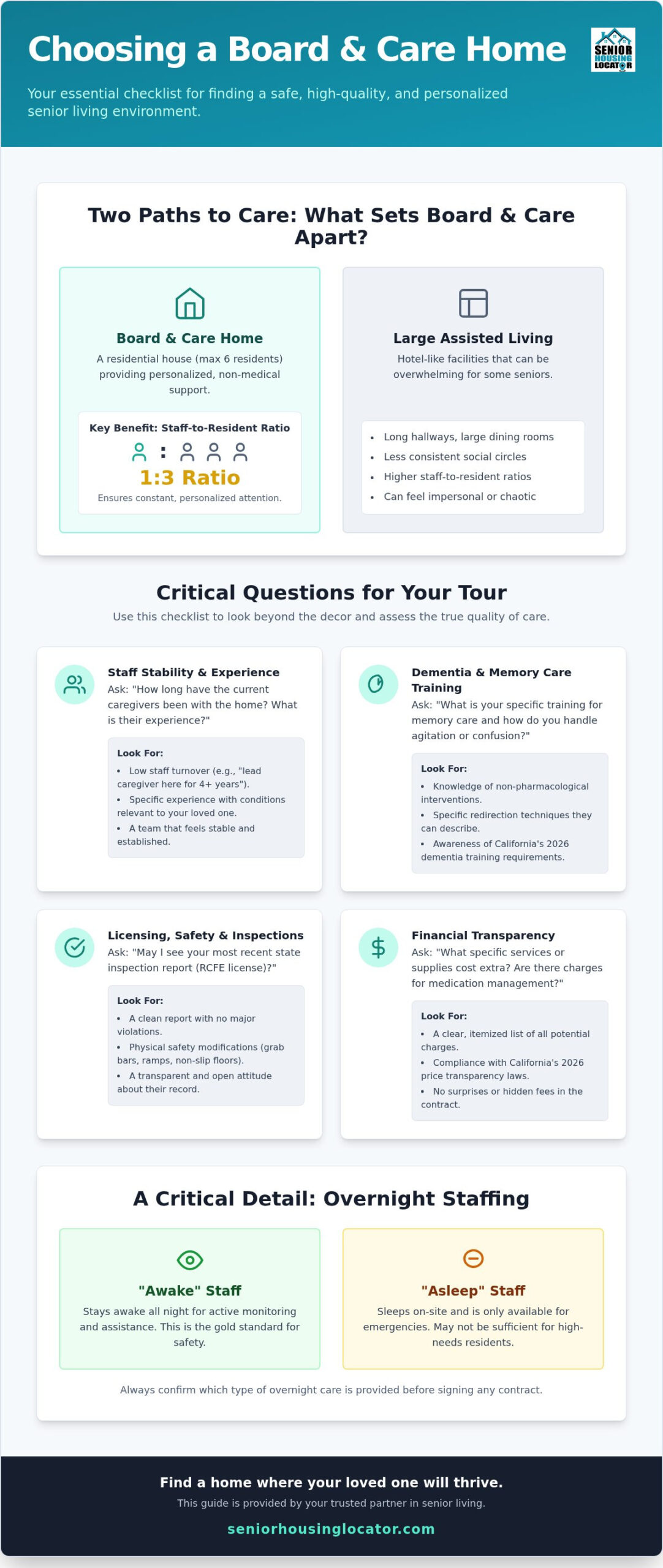
A board and care home is essentially a traditional residential house that has been modified to provide high-quality senior living. It falls under the broader category of Residential care, focusing on non-medical support in a setting that looks and feels like home. The primary benefit of this model is the intimate staff-to-resident ratio, which usually sits at 1:3 or 1:4. In this environment, your parent isn’t just one of a hundred residents; they are one of six. This closeness ensures that help is always just a few steps away, whether they need assistance with dressing or simply a friendly conversation over morning coffee.
The RCFE Designation in California
In California, these homes are officially licensed as Residential Care Facilities for the Elderly (RCFE). This license means the home is subject to regular oversight and must follow strict safety and care standards. The 6-bed model is widely considered the gold standard for personalized attention because it prevents residents from feeling lost in the crowd. When you are gathering questions to ask a board and care home, always include a request to see their most recent state inspection report. These documents provide a transparent look at how the home maintains safety, manages medications, and treats its residents.
Comparing Board and Care to Assisted Living
The main difference between these settings is the physical and social atmosphere. Large assisted living facilities often resemble high-end hotels with long hallways and grand dining rooms. While they offer many amenities, they can be overwhelming for seniors who prefer a quieter pace. In contrast, a board and care home offers family-style dining and a consistent social circle. This stability is incredibly comforting for those who find large crowds stressful. To see how these differences play out in our local community, you can read our board and care homes Woodland Hills guide.
Families in Woodland Hills often prefer these residential settings for dementia care because the smaller layout naturally prevents wandering and confusion. Caregivers are always present in the main living areas, providing a level of supervision that is difficult to match in a massive complex. As you prepare your questions to ask a board and care home, think about how a smaller, more predictable environment could improve your loved one’s daily peace of mind. It’s about finding a place where they feel safe, seen, and truly cared for.
Critical Questions Regarding Staffing and Care Quality
The house itself is just a backdrop. The true quality of a residential care home depends entirely on the hands that provide the care. When you are compiling questions to ask a board and care home, you need to dig deeper than basic certifications. You are looking for a team that treats your parent like family, not just a task on a checklist. High-quality care is built on stability, and you deserve to know exactly who will be watching over your loved one while you are away.
Ask the manager how long the current caregivers have been with the home. A good answer sounds like, “Our lead caregiver has been here for four years.” High turnover is often a red flag for poor management or low morale. You should also ask about their training for memory care. Since 2026 California regulations now require dementia-aware practices facility-wide, a high-quality home should be able to explain their specific non-pharmacological interventions for residents who become agitated or confused. If they can’t describe a specific redirection technique, they may not be prepared for the realities of cognitive decline.
Evaluating Caregiver Chemistry
Watch the interactions during your tour. Do caregivers make eye contact and smile, or do they seem rushed and efficient? Ask how they handle a resident who refuses a meal or a shower. A quality response focuses on patience, choice, and gentle redirection rather than force. Consistent caregivers are vital for residents with cognitive decline because familiar faces reduce anxiety and help prevent wandering. If you feel unsure about the answers you are getting, our local advisors can help you find a home that meets our high standards for integrity and care.
Night-Shift and Emergency Protocols
One of the most important questions to ask a board and care home involves the overnight shift. You must know if the staffer is “awake” or “sleep.” An awake staffer stays up all night to monitor residents, while a sleep staffer is on-site but may need to be woken up by an alarm or a resident’s call. For seniors who tend to wander or wake up confused at night, an awake staffer is often essential for safety.
In the event of a 2:00 AM medical emergency, every minute counts. Ask about the home’s proximity to local San Fernando Valley hospitals like West Hills Hospital or Providence Cedars-Sinai Tarzana. A prepared manager will have a clear, written protocol for contacting families and coordinating with emergency responders immediately. Knowing there is a plan in place provides the peace of mind you need to sleep soundly yourself.
Safety, Licensing, and the Physical Environment
Safety is about more than just a locked front door. It is about the rigorous standards a home must meet to keep your loved one protected every single day. In California, every residential care facility is overseen by the Department of Social Services. One of the most vital questions to ask a board and care home is whether they are currently in good standing with the state. You shouldn’t just take their word for it. Ask to see their LIC 256 reports from the last two years. These public documents list any citations or deficiencies found during state inspections, giving you a transparent look at how the home actually operates when no one is watching.
Beyond the paperwork, the physical house must be prepared for the realities of aging. Look for concrete safety modifications like sturdy grab bars in the bathrooms, entry ramps for easy access, and widened doorways that can accommodate a walker or wheelchair. Emergency preparedness is equally critical. Ask the manager how often they conduct fire drills and evacuation rehearsals. In a small 6-bed home, these drills should be quick and efficient, ensuring every resident knows exactly what to do if an alarm sounds at midnight.
The “Private Room” vs. “Shared Room” Debate
Choosing between a private or shared room is a personal decision that impacts both budget and well-being. Private rooms offer a sanctuary for quiet reflection and dignity, which many seniors value deeply. On the other hand, shared rooms can be a wonderful way to prevent the isolation that often leads to depression. If you are looking for specific local options, our guide on board and care homes with private rooms Los Angeles can help you compare what is available in your neighborhood. Most quality homes encourage you to bring your own furniture and decor to make the space feel like a true home rather than a temporary stay.
Medication Management and Health Monitoring
Health needs can change in an instant, so the home must have a proactive monitoring system. Ask who is responsible for ordering and administering medications. In a residential setting, medications are typically centrally stored and logged to ensure no doses are missed. You should also find out how the staff tracks subtle changes in physical or mental health. Does a visiting nurse or doctor come to the home regularly? Having a professional who visits the house helps catch small issues before they become emergencies. This level of oversight is a key part of the questions to ask a board and care home to ensure long-term stability for your parent.
Daily Life: Food, Activities, and Socialization
Daily life in a 6-bed home should feel like living in a family, not a facility. Because the group is so small, the social rhythm is naturally more flexible and personalized. When evaluating the atmosphere, there are several specific questions to ask a board and care home regarding their social schedule. You want to know if the home adapts to the residents, or if the residents are expected to adapt to a rigid institutional clock. A high-quality home will have a clear plan for engagement that includes physical movement, cognitive puzzles, and simple social interaction.
One common worry for families is the “loneliness factor” in a smaller setting. If your parent is an introvert, ask the manager how they encourage socialization without making it feel forced. A good answer involves gentle invitations to common areas or finding ways to connect residents over shared interests like music or gardening. You should also ask about visiting hours. Most residential homes offer open-door policies that allow you to visit whenever it’s convenient for your family, which is a significant benefit over the restricted hours found in many larger communities.
Evaluating the Dining Experience
Food is often the highlight of a resident’s day. In a small home, you should expect to smell fresh cooking rather than harsh cleaning chemicals. Ask to see a sample menu for the current week and find out if residents can make specific requests for their favorite meals. This level of choice is a primary reason families choose this model. You also need to know how they manage special diets like low-sodium, diabetic, or soft-food requirements. A quality caregiver will be able to explain exactly how they prepare these meals while keeping them flavorful and nutritious.
Transportation and Community Connection
Living in a residential home doesn’t mean being cut off from the world. Ask if the home provides transportation to medical appointments in Los Angeles. While some homes have their own van, others coordinate with specialized transport services. You should also find out how they celebrate milestones. Do they throw parties for birthdays and holidays? Are there organized outings for shopping or local entertainment? These connections to the community keep life vibrant and meaningful. If you need help finding a home with a social culture that fits your parent’s personality, our placement experts can guide you through the best local options.
By including these points in your questions to ask a board and care home, you ensure that your loved one’s daily life is filled with dignity and joy. The best homes aren’t just places to stay; they are places where people truly live.
Financial Transparency and Making the Final Decision
Discussing finances is often the most stressful part of the placement process. You need a clear understanding of the monthly rate and what exactly is included to avoid unexpected bills. When finalizing your questions to ask a board and care home, ensure you ask about “care creep,” which is the gradual increase in costs as physical needs change. Some homes offer a flat monthly fee, while others utilize a tiered system where costs rise alongside the level of assistance required.
Beyond the base rate, look for secondary costs that can add up quickly. Ask if there are separate fees for incontinence care, medication distribution, or specialized laundry services. You should also confirm the move-out notice requirement. While 30 days is standard in California, you should know the specific refund policy if a resident requires an immediate transfer to a higher level of medical care. Getting these financial details in writing protects your family’s long-term budget.
Understanding the Care Contract
Request the admissions agreement early so you can review it away from the pressure of the tour. This document defines the specific “level of care” tiers that dictate your monthly bill. As of July 1, 2026, California law requires these facilities to provide a full written disclosure of all fees and their rate increase history for the previous three years before you sign. This level of price transparency ensures you can plan your family’s finances with confidence and avoid homes with a history of aggressive price hikes.
How a Senior Living Advisor Simplifies Your Search
Navigating the hundreds of residential options in the San Fernando Valley is a significant undertaking. Working with a senior living advisor Los Angeles removes the guesswork by providing a curated list of homes that fit your specific budget and care needs. We have already vetted these locations for licensing compliance and caregiver integrity, so you don’t have to spend hours searching state databases yourself.
Our service is entirely free for families. We act as your local guide, helping you refine your questions to ask a board and care home and advocating for your parent’s best interests. We have spent years building relationships with the best 6-bed homes in the community. Let us do the heavy lifting of research and vetting so you can focus on making the best choice for your loved one’s future.
Taking the Next Step Toward Quality Care
Choosing a residential care home is a deeply personal journey. You now have a concrete list of questions to ask a board and care home to ensure your loved one is safe, respected, and truly at home. Remember that the best facilities don’t just have clean rooms; they have caregivers who treat residents with genuine warmth. By focusing on staffing stability and verifying California licensing reports, you can make a decision rooted in facts rather than just first impressions. You deserve the peace of mind that comes from knowing your parent is in good hands.
You don’t have to navigate this high-stakes process alone. Let our expert advisors find the perfect board and care home for your family. We provide a free personalized placement service and have been trusted by SFV families for over a decade. Because we are deeply rooted in the Woodland Hills community, we have already done the hard work of vetting local homes for integrity and care quality. Let us be your helping hand during this transition so you can focus on what matters most: your family’s well-being.
Frequently Asked Questions
What is the difference between a board and care home and assisted living?
Board and care homes are traditional residential houses with six residents, while assisted living communities are large complexes with fifty or more residents. The main difference lies in the intimate 1:3 or 1:4 staff ratio in board and care versus the 1:15 ratio often found in large facilities. This choice usually depends on whether your parent prefers a quiet family home or a bustling social environment with many amenities.
Are board and care homes licensed in California?
Yes, these homes are licensed as Residential Care Facilities for the Elderly (RCFE) by the California Department of Social Services. This oversight ensures the home meets specific fire safety, staffing, and health monitoring standards. You can verify a license online through the state database or ask to see the facility’s current permit during your tour to confirm they are in good standing and up to date.
How do I know if a board and care home is safe for my parent?
Safety is verified through state inspection reports and physical observations of the house. Look for modifications like entry ramps, grab bars, and non-slip flooring in bathrooms. One of the best questions to ask a board and care home is how they handle night-shift supervision. Having an awake staffer is a critical safety feature for residents who tend to wander or wake up confused at night.
Do board and care homes provide 24-hour nursing care?
No, board and care homes generally provide non-medical personal care rather than 24-hour skilled nursing. While they assist with medications and daily living, they are not medical facilities. If your parent requires constant medical intervention, a skilled nursing facility is usually the appropriate choice. Many homes do, however, have visiting doctors or nurses who stop by regularly to monitor residents and update their care plans.
Can I visit my parent anytime at a board and care home?
Most residential care homes offer flexible visiting hours that allow you to stop by whenever it is convenient for your family. Unlike large institutions with rigid schedules, these homes operate like a private residence. It’s always polite to call ahead if you plan to visit during meal times or late at night, but you should generally have open access to your loved one whenever you like.
What happens if my parent’s care needs increase over time?
Many homes allow residents to age in place by increasing the level of support provided as needs change. This often triggers a price increase based on the care tiers outlined in your contract. If medical needs become too complex for a residential setting, the staff will work with you to coordinate a move to a higher level of care, such as a skilled nursing facility or hospital.
How much do board and care homes in Los Angeles typically cost?
Monthly costs depend on the neighborhood and whether your parent selects a private or shared room. Generally, these homes are more affordable than hiring 24-hour in-home care but stay comparable to large-scale assisted living due to the high staff-to-resident ratio. Always ask for an all-inclusive rate to avoid hidden fees for things like laundry, incontinence supplies, or medication management. This ensures your family budget remains stable.
Is there a way to check for complaints against a board and care home?
You can check the California Department of Social Services website to view the public licensing profile of any RCFE. This database lists recent complaints, citations, and the results of state inspections from the past several years. Reviewing these records should be one of your top questions to ask a board and care home advisor before you commit to a long-term contract or a specific move-in date.