
Choosing between independent living vs assisted living is rarely about where your loved one is today; it’s about where they’ll be three years from now. You want them to stay active and social, but you also need the peace of mind that comes with knowing they’re safe. It’s perfectly normal to feel a bit overwhelmed or even guilty as you look at the options in Los Angeles. You aren’t alone in this journey, and your desire to get this right shows just how much you care.
This 2026 guide will help you replace that confusion with a clear, manageable plan. You’ll discover the key differences in daily support, social opportunities, and the impact of the new California transparency laws that took effect this July. We’ve done the heavy lifting to simplify the research process for you. We’ll walk through a roadmap for the transition, explain how to evaluate future care needs, and show you how to find a community that feels like home. By the time you finish reading, you’ll have the confidence to make a decision that protects your parent’s health while celebrating their independence.
Key Takeaways
- Identify the primary difference between independent living vs assisted living by evaluating if your parent needs lifestyle convenience or daily care support.
- Understand how Los Angeles communities use “care tiers” to calculate monthly costs and protect your family from unexpected financial surprises.
- Use the Activities of Daily Living (ADL) checklist to objectively assess which environment will best support your loved one’s current health and safety.
- Explore how the 2026 California transparency laws provide you with more leverage and critical information before you sign any senior living contract.
- Learn why partnering with a local placement expert can streamline your search and provide access to vetted communities throughout the San Fernando Valley.
Understanding the Core Differences: Independent vs. Assisted Living
“Senior housing” is a broad term that often leads to more questions than answers. For many families in Los Angeles, the search starts with a simple goal: find a safe, happy place for Mom or Dad. However, the term can be misleading because it bundles dozens of different care levels into one confusing bucket. You might see a beautiful building and think it’s perfect, only to realize later it doesn’t offer the medical support your parent needs. Or, you might worry a facility is too “clinical” when it’s actually a vibrant social hub.
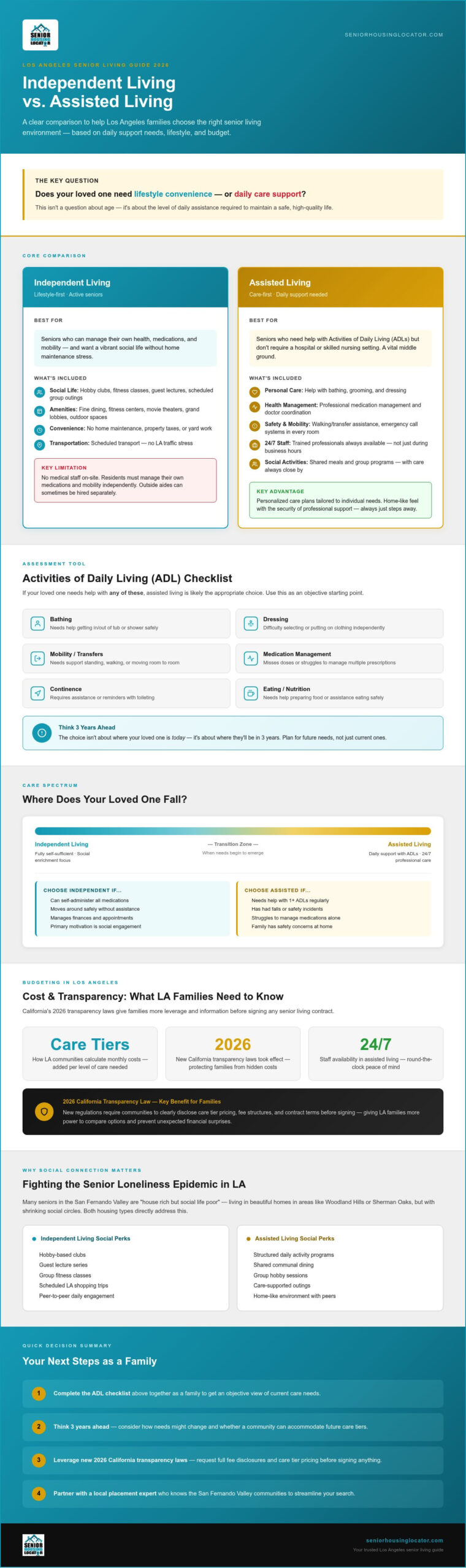
The most important step in your journey is understanding the functional gap between independent living vs assisted living. This choice isn’t about age; it’s about the daily support required to live a high-quality life. It’s about finding that perfect balance where your loved one feels empowered but also protected.
What is Independent Living?
Independent living is a lifestyle choice for active seniors who want to shed the burdens of maintaining a large home. It’s about trading property taxes and yard work for boutique-style amenities. These communities focus on three main pillars: socialization, convenience, and wellness. You’ll find fine dining rooms, movie theaters, and group excursions to local landmarks. It’s the perfect fit for someone who wants a vibrant social life without the stress of managing a household.
There’s a key limit to keep in mind. These facilities generally don’t have medical staff on-site to help with physical needs. Residents are expected to manage their own medications and move around without assistance. Medical care is not provided by the facility staff, though residents can sometimes hire outside help if they wish to stay in their independent apartment longer.
What is Assisted Living?
Assisted living is a care-based choice designed for seniors who need help with “Activities of Daily Living,” or ADLs. It provides a vital middle ground for those who don’t need a hospital setting but can no longer live safely without a helping hand. Staff members are available 24/7, providing a layer of security that independent living doesn’t offer.
In an assisted living environment, your loved one receives personalized support tailored to their specific needs. This often includes:
- Personal Care: Help with bathing, grooming, and dressing.
- Health Management: Professional medication management and coordination with doctors.
- Safety and Mobility: Assistance with walking or transferring, plus emergency call systems in every room.
While the focus is on care, these communities still prioritize a “home-like” feel. They offer social activities and shared meals, but with the added peace of mind that a trained professional is always just a few steps away. This ensures your loved one isn’t just “housed,” but is actually thriving in an environment that matches their physical and emotional requirements.
Comparing Lifestyle, Amenities, and Social Connection
When comparing independent living vs assisted living, the atmosphere often dictates the final choice. Independent living communities in Los Angeles frequently mirror high-end boutique hotels. They offer grand lobbies, fitness centers, and lush outdoor spaces. In contrast, assisted living communities prioritize safety and accessibility features, yet they work hard to maintain a warm, “home-like” feel. Both options serve a critical purpose: fighting the loneliness epidemic that affects so many older adults. Whether it’s through shared meals, group outings, or hobby clubs, these environments are designed to keep seniors connected and engaged.
The Social Advantage of Independent Communities
Many seniors in the San Fernando Valley are “house rich but social life poor.” They may live in a beautiful home in Woodland Hills or Sherman Oaks, but their neighbors have moved away, and their social circle has shrunk. Independent living solves this by placing peer-to-peer engagement at the center of daily life. Residents can join hobby-based clubs, attend guest lectures, or participate in fitness classes. Most communities also provide scheduled transportation for shopping trips or local outings. This removes the stress of driving in LA traffic, allowing seniors to focus on enjoyment rather than logistics. If you aren’t sure which neighborhood fits your lifestyle best, a local placement advisor can help you compare the social calendars of different communities.
Safety and Engagement in Assisted Living
In an assisted living setting, the lifestyle is built around a foundation of security. Every room includes an emergency call system, giving families immediate peace of mind. However, safety doesn’t mean a lack of activity. Staff members curate social calendars tailored to various physical and cognitive ability levels. They don’t just post a schedule; they actively encourage participation. This proactive approach is vital for preventing withdrawal and depression. Whether it’s a seated yoga class or a guided art session, these activities are designed to keep residents connected to their community and their peers.
Dining is another area where these care levels shine. Independent living often features restaurant-style menus with multiple venues, from casual bistros to formal dining rooms. Assisted living provides similar quality but adds layers of specialized nutritional support. Staff can assist with dietary restrictions or provide physical help during meals. This ensures every resident enjoys a healthy, social dining experience without the stress of meal preparation or cleanup. It’s about dignity, health, and the joy of a good meal shared with friends.
The Cost of Care: Budgeting for Senior Living in Los Angeles
Many families feel a sense of “sticker shock” when they first look at the price tags for senior housing in Los Angeles. It’s helpful to remember that you aren’t just paying for a room; you’re paying for a comprehensive support system. When comparing independent living vs assisted living, the way you budget changes significantly. Independent living usually follows a “base rent plus amenities” model, while assisted living uses a “base rent plus care tiers” structure. This means your monthly bill in assisted living will fluctuate based on the intensity of the support your loved one needs, such as help with bathing or medication management.
Effective July 1, 2026, a new California law requires all assisted living facilities to provide written disclosures of all fees and their rate increase history for the past three years. This transparency makes it much easier to plan for the future without fearing hidden costs. Understanding these tiers is the best way to ensure your family isn’t surprised by a bill later on.
Average Pricing Trends in the San Fernando Valley
Pricing in Southern California is highly localized. You’ll often find that communities in Woodland Hills or the San Fernando Valley offer different price points than those in Santa Monica or West LA. If a large community feels out of reach, “Board and Care” homes are a vital local alternative. These are residential houses converted into care facilities, often providing a more intimate setting at a different price structure. Regardless of the location, prices vary based on room size and care intensity.
Hidden Savings: What You Stop Paying For
To get an accurate picture of the cost, you have to look at what you’ll stop paying for at home. A monthly fee in a senior community replaces a long list of individual bills. When you move, you’re often eliminating:
- Property Expenses: Property taxes, homeowners insurance, and constant repair costs.
- Daily Utilities: Electricity, water, trash, and high-speed internet.
- Living Essentials: Grocery bills, dining out, and the high cost of fuel or car maintenance.
There are also financial resources to help bridge the gap. For the 2026 tax year, California has expanded the family caregiver tax credit, which can help offset out-of-pocket expenses. Additionally, long-term care insurance or the Medi-Cal Assisted Living Waiver (ALW) can provide relief for those who qualify. While independent living might seem cheaper at first glance, it’s important to watch for hidden service fees for things like laundry or tray service that are often bundled into assisted living. We recommend looking at the “all-in” value to see the true impact on your family’s budget.
How to Choose: A Decision Framework for Local Families
Selecting the right environment for a parent is a journey that requires both heart and logic. It is not just about the building; it is about the daily rhythm of their life. To move past the uncertainty of independent living vs assisted living, you need a structured way to evaluate their needs. This framework helps you look at their current health, their future safety, and the social “vibe” that will make them feel truly at home in Los Angeles.
The ADL Checklist: A Practical Assessment
The first step is an honest look at Activities of Daily Living (ADLs). These are the basic tasks we often take for granted until they become difficult. Ask yourself these three questions to gauge the level of support required:
- Medication Safety: Can they manage their prescriptions accurately without reminders or help?
- Kitchen Safety: Is meal preparation becoming a burden, or have there been close calls with the stove?
- Physical Wellness: Are there signs of “failure to thrive,” such as unexplained weight loss, poor hygiene, or social withdrawal?
If you answered “yes” to these concerns, assisted living is likely the safer choice. If they are physically capable but simply tired of maintaining a house, independent living offers the freedom they crave.
Local Alternatives: Board and Care Homes
In Los Angeles, you have options beyond the large, resort-style facilities. Many families find that a residential “Board and Care” home is the perfect middle ground. These are traditional houses in neighborhoods like Woodland Hills that have been converted into licensed care facilities. They typically house six residents, offering a much higher caregiver-to-resident ratio than a large community. This intimate setting is often less overwhelming for seniors who prefer a quiet, familiar environment. For a deeper look at these options, read our Board and Care Homes in Woodland Hills guide.
Location and Social Connection
Proximity matters for your own peace of mind. Choosing a community in Encino or Burbank makes it easier for you to drop by for a quick lunch or a weekend visit. Frequent family connection is one of the best ways to ensure a successful transition. Beyond the map, consider the social atmosphere. Does your loved one enjoy large parties and busy dining rooms, or do they prefer small book clubs and quiet garden walks? Every community has a distinct personality. Matching that personality to your loved one’s character is the “secret sauce” for long-term happiness. Because there are hundreds of options in the city, you may want to consult a local placement expert to help narrow down the search to the top three communities that fit your family’s specific needs.
Navigating the Transition with Senior Housing Locator
Searching for senior housing in Los Angeles is often a full-time, high-stress job. Between comparing care levels, touring buildings, and deciphering contracts, it’s easy to feel overwhelmed. You don’t have to carry this burden alone. Senior Housing Locator provides a free placement service for families across the San Fernando Valley. We act as your trusted local ally, simplifying the research so you can focus on your family’s emotional well-being.
Our commitment to integrity means we prioritize your loved one’s comfort over everything else. We focus on a simple triad of factors for every match: medical needs, financial budget, and social preferences. This ensures the community isn’t just a safe place, but a place where your parent will truly thrive. We’ve already done the hard work of vetting local options, allowing you to move forward with peace of mind.
Our Personalized Approach for LA Families
We provide more than just a list of addresses. We serve Woodland Hills, Sherman Oaks, and the greater LA area with a hands-on, full-service approach. When it’s time to visit a community, we tour with you. This allows us to provide an objective, expert perspective on things you might miss. We have insider knowledge regarding facility management, staff turnover, and the daily culture of these homes. Whether you’re deciding between independent living vs assisted living, we help you see past the marketing to find the reality of the care provided.
Ready to Find the Right Fit?
The best time to start this conversation is before a health crisis occurs. Waiting for an emergency often limits your choices and increases the emotional toll on everyone involved. We help you stay ahead of the curve by providing a clear roadmap for the transition. It’s about being prepared, being informed, and being proactive. If you’re specifically looking in the West Valley, our guide on assisted living placement in Woodland Hills is a great place to begin your research.
Taking the first step is simple and straightforward. During your initial consultation, we’ll listen to your story, assess your needs, and begin narrowing down the options. We handle the calls, schedule the tours, and provide the support you need for a stress-free transition. Contact us today to begin your journey with confidence, knowing you have a knowledgeable guide by your side every step of the way.
Finding Peace of Mind in Your Senior Care Journey
Choosing the right path for a loved one is a significant milestone. By understanding the functional differences between independent living vs assisted living, you’ve already taken a vital step toward a safer and more vibrant future. You now have the tools to assess daily care needs, evaluate the hidden savings of senior housing, and navigate the unique landscape of the San Fernando Valley market. Remember that this decision is about more than just a building; it’s about finding a community where your parent can truly belong.
You don’t have to manage this complex process alone. As a trusted local ally, we’re here to offer personalized assistance for assisted living, memory care, and more. Our integrity-driven approach ensures you find a match that respects your budget and social preferences without any financial burden. Let us help you find the perfect senior living community; our expert placement service is 100% free for families.
Your family’s comfort and security are within reach. With the right information and a helping hand, you can move forward with total confidence.
Frequently Asked Questions
What is the main difference between independent living and assisted living?
The primary distinction is the level of daily care provided by the facility staff. Independent living focuses on a maintenance-free lifestyle and social engagement for active seniors who don’t require physical assistance. Assisted living provides professional help with daily tasks like bathing, dressing, and medication management. While both offer meals and social activities, assisted living includes 24/7 staff support to ensure physical safety and health monitoring.
Can you move from independent living to assisted living in the same community?
Yes, many Los Angeles communities are designed as multi-level campuses that allow for this transition. These are often called Continuing Care Retirement Communities or campuses with a continuum of care. They enable residents to start in an independent apartment and move to an assisted living wing if their health needs change. This approach minimizes the stress of moving and allows seniors to keep their existing social circles and familiar surroundings.
Is assisted living more expensive than independent living in Los Angeles?
Assisted living usually carries a higher monthly cost because it includes professional caregiving services and 24/7 staffing. In the comparison of independent living vs assisted living, the price of assisted living reflects the care tiers required for personal assistance. While independent living covers rent and amenities, assisted living adds the cost of medication management, mobility support, and personal care. Prices in the city reflect the high demand for these specialized services.
Does Medicare pay for independent or assisted living in California?
Medicare generally does not cover the room and board or custodial care costs for either of these living options. It is designed to pay for medical expenses, hospital stays, and short-term rehabilitative care. Most families in California use private funds, long-term care insurance, or the VA Aid and Attendance benefit. Some assisted living facilities may accept the Medi-Cal Assisted Living Waiver if the resident meets specific clinical and financial requirements.
How do I know if my parent needs assisted living instead of just help at home?
Assisted living is often the better choice when home safety becomes a constant worry or when social isolation leads to depression. If your parent is struggling with multiple Activities of Daily Living or if a family caregiver is experiencing burnout, a community setting provides more comprehensive support. It offers a level of professional oversight and peer interaction that is difficult to replicate with part-time help at home.
What is a Board and Care home, and is it different from assisted living?
A Board and Care home is a smaller, residential house licensed to provide the same level of care as a large assisted living facility. These homes typically serve only six residents in a traditional neighborhood setting. While large communities offer more resort-style amenities, Board and Care homes provide a much higher caregiver-to-resident ratio. This makes them an excellent option for seniors who prefer a quiet, intimate environment with more personalized attention.
What amenities are typically included in Woodland Hills independent living communities?
Communities in the Woodland Hills area often feature high-end amenities that rival boutique hotels. You can expect restaurant-style dining, heated swimming pools, and modern fitness centers. Many also provide movie theaters, art studios, and lush outdoor gardens. A major perk is the scheduled transportation service, which takes residents to local destinations like The Village at Westfield Topanga for shopping and social outings without the stress of navigating Valley traffic.
How long does the placement process usually take with a senior living advisor?
The timeline depends on your family’s specific needs and the current availability in the San Fernando Valley. For families in an immediate health crisis, we can often identify the right community and coordinate a move within a few days. For a planned transition, the process typically takes two to four weeks. Working with an advisor speeds this up by eliminating the time you would spend researching hundreds of individual facilities alone.