
What if the monthly rate you’re comparing is only part of what your family may pay? The hidden costs of senior living communities can include one-time move-in charges, recurring service fees, and added costs as care needs change. A quoted price alone may not show the full picture.
If it’s difficult to tell what’s included, you’re not alone. Communities may describe their fees differently, and a clear starting rate doesn’t always explain how the total could change over time. Asking specific questions and reviewing the written terms can help you compare options more clearly.
This guide explains which charges to check, how care-level fees and rate changes may affect a budget, and what to look for in a community’s fee schedule and agreement. You’ll learn how to compare communities on equal terms and ask about costs before signing, so your family can make its next decision with greater confidence.
Key Takeaways
- The hidden costs of senior living communities may include one-time, recurring, optional, or care-related charges. Check which examples apply to each community.
- Ask for a written fee schedule that shows what the quoted rate includes and what could be billed separately.
- Compare communities using the same categories, including base rate, included services, deposits, extra charges, and rate-change terms.
- Bring specific questions to tours in Los Angeles and the San Fernando Valley, and request a sample billing explanation and follow-up contact details.
- Before committing, consider whether the care fits, the full cost works for your budget, and the agreement is clear.
Why a Senior Living Quote May Not Show the Full Cost
A quoted monthly rate is a starting point, not always a complete picture. A hidden cost is a charge that isn’t clear in the initial rate or in the written list of what that rate includes. The phrase doesn’t necessarily mean a community is concealing a fee. A service may be optional and disclosed separately, or a charge may change after a resident’s support needs are reviewed.
The hidden costs of senior living communities can be difficult to compare because pricing depends on the community, location, room, services, agreement, and resident’s individual needs. Two communities may use different fee structures even when their headline rates look similar. Focus on what your family would actually pay for the services the resident expects to use.
What does a senior living monthly rate usually cover?
There’s no single standard package. One community may bundle housing, meals, activities, and some support into its rate, while another may list services separately or set limits on what’s included. Independent living, assisted living, memory care, and board and care homes also differ in their living arrangements and support. For background, Assisted living describes a type of housing and support for people who may need help with daily activities.
Ask each community for a current written list of included services and any limits. Clarify whether meals, transportation, housekeeping, activities, and personal support are covered, offered for an additional charge, or subject to usage limits. During a tour, note the answer for each service, then check that it matches the written details. This makes it easier to compare offers and follow up on anything that’s unclear.
Why can the amount due change after move-in?
A resident’s support needs may change over time. If a community reassesses those needs, it may update the service plan and related charges, depending on its policies and agreement. Optional services or actual usage may also affect the bill. These changes aren’t automatically hidden fees if the terms and possible charges were clearly explained in advance.
Before signing, look for what could trigger a reassessment, how the family will be notified, and how any new charge is calculated. Check whether the agreement explains optional services, billing, and the process for changes. Ask for unclear terms in writing, and don’t assume one community’s rate-change approach applies to another. A clear explanation now can help your family plan with fewer surprises later.
Hidden Costs of Senior Living Communities to Check Before Moving In
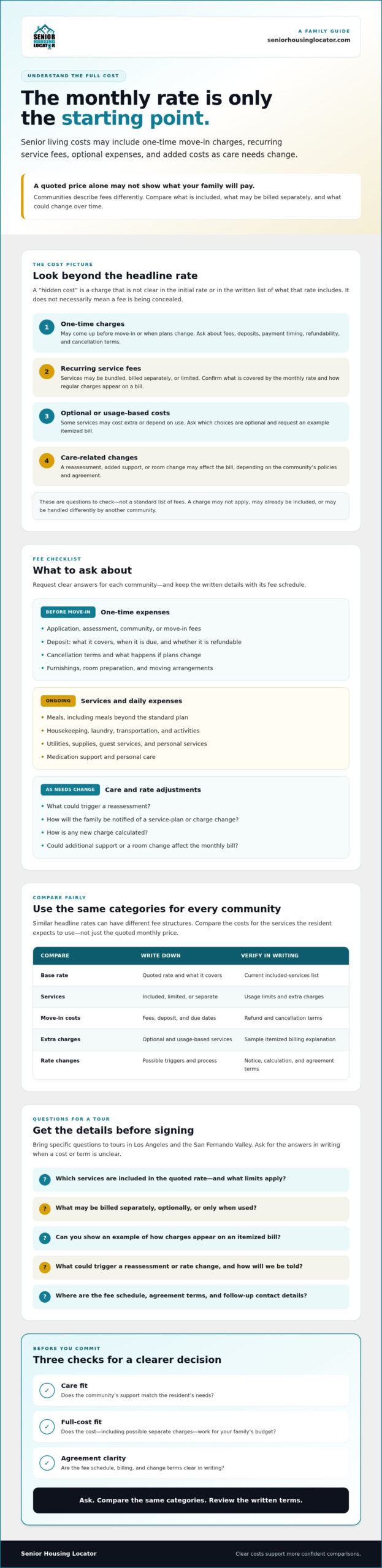
The hidden costs of senior living communities aren’t one standard list of fees. Charges depend on what a particular community includes, what the resident chooses, and what support they need. To understand the full picture, compare the base rate with any one-time, recurring, optional, and care-related charges.
Use these examples as questions, not assumptions. A charge may not apply, may be included, or may be handled differently under another community’s agreement. Ask for the answer in writing and keep it with the fee schedule.
One-time charges and move-in expenses
Before paying or signing, ask whether the community charges an application, assessment, community, or move-in fee. If there’s a deposit, confirm what it covers, when payment is due, and whether it’s refundable. Read the cancellation terms and ask what happens if plans change before move-in.
Check practical details, too. Are furnishings or room preparation included? Are moving arrangements handled by the community, or must the family organize them separately? Ask for any conditions and deadlines in writing. This helps you account for expenses that may fall outside the monthly rate and avoid relying on verbal assurances.
Recurring, optional, and care-related charges
Some costs may appear regularly, while others depend on a resident’s choices or needs. Ask whether these services are included, billed separately, or charged only when used:
- Personal services: Could medication support, personal care, laundry, or transportation add a charge?
- Daily expenses: How are meals beyond the standard plan, guest services, supplies, utilities, and activities billed?
- Changing needs: How could a reassessment, additional support, or a room change affect the monthly bill?
Ask for an example of how each charge would appear on an itemized bill. If someone in your family helps manage a parent’s finances, the Consumer Financial Protection Bureau’s guides for financial caregivers may help them understand their role and keep financial records organized.
For each community, record the base rate, one-time charges, recurring services, optional costs, and possible care-related changes. This keeps the headline rate from driving the whole comparison. If you’d like help organizing senior living placement options around care needs, budget, and location, Senior Housing Locator’s placement referral service is free to families and funded by commissions from facilities and care providers upon successful placement.
How to Compare Senior Living Fees and Agreement Terms
A headline rate can make one community look less expensive, but it may include fewer services or a different level of support. For a fair comparison, use each community’s current written fee schedule and agreement, not just figures discussed during a tour. The Los Angeles assisted living cost guide offers broader context, but the community’s own documents explain its charges and terms.
Build a side-by-side comparison using the same categories for every option. Record the source of each detail, such as the fee schedule or agreement, and flag anything that needs clarification.
| What to compare | What to record |
|---|---|
| Base rate | Room type and billing frequency |
| Included services | Support, meals, activities, and any limits |
| Extra charges | Optional services and care-related fees |
| Deposits | Amount, due date, and refund conditions |
| Rate-change terms | Reassessment and rate-change process |
What to look for in a fee schedule and residency agreement
Check how the agreement defines care levels, included support, and extra services. Look for how often charges are billed, how reassessments work, and what the agreement says about rate changes, deposits, and move-out notice. If a term is vague, ask the community to explain it in writing before signing. Clear answers make it easier to understand both the expected bill and what could change it.
How care setting and location affect comparisons
Compare like with like. A rate for assisted living may cover a different set of services than a memory care option or a board and care home. List the resident’s expected support needs, then check which of those needs each written rate and service plan addresses. For more on how this care setting differs, see the Woodland Hills board and care guide.
Location matters beyond the quoted fee, too. Consider how each setting fits the family’s travel, visits, and day-to-day plans, without assuming that a particular neighborhood always costs more or less. Families considering options in Woodland Hills, Granada Hills, Northridge, Sherman Oaks, Encino, Burbank, Los Angeles, Santa Monica, or Pasadena can weigh location alongside services and agreement terms. The hidden costs of senior living communities are easier to spot when you compare what each rate covers and how future charges are handled.
Questions to Ask About Extra Fees in Los Angeles Area Communities
Bring these questions to tours in Los Angeles and the San Fernando Valley. Ask for answers in writing, along with the current fee schedule and a sample bill that shows how charges appear. These details can help your family identify the hidden costs of senior living communities before comparing options or signing an agreement.
Questions about services, care changes, and billing
- What does the quoted rate include, and which services are billed separately?
- Are there charges for medication support, personal care, transportation, meals, laundry, supplies, or activities? How are optional services billed?
- Who reviews a resident’s support needs, and how will the family be told if the service plan or charges change?
- When would a new or increased charge begin, and where is that process explained in the agreement?
- How are billing questions or disputes handled? Who should the family contact, and what details should they provide?
- What happens to charges if a resident is temporarily away or cancels a service?
- Can you provide a sample billing explanation and the name and contact details of someone we can follow up with?
Ask the community to point to the relevant agreement language rather than relying only on a verbal explanation. If an answer is unclear, note the question and request a written response before making a decision.
Questions about California coverage and consumer resources
Don’t assume Medicare or Medi-Cal will pay for a community’s room and board, or that a particular service is covered. Eligibility and coverage depend on individual circumstances and current program rules. Confirm details with the relevant program or a qualified benefits contact before including them in your budget.
For licensing information, consult the California Department of Social Services and its Community Care Licensing Division (CCLD). Check that the resource applies to the specific type of community you’re considering, and confirm details directly with the state agency if you’re unsure. Licensing information is one part of your review. It doesn’t replace comparing written fees and agreement terms.
Once you’ve gathered the documents and questions, you can get help comparing senior living options. Senior Housing Locator helps families consider care needs, budget, and location. Its placement referral service is free to families and funded by commissions from facilities and care providers upon successful placement.
Make a Confident Senior Living Decision Without Cost Surprises
You don’t need every future detail to be certain before choosing, but you should have clear answers about the care, costs, and agreement in front of you. Use this three-part check to organize what you’ve learned about the hidden costs of senior living communities.
A simple final review before choosing a community
- Care fit: Do the resident’s needs match the services and support described in writing? Confirm what’s included and what may require a separate service or charge.
- Full cost: Have you reviewed expected recurring charges alongside possible extras, deposits, and charges that could change if needs or services change?
- Agreement clarity: Can your family explain the key billing, reassessment, rate-change, and move-out terms in plain language?
Write down anything that remains unresolved. Ask the community for a clear answer before committing, especially if a term could affect the monthly bill or the resident’s support. Keep copies of the fee schedule, agreement, and written responses together so everyone has the same reference if questions come up later.
When a local placement advisor may help
Comparing communities can take time, especially when each offers different services and describes fees in its own way. A local placement referral service can help families organize options around care needs, budget, and preferred location. It’s still important to review each community’s fees and agreement directly, since recommendations don’t make different offerings identical.
Senior Housing Locator provides referral assistance at no charge to families. Facilities and care providers pay referral commissions upon successful placement, so families can take that funding arrangement into account as they consider their options.
If you’re weighing senior living choices in Woodland Hills, Granada Hills, Northridge, Sherman Oaks, Encino, Burbank, Los Angeles, Santa Monica, or Pasadena, you can discuss your family’s care needs, budget, and preferred locations with a local advisor. Talk with a local senior living advisor about next steps.
Choose Your Next Step With Clarity
The hidden costs of senior living communities are easier to assess when you look beyond the headline rate. Compare written fee schedules, check which services are included, and review how care changes or agreement terms could affect the bill. Before committing, make sure the community’s support fits the resident’s needs, the full cost works for your family, and unanswered questions have clear answers.
You don’t have to resolve every detail at once. Take the decision one question at a time, keep the written information close, and choose the option that feels clear and appropriate for your family.
Frequently Asked Questions
What hidden fees should I ask about before choosing a senior living community?
Ask about possible move-in charges, recurring fees, optional services, and costs tied to care needs. For example, check whether an application or deposit is required, and whether transportation, laundry, medication support, or personal care costs extra. Charges vary by community, so don’t assume an example applies. Request the current written fee schedule and confirm what the quoted rate includes, what it excludes, and when additional charges may begin.
Can senior living communities increase monthly fees after move-in?
Yes, a resident’s monthly charges may change, but the process and terms vary by community. Review the agreement for rate-change clauses and reassessment details, including who reviews support needs, how the family is notified, and when a new charge takes effect. Ask the community to explain unclear language in writing before signing. Don’t rely on a general estimate or verbal promise as a substitute for the specific policy.
Does Medicare pay for assisted living room and board?
Generally, Medicare doesn’t pay for room and board in an assisted living community. It may cover eligible health care services separately, depending on the service and the person’s circumstances. Don’t assume that Medicare coverage for a particular service also covers the community’s housing or meals. Review current information from Medicare.gov and confirm how any proposed service would be billed with the provider before including it in your budget.
Does Medi-Cal cover assisted living costs in California?
Don’t assume Medi-Cal will cover an assisted living community’s full cost, including room and board. Coverage depends on current program rules, the services and setting involved, and the individual’s eligibility. Some support may be available through programs with specific requirements, so check directly with the California Department of Health Care Services (DHCS) and ask the community which programs it accepts. Confirm current eligibility and covered services before relying on them in a budget.
Are senior living community deposits refundable?
Refundability depends on the agreement and the type of deposit. Before paying, ask what the deposit covers, whether any portion is refundable, and what conditions apply. Check deadlines, cancellation terms, and how the community handles a change of plans before move-in. Request the refund policy in writing and compare it with the agreement itself. If the documents use unclear wording, ask for a written explanation before signing or paying.
How can I compare senior living communities when their fees include different services?
Compare the services behind each rate, not just the headline amounts. Make a side-by-side chart for care setting, included services, service limits, add-on charges, deposits, billing frequency, and terms for reassessments or rate changes. Then consider whether each option addresses the resident’s needs. A lower quoted rate may include fewer services, so mark anything that’s unclear and ask each community for a written explanation before deciding.
Can a senior living advisor help me understand extra fees?
A placement referral service can help organize options around care needs, budget, and preferred location, while your family confirms each community’s fees directly. Senior Housing Locator’s referral assistance is free to families; senior living facilities and care providers pay commissions upon successful placement. Families in Woodland Hills, Granada Hills, Northridge, Sherman Oaks, Encino, Burbank, Los Angeles, Santa Monica, and Pasadena can discuss local options and ask how recommendations are funded.