
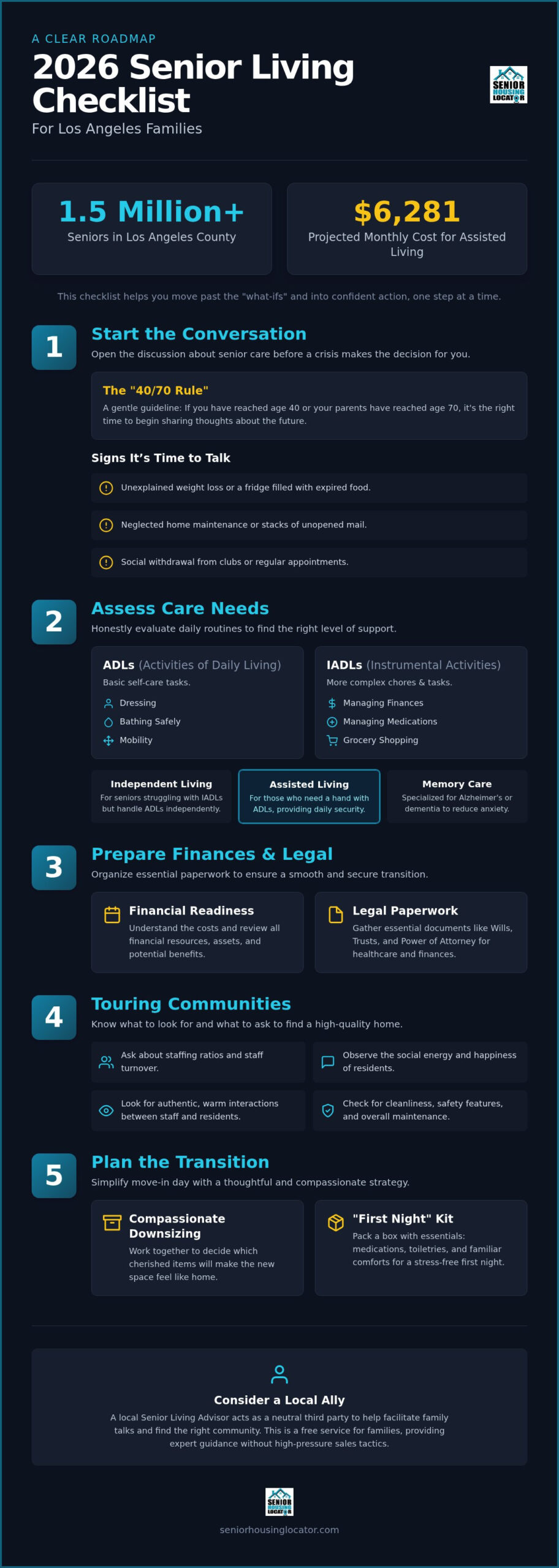
You are sitting in your parent’s living room in Sherman Oaks, noticing the mail piling up and a quietness that feels a bit too heavy. It is that heart-wrenching moment many adult children face, realizing the home you grew up in might no longer be the safest place for the people who raised you. You are not alone in this feeling. With over 1.5 million seniors living in Los Angeles County, thousands of families are asking the same hard questions right now. We created this 2026 senior living checklist for parents to help you move past the “what-ifs” and into a place of steady, confident action.
We understand the weight you are carrying. You might feel a sharp sting of guilt about the move, or perhaps you are staring at the projected $6,281 monthly cost for local assisted living and wondering how to make the math work. It is a lot to handle, but you do not have to do it by yourself. We promise to provide a clear roadmap that helps you find a community that fits your family’s budget, care needs, and neighborhood.
This guide walks you through the transition one step at a time. You will learn how to use California’s new 2026 transparency laws to your advantage, what specific questions to ask about staffing ratios, and how to spot a high-quality home during a tour. We have organized the complex details into simple phases so you can focus on what matters most, which is your parent’s comfort and your own peace of mind.
Key Takeaways
- Master the “40/70 Rule” to begin honest conversations about future care before a health crisis makes the decision for you.
- Organize essential financial and legal paperwork with a step-by-step senior living checklist for parents designed for Los Angeles families.
- Identify the right level of support by learning the difference between help with daily chores and specialized medical care.
- Learn what to look for during community tours, from the authenticity of staff interactions to the social energy of the residents.
- Simplify move-in day with a compassionate downsizing strategy and a “first night” kit to ensure your parent feels at home immediately.
Starting the Conversation: The 40/70 Rule and Emotional Readiness
Opening the discussion about senior care is rarely easy. It is often the most emotionally charged part of the entire journey. Many families wait for a fall or a medical emergency to act, but you don’t have to wait for a crisis. Experts recommend the 40/70 rule as a gentle guideline. If you have reached age 40 or your parents have reached age 70, it is the right time to begin sharing thoughts about the future. Using a senior living checklist for parents now allows you to explore options while everyone is calm and clear-headed.
The goal isn’t to take over their lives. It is about identifying “the why” behind a potential move. Are they struggling with stairs? Do they feel isolated in a large house? Focus the conversation on safety, social connection, and quality of life. By starting early, you keep your parents in the driver’s seat. They get to choose their neighborhood, their amenities, and their level of care. It helps to understand the basics first, such as What is Assisted Living?, so you can explain that these communities are designed for independence, not just medical supervision.
Signs It’s Time to Talk
Sometimes the need for a change is subtle. You might notice small things during a Sunday dinner in Encino or a visit to their home in Woodland Hills. Look for these specific indicators that suggest it’s time to review your options:
- Unexplained weight loss or a fridge filled with expired food.
- Neglected home maintenance, like a brown lawn or stacks of unopened mail on the counter.
- Social withdrawal, such as skipping bridge club or missing regular medical appointments.
When you encounter the “not yet” hurdle, acknowledge their fears. Most seniors worry about losing their freedom. Reassure them that a move is about gaining freedom from chores like mowing the lawn or fixing a leaky roof. This shift in perspective is a vital part of your senior living checklist for parents. It turns a stressful transition into a proactive plan for a better lifestyle.
Working with a Local Ally
You don’t have to carry the emotional weight of these meetings alone. A senior living advisor Los Angeles can act as a neutral third party to help facilitate these tough family talks. Because these advisors are local experts, they bring a neighborly approach rather than a clinical one. They understand the specific vibes of communities in Sherman Oaks or the San Fernando Valley. Most importantly, this is a free service for families. Having an organized expert do the legwork lowers the emotional temperature; it ensures the focus stays on finding a safe, happy home for your parents without the high-pressure sales tactics of national corporate chains.
Assessing Care Needs: Identifying the Right Support Level
Choosing the right level of support is the next logical step on your senior living checklist for parents. It starts with an honest look at how they handle their daily routine. Professionals often divide these tasks into two groups: Activities of Daily Living (ADLs) and Instrumental Activities of Daily Living (IADLs). ADLs are the basics. Can they dress themselves, bathe safely, and move around the house without help? IADLs are more complex chores like managing a checkbook, driving to the grocery store, or keeping up with medications.
If they are struggling with IADLs but can still handle basic self-care, independent living might be the solution. It offers a social lifestyle without the burden of home maintenance. However, if they need a hand with bathing or dressing, assisted living provides that extra layer of daily security. For families dealing with Alzheimer’s or dementia, memory care offers specialized environments designed to prevent wandering and reduce anxiety. Assessing these needs can be exhausting, especially if you are also managing your own career. If you find yourself needing time off to coordinate this transition, you may want to look into FMLA for eldercare to understand your rights as a family caregiver.
Assisted Living vs. Board and Care Homes
In the San Fernando Valley, you have a unique option often overlooked by national guides: the Board and Care home. While large assisted living communities feel like upscale hotels with many residents, Board and Care homes are traditional houses in quiet residential neighborhoods. They typically house only six residents at a time. These smaller settings are excellent for seniors who feel overwhelmed by crowds or need a higher caregiver-to-resident ratio. If you are looking in areas like Encino or Sherman Oaks, you’ll find many of these hidden gems. You can explore a Board and Care Homes in Woodland Hills guide to see how these intimate settings compare to larger facilities.
Determining the Right Fit
The best choice depends on your parent’s personality and their specific health diagnosis. Does your mother love large social mixers and fitness classes? A larger community might be her paradise. Does your father prefer a quiet, home-like kitchen and a familiar face every morning? A Board and Care home could be the better fit. We recommend planning for the long term by choosing a community that allows for “aging in place.” This means they won’t have to move again if their care needs increase later on. If you are feeling stuck on which path to take, you can always request a personalized care assessment to help narrow down the search.
Financial and Legal Readiness: Organizing the Paperwork
Once you understand the level of support your parent needs, it is time to tackle the practical side of the transition. Organizing finances and legal documents can feel like a mountain of paperwork, but taking it one step at a time brings a sense of order to the chaos. This part of your senior living checklist for parents ensures that their wishes are respected and their care is sustainable. It is much easier to have these conversations now than during a medical emergency when stress levels are at their peak.
Start with the essential legal trio: Financial Power of Attorney, Healthcare Power of Attorney, and a Living Will. These documents allow a trusted family member to make decisions if a parent is no longer able to do so. In California, senior living communities are officially known as Residential Care Facilities for the Elderly (RCFE). As of July 1, 2026, new state transparency laws require these facilities to provide full written disclosures about their pricing history and staffing ratios before you sign a contract. This is a major win for families, as it helps you avoid unexpected surprises after move-in day.
Reviewing insurance is just as vital. Many families are surprised to learn that Medicare rarely pays for the room and board associated with long-term care. You will want to look closely at any long-term care insurance policies, Social Security income, and potential VA benefits. If your parent is a veteran or the spouse of a veteran, they might qualify for “Aid and Attendance” benefits, which can significantly help with monthly costs.
Budgeting for Los Angeles Care
Los Angeles is a unique market where costs can vary wildly between a high-rise in Santa Monica and a cozy Board and Care home in the San Fernando Valley. When building your budget, look beyond the base monthly rate. You should ask about community fees, which are often one-time move-in charges, and how the facility handles level-of-care increases. If a parent’s health needs grow, the monthly cost typically rises as well. For a detailed breakdown of what to expect in our area, see this Assisted Living Costs in Los Angeles guide.
Gathering the Medical File
A complete medical record is the best tool you can give a new care team. Create a dedicated folder that includes a current medication list, pharmacy contact information, and recent notes from primary care physicians or specialists. Having hospital discharge papers ready is also helpful if a recent health event triggered the move. Using resources like the National Institute on Aging Caregiver Checklists can help you stay organized so no vital detail slips through the cracks during the move.
Touring Communities: A Checklist for Los Angeles Families
Walking through the front doors of a senior living community is where your research finally meets reality. This phase of your senior living checklist for parents is about more than just checking off boxes; it is about feeling the “vibe” of the home. When you step inside, take a moment to look past the decor. Are the residents active and engaged in the common areas? Do you hear laughter or quiet conversation? A community that feels alive is often one where the staff prioritizes social well-being as much as physical safety.
Pay close attention to how the staff members move and communicate. They are the heart of the community. Watch to see if they use residents’ names or if they seem to be rushing through their tasks. You want to find a team that is attentive and genuinely enjoys their work. This is also the time to inspect the physical environment. Look for wide, well-lit hallways, sturdy grab bars in bathrooms, and easily accessible emergency pull cords. These features provide the quiet security your parent needs to maintain their independence.
Don’t forget to stay for a meal. The dining experience is a huge part of your parent’s daily happiness. Taste the food yourself and check the menu for variety and nutritional balance. A high-quality community will offer fresh, appealing meals and accommodate specific dietary needs without making it feel like a chore.
The Local Touring Checklist
In Los Angeles, location is about more than just a zip code; it is about the commute. Consider the local traffic patterns on the 405 or the 101 before making a final choice. If you live in Sherman Oaks, a community in Woodland Hills might be perfect, but a home in Santa Monica could mean hours in the car for a simple visit. Frequent family visits are one of the best ways to ensure consistent care, so proximity matters. While on-site, also check the outdoor spaces. Look for shaded patios and secure walking paths where your parent can enjoy the California sunshine safely. Finally, trust your nose. A simple but vital indicator of daily care standards is the absence of strong chemical smells or unpleasant odors.
Questions to Ask the Director
Don’t be afraid to ask the tough questions. You deserve transparency about the daily operations of the home. Start with these three vital inquiries:
- What is your actual staff-to-resident ratio during the night shift?
- How does the team handle a sudden health decline or a medical emergency?
- Can we see the history of your rate increases over the last three years?
A great director will welcome these questions. If you want a more detailed look at specific neighborhoods in the Valley, you can review our guide on Assisted Living Placement in Woodland Hills. If you are feeling overwhelmed by the number of choices, we can help you narrow them down. You can book a free consultation with a local advisor to ensure you are seeing the best options for your family’s specific needs.
The Transition Plan: Moving Your Parent with Confidence
The day of the move is the culmination of all your careful research and planning. It is the final, most emotional piece of your senior living checklist for parents. While the physical move is a big task, the emotional transition is what truly makes a new space feel like home. Approaching this day with a clear plan helps lower the stress for both you and your parents; it allows everyone to focus on the new chapter ahead rather than the logistics of the past.
Start by downsizing with dignity. This process is about more than just clearing out a closet. It is an opportunity to celebrate the memories attached to their belongings. We suggest sorting items into three simple categories: keep, gift, and donate. Focus on bringing the items that provide the most comfort and familiarity. Once the boxes are packed, prepare a “First Night” kit. This should include their daily medications, a few cherished family photos, their favorite pillow, and a change of clothes. Having these essentials within reach ensures they don’t have to hunt through boxes for immediate comfort.
The first 30 days are often an adjustment period for everyone involved. It is normal for your parent to feel a mix of hesitation and relief. Establish a steady communication routine with the community staff early on. Ask the caregivers for updates on how your parent is socializing and eating. This partnership with the staff helps you stay informed and gives you peace of mind that your parent is being cared for by people who know their name and their preferences.
Logistics of the Move
To make the day go smoothly, consider hiring senior-specific movers in the San Fernando Valley. These professionals understand the delicate nature of moving older adults and often provide extra care with fragile heirlooms. We highly recommend setting up the new room *before* your parent arrives. Seeing their bed made with familiar linens and their favorite chair in the corner can significantly reduce the “new place” anxiety. Don’t forget the administrative details; you will need to handle the change of address with the post office and ensure all utilities at the old home are scheduled for shut-off.
Why You Don’t Have to Do This Alone
Finding the perfect community is a complex journey, but you do not have to walk it by yourself. Our placement service is completely free for families. We do the heavy lifting by researching licensed facilities, scheduling tours, and matching your parent’s social needs with the right local environment. For families facing more complex challenges, our Memory Care Placement in San Fernando Valley experts specialize in finding secure, compassionate homes for those with Alzheimer’s or dementia.
You have done the hard work of starting the conversation and gathering the facts. Now, let us help you cross the finish line. We are here to simplify the search and ensure your parents find a community where they can truly thrive. Reach out today and let us help you find the perfect home for the people who matter most.
Taking the Next Step with Confidence
Finding the right home for your parents is one of the most significant decisions your family will ever make. You now have the tools to move forward, from understanding the 40/70 rule to identifying the unique benefits of local Board and Care homes. By following this senior living checklist for parents, you have already replaced confusion with a clear, actionable plan. You are no longer just reacting to a situation; you are proactively building a safer, more social future for the people who raised you.
Our team is here to act as your trusted local ally throughout this entire process. We offer expert local knowledge of the San Fernando Valley and the greater Los Angeles area to ensure you find the perfect match. Because our placement assistance is a 100% free service for families, you can focus entirely on your parent’s well-being without any added financial pressure. We provide compassionate, integrity-driven guidance to help you navigate every turn. Start your free personalized senior living search today and let us handle the heavy lifting. You’ve got this, and we are ready to help you every step of the way.
Frequently Asked Questions
What are the most common red flags to look for in a senior living facility?
Look for signs of neglect such as lingering odors, unanswered call lights, or a lack of cleanliness in common areas. Pay attention to how staff members interact with residents; if they don’t know names or seem rushed, it may indicate low staffing ratios. Finally, observe the residents themselves. If they appear disengaged, lonely, or unkempt, the community might not be providing the social and personal care your family expects.
How much does assisted living cost in Los Angeles in 2026?
The projected median cost for standard assisted living care in Los Angeles County for 2026 is approximately $6,281 per month. This rate typically covers room, board, and basic assistance with daily tasks. However, total monthly fees can vary significantly based on the neighborhood and the specific level of care required. It is always wise to ask for a full fee schedule that includes any potential rate increases over the next three years.
Is there a difference between a nursing home and assisted living in California?
Yes, the primary difference lies in the level of medical care provided. Nursing homes, or Skilled Nursing Facilities, offer 24/7 medical supervision and complex treatments for chronic conditions. Assisted living, officially known as a Residential Care Facility for the Elderly (RCFE) in California, focuses on helping seniors with daily activities like dressing or bathing in a more residential, social setting. Most families include both options on their senior living checklist for parents to ensure the right medical fit.
What is the 40/70 rule for senior living conversations?
The 40/70 rule is a practical guideline for starting the talk about future care. It suggests that when you reach age 40 or your parents turn 70, it is time to begin discussing long term plans. This approach ensures that you have honest conversations while everyone is healthy and capable of making decisions. Starting early helps avoid the stress of making major life changes during a sudden health crisis.
How do I know if my parent needs memory care instead of assisted living?
Memory care is specifically designed for seniors with Alzheimer’s or dementia who require a secure environment. If your parent is wandering, experiencing severe confusion, or facing safety risks at home, specialized memory care is likely necessary. Assisted living is better suited for seniors who need physical help but are still cognitively aware and safe in an open environment. A professional assessment can help you determine which level of support is safest.
Does Medicare pay for assisted living or board and care homes?
Medicare does not pay for the room and board costs associated with assisted living or board and care homes. It generally only covers short term stays in skilled nursing facilities or specific medical services provided by doctors. Families often use a combination of private funds, long term care insurance, or VA benefits to cover these monthly expenses. Understanding these financial limits is a vital part of any senior living checklist for parents.
How can a senior placement agency help me for free?
Senior placement agencies operate on a referral model, meaning the senior living communities pay for the service rather than the families. This allows us to provide expert research, schedule tours, and offer personalized matching at no cost to you. We act as a local ally to do the heavy lifting, ensuring you find a community that fits your budget and care needs without the stress of searching alone.
What should be on a packing list for a senior moving to a smaller apartment?
Focus on items that provide immediate comfort and safety. Your packing list should include all current medications, comfortable clothing, and personal toiletries. Bring cherished items like family photos and a favorite pillow to make the new space feel like home right away. It is also helpful to include a few pieces of familiar furniture that fit the new layout, ensuring the apartment feels cozy rather than cluttered.