
What if helping a parent adjust to memory care isn’t about making the move feel perfect on day one, but about helping them feel safe and familiar one step at a time? If you promised you’d never move your parent, guilt may come with every decision. You may worry they’ll feel confused or agitated, or wonder whether visiting every day will comfort them or make settling in harder. Those concerns are understandable.
The transition doesn’t have to be a hand-off. It can be a partnership between your family and the memory care team, shaped around your parent’s routines, preferences, and changing needs. A thoughtful plan can support connection and comfort while giving everyone room to adjust.
This guide offers practical steps for the first 30 days, from preparing a familiar space to building a steady routine and communicating with staff. You’ll also find guidance on early visits and ways to notice small signs of progress. The goal isn’t to remove every difficult moment. It’s to help your parent feel more at home, stay socially engaged, and give your family a clearer path forward.
Key Takeaways
- Expect adjustment to unfold over time. The first few days may look different from progress over the first month.
- Use the packing “Rule of Three” to choose a few meaningful items that offer comfort, familiarity, and safety.
- Plan move-in timing with the care team and ask how they’ll welcome and orient your parent.
- When helping a parent adjust to memory care, use a flexible visit plan and watch for small signs of growing comfort and connection.
- At care plan meetings, share your parent’s routines and preferences, ask clear questions, and focus on your role as their advocate.
Understanding the Transition: Why Adjustment Takes Time
A move to memory care can bring relief that your parent has support, alongside grief, guilt, and worry. Your parent may also feel unsettled when familiar people, surroundings, and routines change at once. These reactions don’t mean the decision was wrong. A move is a significant transition, and adjustment usually happens gradually rather than on a set schedule.
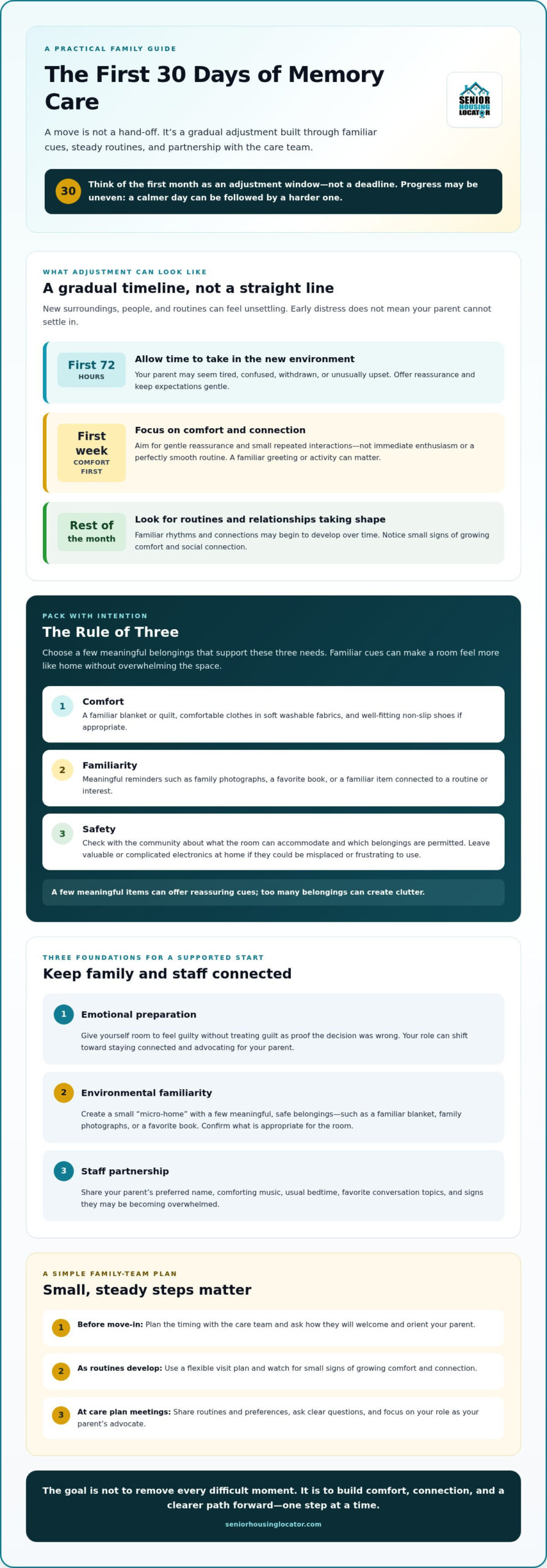
Think of the first month as an adjustment window, not a deadline. In the first 72 hours, your parent may seem tired, confused, withdrawn, or unusually upset as they take in a new environment. During the rest of the month, familiar routines and relationships may begin to take shape. Progress can be uneven: a calmer day may be followed by a harder one.
The Emotional Landscape of Memory Loss
For someone living with memory loss, a changed room or unfamiliar schedule can make it harder to understand what’s happening. A predictable rhythm can offer reassurance. Meals, rest, and activities in a familiar order give the day clearer cues. In Los Angeles communities, staff can learn what helps your parent feel at ease and use those preferences to make routines feel more familiar.
Some families use the phrase “transfer trauma” for the distress a person may experience around a move. It isn’t a sign that your parent can’t settle in. Memory care staff can help by offering gentle reassurance, responding patiently to distress, and building trust through small, repeated interactions. A greeting by name or a familiar activity can matter. For broader context on the social and emotional work involved, see this overview of understanding dementia caregiving. During the first week, aim for comfort and connection, not immediate enthusiasm or a perfectly smooth routine.
The Three Pillars of a Successful Start
Helping a parent adjust to memory care is easier when family and staff create continuity together. Keep these three foundations in mind:
- Emotional preparation: Give yourself room to feel guilty without treating that feeling as proof you made the wrong choice. Your role can shift from providing every form of support to staying connected and advocating for your parent.
- Environmental familiarity: Create a small “micro-home” with a few meaningful, safe belongings, such as a familiar blanket, family photographs, or a favorite book. Check with staff about what’s appropriate for the room.
- Staff partnership: Share details that may help, including your parent’s preferred name, comforting music, usual bedtime, favorite conversation topics, and signs they’re becoming overwhelmed. This context helps staff respond more personally.
Adjustment isn’t a hand-off. It’s a shared process built through steady routines, familiar reminders, and open communication.
Preparing the Space: The Rule of Three for Packing
A familiar room can help your parent feel less like a visitor and more at home. Too many belongings, however, can create clutter and make the new space harder to take in. Use a simple “Rule of Three” to guide your choices: pack for comfort, familiarity, and safety. A few meaningful items can offer reassuring cues without overwhelming the room.
Before packing, ask the community what the room can accommodate and which items are permitted. The Alzheimer’s Association’s guide to long-term care options offers helpful background as families consider residential care. For a parent moving into a San Fernando Valley community, breathable clothing may be more comfortable during warm weather. Choose soft, washable fabrics, and leave valuable or complicated electronics at home if they could be misplaced or frustrating to use.
Category 1: Comfort and Essentials
Start with everyday items your parent already knows how to use. Familiar textures and easy-to-manage clothing can make getting dressed and settling in feel less complicated.
- Three favorite outfits: Choose comfortable clothes in soft fabrics with simple fastenings, such as elastic-waist pants, if they suit your parent’s needs.
- A familiar blanket: Bring a quilt or throw from a favorite chair. Its texture and appearance may offer a recognizable comfort in an unfamiliar room.
- Comfortable shoes: Pack well-fitting, non-slip shoes that are easy to put on. Ask staff whether they’re appropriate for your parent and the community’s walking areas, including any garden paths.
Category 2: Familiarity and Memories
Choose personal reminders that invite recognition without turning the room into a crowded display. Tactile and visual items can connect the new space to people, routines, and interests your parent has known for years.
- Three framed photos: Pick clear images of familiar people or meaningful places. High-contrast borders may help the photos stand out, and secure frames can be easier to manage than loose pictures.
- A small memory box: Select three to five safe objects tied to a lifelong hobby or career, such as a well-loved recipe card or a familiar craft item. Check with staff before bringing anything fragile, sharp, or easily misplaced.
- A familiar scent: Their usual soap or lotion may provide a comforting sensory cue. Confirm with the community that the product is suitable for your parent and the setting.
Pack thoughtfully, then let your parent’s response guide what stays within reach. Helping a parent adjust to memory care can begin with a few familiar details, not a perfect replica of home. If you’re still comparing communities, explore memory care placement support from Senior Housing Locator, a free referral service for families.
Navigating Move-In Day: A Step-by-Step Strategy
Move-in day can feel emotional for everyone. A calm plan reduces last-minute decisions and gives your parent a more reassuring welcome. If they experience late-day confusion or agitation, ask whether a morning arrival would suit their routine. An earlier arrival may leave more daylight for settling in, but your parent’s needs and the community’s guidance should shape the plan.
The Logistics of a Smooth Arrival
Before move-in day, coordinate with the San Fernando Valley care team. Confirm the arrival time, what to bring, and who will greet your parent. If possible, arrange for familiar belongings to be set up in the room before they arrive, so they aren’t watching boxes being unpacked in an unfamiliar space. Ask which staff member can welcome them and help them get oriented.
- Keep arrival simple: Bring only the items the room is ready for, and avoid turning the first moments into a busy gathering.
- Make a warm introduction: Help your parent meet a staff member who can be a familiar point of contact. Share a few helpful details, such as their preferred name or a favorite topic.
- Say goodbye with care: Offer a warm, clear farewell rather than prolonging it through repeated goodbyes. If your parent is comfortable, staff might redirect their attention toward a snack, activity, or room tour as you leave. Don’t use distraction to dismiss their feelings. Keep your words reassuring and honest.
A short goodbye isn’t a measure of your love. It can simply make the departure easier to understand. Helping a parent adjust to memory care means balancing your presence with an opportunity for them to begin building trust with the people around them.
Handling the First 24 Hours
Ask the community how it handles family visits during the settling-in period. A staff member may suggest limiting visits, sometimes for 7 to 10 days, if they believe frequent arrivals and departures could unsettle your parent. That isn’t a universal rule. Ask why it’s being recommended, whether shorter visits are an option, and how staff will keep you informed. Agree on a communication plan, including whom to contact for routine updates and how to reach the facility director with concerns.
Make a plan for yourself, too. Arrange for a relative or friend to be with you after the move, or schedule something comforting instead of returning to an empty house without support. The National Institute on Aging offers practical background on planning for long-term care. For local placement considerations, read the San Fernando Valley memory care placement guide.
The First 30 Days: Helping a Parent Adjust to Memory Care
The first month is a chance to learn what helps your parent feel secure, not a test they have to pass. Use this roadmap as a flexible guide, and adjust visits with the care team based on your parent’s responses. Some people need more time before they’re ready to join activities or welcome longer visits.
- Week 1, observe and connect: Ask staff how your parent is responding to the daily rhythm. Keep visits brief if they seem tiring, and give your parent space to become familiar with staff and other residents.
- Week 2, ease back in: Try a short visit centered on an activity, such as listening to a favorite song or taking a gentle walk together, if appropriate. A shared task can feel easier than trying to keep a conversation going.
- Week 3, build a routine: If visits seem welcome, choose consistent days or times that work for your family and your parent’s schedule. A predictable pattern can make visits easier to anticipate.
- Week 4, review together: Check in with the care team about what’s going well, what remains difficult, and whether routines or supports should be adjusted. Share your observations and ask what staff have noticed between visits.
Effective Visiting Strategies for Los Angeles Families
Focus on doing rather than asking your parent to explain how they feel. Walk the grounds, look through familiar photos, or listen to music together. If you’d like to bring a small “gift for the group,” check with staff first. A shared activity or suitable treat may create an easy opening for conversation, but community guidance can help you avoid items that don’t fit residents’ needs.
If your parent asks to “go home,” try not to argue or insist they remember where they are. Acknowledge the feeling: “You miss home. I’m here with you.” Then offer reassurance and, if it feels right, gently shift to a familiar activity. Tell staff what prompted the question and what seemed to help.
Monitoring Progress and Wellbeing
Look for small changes over time, such as more settled sleep, joining meals, or showing interest in people and activities. These clues matter more than a single difficult visit. Share specific observations with staff, including what happened before and after a change in mood or routine.
Some sadness or confusion can occur during a transition, but ongoing concerns deserve a clear conversation. Raise concerns if your parent seems persistently distressed, is withdrawing from meals or activities, or you can’t get clear answers about their wellbeing. Ask the team what they’ve observed and what steps they recommend. A Los Angeles senior living advisor can also help families understand placement options and questions to ask. Learn how a senior living advisor in Los Angeles can help, or connect with Senior Housing Locator about memory care placement. Helping a parent adjust to memory care is a gradual partnership, built through steady visits, honest communication, and attention to what your parent needs.
Partnering with the Care Team for Long-Term Success
After move-in, your role changes, but your voice still matters. You may no longer handle every daily task, yet you remain the person who knows your parent’s history, preferences, and ways of communicating. Think of yourself as their advocate: share useful context, ask questions, and work with staff to support a life that feels personal and secure.
Build Trust Through Everyday Communication
A care plan meeting is a chance to compare what your family observes with what staff see throughout the day. Bring a few specific questions: What routines seem to comfort my parent? How are they joining meals or activities? What changes should we discuss, and who should we contact with concerns?
A short life story can help staff connect with your parent. Share three to five details, such as a preferred name, former job, favorite music, meaningful traditions, or topics they enjoy. Keep it practical and personal. “She likes to fold towels while chatting” gives staff a simple way to invite connection.
Good partnerships include honest feedback. Describe what you’ve noticed, ask for the team’s perspective, and agree on next steps rather than beginning with blame. You can also recognize staff members who may be less visible, including those working night or weekend shifts. A sincere thank-you can help build the trust that supports communication.
Find a New Normal for Your Family
Letting go of constant hands-on caregiving can feel unfamiliar. It may also make room for what you miss most: being your parent’s son or daughter, sharing a story, listening to music, or enjoying a quiet visit. Your wellbeing matters, too. Rest, time with friends, and support from others can help you stay present without carrying every concern alone.
Families in Los Angeles can ask the community about family meetings or support groups, and contact a local Alzheimer’s Association chapter to learn about available caregiver support. Warm seasons may also shape visit plans. Ask staff whether an indoor activity or a cooler time of day is more comfortable for your parent.
Helping a parent adjust to memory care is an ongoing partnership, not a task you have to manage alone. Senior Housing Locator provides free referrals to help families explore memory care options that fit psychological, social, and budget needs. For help considering placement options, contact Senior Housing Locator.
Take the Next Step with Confidence
Helping a parent adjust to memory care is a process, not a single move-in day. In 2026, remember that small signs of comfort can matter: a familiar item in their room, a predictable routine, or a growing connection with staff. Keep communication open with the care team, and give yourself permission to learn your new role as an advocate over time.
You don’t have to sort through options in Los Angeles and the San Fernando Valley alone. Senior Housing Locator offers families a free placement referral service to explore memory care choices that fit a parent’s psychological, social, and budget needs. The service can help families consider communities in Woodland Hills, Granada Hills, Northridge, Sherman Oaks, Encino, Burbank, Los Angeles, Santa Monica, and Pasadena.
Contact Senior Housing Locator for free memory care placement referrals. A steady plan and personalized guidance can help your family move forward with greater confidence. You’re still showing up for your parent, just in a new way.
Frequently Asked Questions
How long does it typically take for a parent to adjust to memory care?
Adjustment varies, and there isn’t a set timeline for every person. The first few days may bring confusion, sadness, or tiredness as your parent gets used to new surroundings and routines. Over the first month, look for small changes, such as joining a meal or seeming more comfortable with a staff member. Helping a parent adjust to memory care means noticing gradual progress, not expecting every day to feel easier than the last.
Should I visit my parent every day during the first week?
Not necessarily. The right visiting schedule depends on your parent’s reactions and the community’s guidance. Frequent visits may reassure some people, while repeated arrivals and departures may feel unsettling to others. Ask staff what they observe between visits, then agree on a plan. You might begin with brief visits or give your parent time to get familiar with the daily routine before building up contact. Keep communication open so you can adjust together.
What should I do if my parent cries or begs to go home?
Acknowledge the emotion instead of arguing about whether the community is “home.” You might say, “You miss home. I’m here with you,” then offer a calm activity, such as listening to familiar music or looking at photos. Let staff know what happened and what seemed to comfort your parent. If distress continues or you’re concerned about their wellbeing, ask the care team what they’re seeing and how they can support your parent.
How can I help the staff get to know my parent’s unique personality?
Share a short life story with three to five useful details: your parent’s preferred name, past work, favorite music, meaningful routines, or conversation topics they enjoy. Include what helps when they’re worried and what may frustrate them. For example, staff may find it easier to invite someone to an activity if they know gardening was a lifelong interest. Update the team as you learn what your parent responds to in their new setting.
Is it normal to feel guilty after moving a parent to memory care?
Yes, guilt can be part of a major family decision, especially if you once promised your parent they would never move. Feeling guilty doesn’t automatically mean you made the wrong choice. You can still be a loving son or daughter while relying on a community for daily support. Talk with someone you trust, and remind yourself why the move became necessary. Your role can continue through visits, communication, and advocacy.
What are the signs that a memory care community is a good fit?
Look for signs that the setting fits your parent’s needs and that staff communicate with respect and care. Notice whether your parent is treated as an individual, whether routines and activities suit their interests, and whether staff answer your questions clearly. Families comparing options in Woodland Hills, Granada Hills, Northridge, Sherman Oaks, Encino, Burbank, Los Angeles, Santa Monica, or Pasadena can use these observations during visits and follow-up conversations.
How do I handle “sundowning” during my visits?
If your parent tends to become more unsettled later in the day, ask staff when visits are usually most comfortable for them. Consider visiting earlier, keeping the visit calm and brief, and choosing a familiar activity instead of asking lots of questions. If distress begins, lower the stimulation and let staff know what you’re noticing. Share any patterns you observe, such as changes in mood at a certain time, with the care team.
Can I bring my parent’s favorite furniture to their new room?
Possibly, but check with the community before moving anything in. Ask about room dimensions, approved furniture, and whether the item can be arranged without blocking walking paths or creating other concerns. A familiar chair or small table may make the room feel more personal, but it should fit safely and comfortably. If larger furniture isn’t suitable, choose a smaller reminder of home, such as a familiar blanket, framed photo, or cushion.