
Imagine walking into a quiet, sunlit house in the San Fernando Valley that looks like a perfect home, yet you still have a nagging knot in your stomach. Is the staff truly attentive? Are the other residents happy, or just quiet? It’s completely normal to feel overwhelmed when evaluating board and care homes, especially when you’re choosing between a small residential setting and a large, bustling facility. You want more than just a clean room; you want a place where your loved one is seen, heard, and deeply cared for.
The good news is that you don’t have to rely on guesswork. You can gain total clarity by learning to look past the decor to see the true quality of life inside. It’s about finding a balance of safety, professional support, and genuine connection. This guide provides a simple, step-by-step framework to help you spot red flags, ask the right questions, and gain the peace of mind that comes with making an informed choice. We’ll show you exactly how to assess staffing levels and resident engagement so you can find a home that feels like the perfect fit for 2026 and beyond.
Key Takeaways
- Understand the essential criteria for evaluating board and care homes, including licensing and the unique benefits of the Residential Care Facility for the Elderly (RCFE) model.
- Learn why staff-to-resident ratios and low caregiver turnover are the most reliable indicators of a stable, high-quality environment.
- Master a two-step touring strategy that uses both scheduled visits and unannounced drop-ins to see the home’s true daily rhythm.
- Discover how to spot critical red flags, such as disengaged staff or poor resident grooming, before you make a long-term commitment.
- Find out how a local placement expert can provide “behind-the-scenes” reputation data that state reports often miss.
What Does Evaluating Board and Care Homes Actually Entail?
Choosing a home for a parent or spouse is one of the most emotional decisions you’ll ever make. It’s about finding safety, comfort, and a sense of belonging. Evaluating board and care homes involves more than a quick tour of the living room or a glance at the backyard. It’s a deep dive into how a home operates, who is providing the care, and how the environment feels on a typical Tuesday afternoon. You’re looking for a place where your loved one is seen as an individual, not just a resident in a bed.
The process is about verification and observation. You need to assess the home’s licensing, the consistency of the staffing, and the overall daily environment. In California, these small residential settings are officially known as Residential Care Facilities for the Elderly, or RCFEs. Unlike large assisted living communities that might house hundreds of people, these homes are often located in quiet residential neighborhoods. Ultimately, evaluating board and care homes effectively means matching a home’s specific care strengths to your loved one’s unique physical and social needs.
The Definition of a Board and Care Home in California
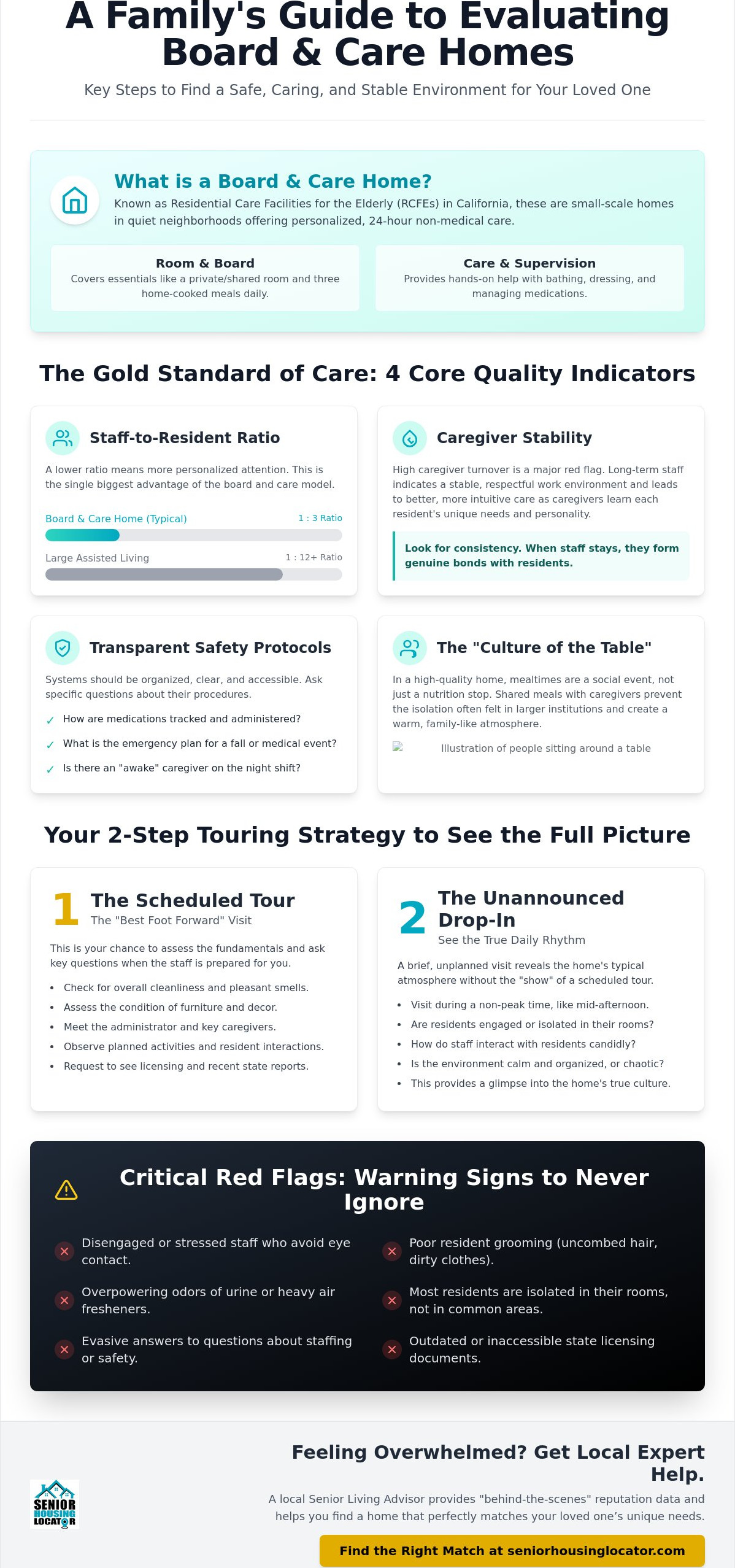
The six-bed residential model is the most common setup you’ll find throughout the San Fernando Valley. This small scale creates a unique care dynamic that larger facilities simply can’t match. An RCFE is a licensed residential home providing 24-hour non-medical care. These homes offer two main levels of support: room and board, and care and supervision. Room and board covers the basics like a private or shared room and three home-cooked meals a day. Care and supervision is where the real value lies, providing help with bathing, dressing, and managing daily medications. This model of Residential care ensures that help is always just a few steps away.
Why a Local Perspective Matters in Your Evaluation
Local knowledge is your best tool when searching for the right fit. Los Angeles area homes are incredibly diverse, often reflecting the vibrant communities where they are located. For instance, board and care homes in Woodland Hills often specialize in specific cultural traditions, languages, or dietary requirements. This local flavor can make a huge difference in how quickly a senior adjusts to their new surroundings. You should always check the California Department of Social Services (CDSS) records as part of your research. These public reports reveal past citations, staffing issues, or safety concerns that aren’t always obvious during an initial visit. A local expert who knows the reputation of these homes can help you look beyond the surface to find the truth.
Essential Criteria for Evaluating Care Quality
When you start evaluating board and care homes, it’s easy to get distracted by new paint or modern furniture. While aesthetics matter, the true heart of a home lies in the quality of daily care. This is often defined by the people who work there and the systems they use to keep residents safe. In the same way that professional firms like CyberOne provide high-level monitoring to ensure safety in the digital realm, a quality care home must have vigilant protocols to protect its residents. Research into the quality of care in board and care homes shows that smaller environments can provide significantly more personalized attention than large facilities. You want a place that feels like a family, not a business transaction.
The main advantage of the board and care model is the low staff-to-resident ratio. In a typical six-bed home, you’ll often find two caregivers during peak hours. This 1:3 ratio is nearly impossible to find in larger assisted living buildings. Beyond the numbers, look for caregiver longevity. High turnover is a major red flag. If the same caregivers have been with the home for years, it suggests a stable, respectful work environment. When staff stays long-term, they truly learn each resident’s unique habits, favorite stories, and subtle health changes.
Safety protocols must be clear and transparent. Ask how they track medications and what their plan is for a midnight emergency. In a residential setting, these systems should be organized but accessible. Also, pay attention to the “Culture of the Table.” In a high-quality home, meals aren’t just about nutrition. They’re a social event where residents and caregivers sit together. This creates a warm atmosphere that prevents the isolation often felt in larger institutions. If you’re feeling overwhelmed by the options, you can always get expert help with your search to find a home that meets these high standards.
Staffing and Supervision Standards
Ask specifically about the night shift. Is there an “awake” caregiver, or does someone sleep on-site? This makes a big difference if your loved one tends to wander or needs help using the bathroom at 2 a.m. You should also check the training levels for specific needs. If your parent has dementia, the staff needs specialized skills to manage “sundowning” or communication challenges. The House Manager should be present and involved, acting as a reliable point of contact for your family.
Cleanliness vs. “Lived-in” Comfort
A great home should be clean, but it shouldn’t feel like a hospital. Look for a “lived-in” comfort where residents feel free to use the common areas. Use your nose during the tour. You aren’t just checking for bad smells; you’re also looking for heavy perfumes or bleach used to hide them. Safety is equally vital. Check for sturdy grab bars in bathrooms, non-slip flooring, and clear pathways that are free of tripping hazards. A safe home is an organized home.
The 5-Step Process for Touring a Residential Care Facility
Touring a home is your chance to see the “rhythm of care” in action. It’s not just about looking at the floor plan; it’s about observing how people live and interact. While a financial appraisal might determine the worth of a property, evaluating board and care homes is about determining the worth of the care itself. To do this right, you need a systematic approach that looks beyond the surface. We recommend a 5-step process to ensure you get the full picture of a potential home.
First, start with a scheduled tour to meet the owner and see the layout. Second, always follow up with an unannounced drop-in. Third, make sure you interview the primary caregiver who will actually be helping your loved one, not just the owner or a placement agent. Fourth, review the facility’s “Statement of Deficiency” and recent state inspection reports to see their track record. Finally, taste the food and check the kitchen for fresh ingredients. Using a formal Residential Care Facility Checklist can help you keep these details organized during your visits.
Step 1: The Initial Scheduled Tour
Your first visit is the time to check the basics and build a relationship with the home’s leadership. Look closely at the private rooms and shared bathrooms. Are they easy to navigate? Is there enough natural light? Ask for a copy of the weekly menu and the daily schedule to see what social activities are actually happening. It’s also vital to observe the “vibe” of the current residents to see if your loved one would truly feel at home in that specific social circle. Do the residents seem groomed and engaged, or are they just sitting in front of a TV? These small details tell a big story about the home’s daily energy and commitment to well-being.
Step 2: The Unannounced Follow-up
Why is a second visit so important? A scheduled tour shows you the home at its best, but an unannounced visit shows you the home at its most honest. Try dropping in during a mealtime or on a Saturday afternoon. This is the best way to see how staff handle a resident’s request or a minor moment of confusion when they aren’t expecting “company.” You want to see if the home remains calm, organized, and supportive even when the owner or administrator isn’t standing right there. A great home doesn’t need a head start to look good; it’s consistently caring every single day. If you see caregivers who are attentive and patient during these “real life” moments, you’ve likely found a winner.
Red Flags: What to Watch for During Your Visit
When you are evaluating board and care homes, your intuition is often your most valuable tool. While most homes provide wonderful care, it’s vital to stay alert for signs that a facility might not be meeting high standards. A “red flag” isn’t always a glaring violation; sometimes it’s a subtle feeling that something isn’t quite right. You want a home where transparency is the default and where your loved one’s dignity is always the top priority. If you feel like you’re being “sold” a version of the home that doesn’t match what you see, take a step back and look closer.
One of the most common issues is “Invisible Staff” syndrome. This happens when you see caregivers who are constantly on their phones or tucked away in a back room while residents sit alone in the common area. Care should be active and engaged. You should also observe the physical state of the residents. Unexplained bruising or poor skin integrity, like extreme dryness or redness, can be signs of poor hydration or improper moving techniques. Other warning signs include:
- Restrictive Environments: Doors that are unnecessarily locked or residents being confined to specific areas without a clear medical or safety reason.
- Vague Financials: Administrators who can’t provide a clear breakdown of extra fees or how level-of-care increases are determined.
- The “Quick Fix” Mentality: A home that seems to rely on medication to manage behaviors rather than personalized engagement.
If you’re worried about missing these subtle signs, you don’t have to do this alone. You can get a professional referral to a vetted home to ensure your loved one is in safe hands.
Communication Gaps and Defensiveness
How an administrator reacts to your questions tells you everything about how they’ll handle future concerns. If they become defensive when you ask to see the kitchen or a resident’s room, it’s a major tell. You have every right to see where meals are prepared and where your loved one will sleep. Be wary of “all-inclusive” pricing that isn’t backed up by a detailed, written contract. A lack of paperwork usually leads to unexpected costs down the road. Transparency is the foundation of trust in any care relationship.
Environmental Warning Signs
Your nose can tell you as much as your eyes. Heavy scents of bleach or strong air fresheners are often used to mask underlying hygiene issues. A truly clean home smells neutral, not like a chemical factory. Don’t forget to look outside, too. A lack of outdoor access or a poorly maintained backyard can lead to a “cooped up” feeling for seniors. Comparing assisted living vs. board and care can help you decide if the smaller, more intimate setting provides the safety and freedom your loved one needs.
Finding the Right Match with a Senior Living Advisor
Evaluating board and care homes on your own is a massive undertaking. In Los Angeles alone, there are hundreds of small residential facilities tucked away in quiet neighborhoods. It’s nearly impossible for a busy family to visit every single one or keep track of which homes have changed ownership or staffing recently. This is where a senior living advisor in Los Angeles becomes an essential partner. They act as your local guide, helping you match your budget, preferred location, and specific care needs all at once. Since these advisors are typically paid by the facilities, this professional service is provided at no cost to your family. It’s a simple way to gain expert insight without adding a financial burden to an already stressful time.
The primary goal of an advisor is to streamline your search. They have already done the heavy lifting of vetting homes, checking licenses, and monitoring reputations. Instead of aimlessly searching through online directories, you get a curated list of homes that actually fit your criteria. This saves you weeks of driving and dozens of phone calls. You can focus your energy on the final visits and spending time with your loved one, while the advisor handles the logistical details. It’s about replacing the feeling of being overwhelmed with a sense of organized progress.
The Advantage of Local Expertise
Local knowledge is about more than just addresses. It’s about knowing which homes in Sherman Oaks or Northridge have the best reputation for memory care or specific cultural traditions. An advisor knows the “hidden” history of a home, including details that don’t always show up in a standard state report. They also help you navigate the technical side of the move, such as the “Physician’s Report” (LIC 602). This document is a mandatory requirement for admission to any residential care facility in California. Your advisor acts as a buffer and advocate during the negotiation process. They ensure that the care plan is fair and that the home is truly prepared for your loved one’s unique health situation.
Next Steps: Moving from Evaluation to Placement
Once you have a list of potential homes, your advisor will help you narrow it down to the top three contenders. This keeps the process focused and prevents the “decision fatigue” that often leads to mistakes. After you make your choice, the final step is a “transition meeting” with the home’s staff. This meeting is your chance to share the small details that make your loved one unique, like their morning coffee preference or their favorite music. It helps the caregivers build a bond before the move even happens. This structured approach replaces chaos with a clear, steady path toward peace of mind. Ready to find a safe, loving home? Contact Senior Housing Locator today for free, personalized guidance.
Moving Forward with Confidence and Clarity
Evaluating board and care homes doesn’t have to be a journey you take alone. By following a structured touring process and keeping a sharp eye out for red flags, you’ve already taken the most important steps toward protecting your loved one’s well-being. You now have the tools to look for high staff-to-resident ratios, observe the true daily atmosphere, and verify the reputation of a home beyond its marketing materials. These simple steps replace uncertainty with a clear plan of action.
Finding the right fit is about more than just a clean room. It’s about finding a community where your family member will truly thrive. Our team provides a free personalized placement service for families throughout the region. With expert knowledge of Woodland Hills and San Fernando Valley homes, we maintain an unwavering commitment to integrity and senior safety. Let our local experts help you evaluate and find the perfect board and care home today—for free.
You’ve done the hard work of starting the research. Now, let’s find that perfect place together.
Frequently Asked Questions
How do I check the state inspection reports for a board and care home in California?
You can verify a home’s history by visiting the California Department of Social Services (CDSS) website. Use their “Care Facility Search” tool to look up a home by its name or license number. This public database shows recent inspection results, any citations issued, and the home’s current licensing status. It’s an essential part of evaluating board and care homes because it provides an objective look at their safety record over time.
Is a board and care home safer than a large assisted living facility?
Safety is often a matter of the staff-to-resident ratio. In a board and care home, you’ll typically find one caregiver for every three residents, which allows for very close supervision. This intimate setting can be safer for seniors who are at a high risk for falls or those who need constant redirection. Large facilities have more resources, but they can’t always match the “eyes-on” attention found in a smaller residential home.
What is the average cost of a board and care home in the San Fernando Valley for 2026?
Costs in the San Fernando Valley vary significantly based on whether your loved one needs a private or shared room. The total monthly fee also depends on the specific “level of care” required for daily tasks like bathing or medication management. While we don’t quote specific prices, these homes generally offer a predictable monthly rate that includes room, board, and 24-hour supervision. It’s best to discuss your specific budget with a local advisor.
Can a board and care home provide memory care for late-stage dementia?
Yes, many small residential homes specialize in memory care and are well-equipped for late-stage dementia. The smaller, predictable environment is often less overwhelming for seniors with cognitive decline. Caregivers in these homes can provide personalized engagement that’s harder to achieve in a large building. However, you must ensure the home has the proper “memory care” or “delayed egress” fire safety clearances required by the state of California.
What questions should I ask the caregivers during my tour?
When you’re evaluating board and care homes, talk directly to the people who will be providing the daily care. Ask them how long they’ve worked at this specific home and what they enjoy most about their jobs. You should also ask how they handle common situations, such as a resident who is having a difficult night or someone who refuses to eat. Their answers will give you a true sense of the home’s heart and patience.
What happens if my parent’s care needs increase after they move in?
Most residential homes are designed to “age in place,” meaning they can increase the level of support as your parent’s health changes. The administrator will typically reassess the resident and adjust the care plan and fees accordingly. If the care needs eventually become strictly medical or exceed what an RCFE license allows, the home will work with your family to transition your loved one to a skilled nursing facility or hospice care.
Are board and care homes required to have a nurse on staff?
No, board and care homes are licensed as non-medical facilities and aren’t required to have a nurse on-site. The staff consists of trained caregivers who assist with “activities of daily living,” such as dressing and grooming. If your loved one needs daily injections or complex wound care, you’ll need to check if the home has a special waiver or if they allow outside home health nurses to visit the property.
How do I know if a board and care home is licensed?
Every legitimate residential care home in California must display its license in a visible area, usually near the front door. This document includes the facility’s official license number and the maximum number of residents they’re allowed to care for. If you don’t see a license posted, it’s a major red flag. You can always double-check the license number on the CDSS website to ensure the home is currently in good standing.