You’ve spent the last hour checking the locks and listening for the front door, your heart racing every time the house goes quiet. This constant state of alert is exhausting, yet the thought of moving your parent feels like a betrayal of their trust. It’s a heavy burden to carry alone, especially when you are worried about wandering or safety issues. Finding the right senior living options for dementia in Los Angeles shouldn’t feel like an impossible puzzle or a source of constant guilt. You deserve to know that your loved one is in a place where they are not just watched, but truly understood and supported.
We understand that the high costs and complex choices in our city can feel overwhelming. This guide is here to help you discover the different levels of care available in our local neighborhoods. You’ll learn how to choose a supportive environment that fits your family budget and provides the professional behavioral support your parent needs. We examine the differences between specialized memory care and smaller board and care homes. We also cover important 2026 California updates, like new hospital visitation rights for those with cognitive impairments and increased facility transparency requirements. By the end of this article, you’ll have a clear, manageable plan to ensure your loved one stays safe and happy.
Key Takeaways
- Learn about the three main senior living options for dementia in Los Angeles so you can make a confident, informed choice for your family.
- Understand the specific differences between assisted living and memory care to ensure your loved one gets the right level of cognitive support.
- Discover why a residential board and care home might be the best fit if you’re looking for a smaller, personalized environment with more direct attention.
- Identify the critical safety markers and licensing requirements you should look for when touring any dementia care community in California.
- Find out how working with a local ally can take the stress out of the placement process and help you find a safe home that fits your budget.
Understanding the Spectrum of Senior Living Options for Dementia
Finding the right care starts with Understanding Dementia and how it changes a person’s daily needs. It isn’t just about providing a room or helping with meals. It is about creating a world where your loved one feels successful despite their memory loss. In Los Angeles, the senior living options for dementia generally fall into three main categories. These include large assisted living communities, dedicated memory care wings, and small, neighborhood-based residential board and care homes.
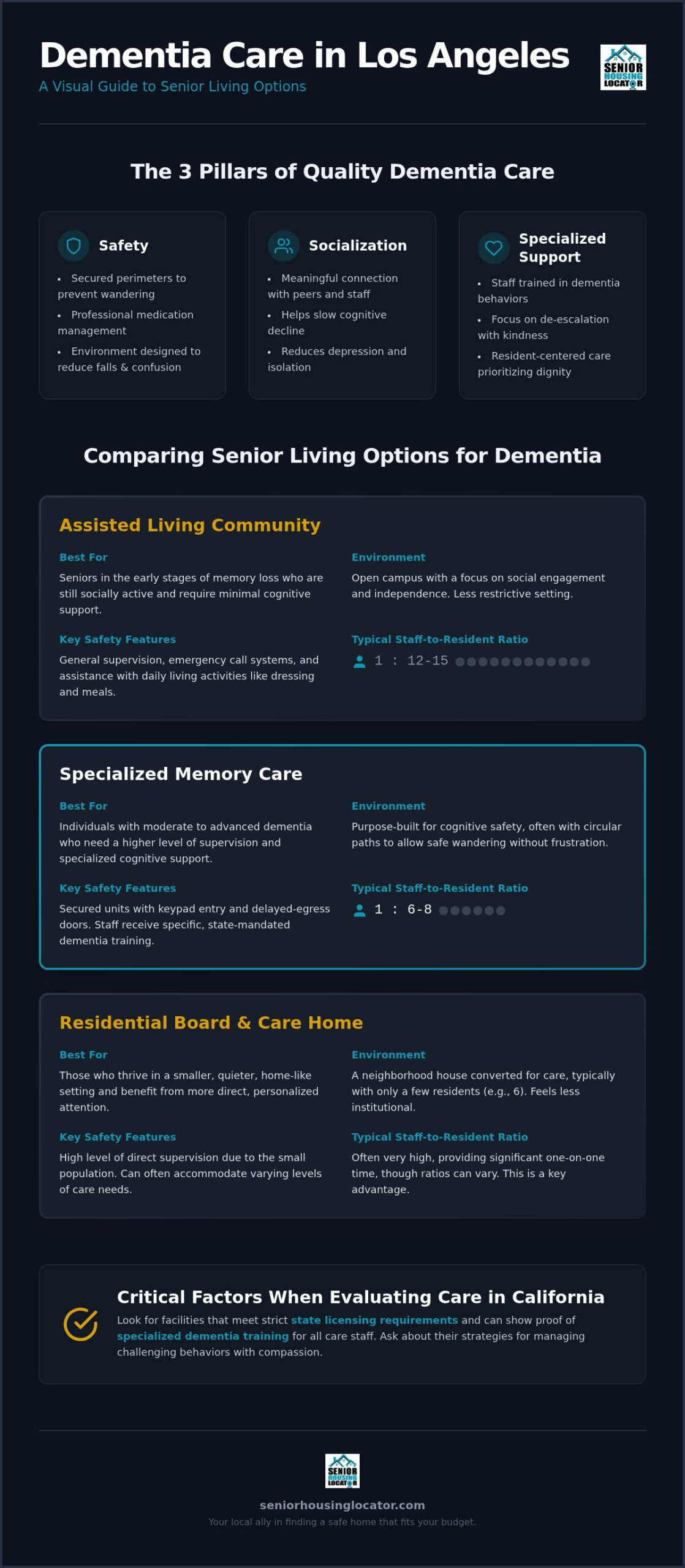
We view quality care as a three-legged stool. If one leg is missing, the whole structure wobbles. When you evaluate any setting, look for these three pillars:
- Safety: This includes secured perimeters to prevent wandering and professional medication management.
- Socialization: Meaningful connection with peers and staff helps slow cognitive decline and reduces depression.
- Specialized Support: You need a team that understands dementia behaviors and knows how to de-escalate confusion with kindness.
When Home is No Longer the Safest Option
In 2026, many Los Angeles families find that our city’s high-density environment makes in-home care increasingly difficult. Heavy traffic can cause caregiver delays, and the isolation of a quiet house often triggers “sundowning.” This is a state of increased confusion and anxiety that hits as the sun sets. You might notice “red flags” like your parent seeking the exit or forgetting their blood pressure pills. These aren’t just small lapses; they are signs that the home environment can’t provide the structure they need. Moving to a professional setting often brings immediate relief. It replaces the chaos of a house with a predictable, calming routine.
The Role of Specialized Memory Care
Memory care is a distinct choice among senior living options for dementia because it is built from the ground up for cognitive safety. It isn’t just assisted living with a locked door. The physical design often features “circular” walking paths. These allow residents to wander and explore without hitting a dead-end, which prevents the frustration of being told “no.” Staff training is also a critical factor. California law requires specific dementia-informed training for all direct-care staff. This ensures they can manage complex behaviors without relying on heavy medications. They focus instead on resident-centered practices that prioritize your loved one’s dignity and comfort.
Memory Care vs. Assisted Living: Which Is Right for Your Loved One?
Choosing between assisted living and specialized memory care is one of the most significant decisions you’ll make for your parent. Assisted living is often a wonderful fit for seniors in the early stages of memory loss. These individuals might need help with physical tasks like dressing or medication management, but they still thrive in an open, social environment. However, as cognitive needs grow, standard senior living options for dementia may no longer provide enough oversight. Memory care becomes necessary when safety and cognitive support take priority over physical independence.
You’ll find that memory care carries a higher monthly cost in areas like the San Fernando Valley. This premium covers the specialized environment and a much higher staff-to-resident ratio. While a standard assisted living wing might have one caregiver for every 12 to 15 residents, a high-quality memory care community often provides a 1:6 or 1:8 ratio. This ensures that someone is always available to redirect a confused resident or offer a helping hand during a difficult moment. These smaller ratios are vital for providing the personalized attention that prevents agitation and keeps residents calm.
Safety and Security Comparison
Safety is often the primary reason families seek memory care placement San Fernando Valley. Unlike the open campuses of assisted living, memory care units are secured. They use keypad entries and delayed-egress doors to prevent wandering while still allowing residents to move freely within a safe zone. These features must meet strict California dementia care regulations to ensure resident rights are protected. Emergency response systems in these units are also more robust. They often include wearable technology that alerts staff if a resident enters a restricted area or needs immediate assistance.
Therapeutic Activities and Engagement
Engagement looks very different in a dedicated memory care setting. Standard social calendars focus on entertainment, but specialized senior living options for dementia prioritize cognitive stimulation. You’ll see activities like music therapy, sensory gardening, or reminiscence groups that use old photos to spark memories. These are designed to be “failure-free,” meaning there is no right or wrong way to participate. This builds self-esteem and reduces the frustration that often leads to difficult behaviors. When you tour a local community, pay attention to the “vibe.” Are residents actively engaged in a task, or are they sitting isolated in a hallway? A vibrant, busy environment is a sign of a team that truly understands dementia care. If you feel stuck, reaching out to a local placement expert can help you compare these options side-by-side.
Board and Care Homes: A Personalized LA Alternative
A board and care home is a unique and often overlooked choice among senior living options for dementia. These are traditional residential houses located in quiet neighborhoods that have been licensed to care for a small group, typically up to six residents. Because the setting is a real home, it feels familiar and safe. There are no long, confusing hallways or massive, echoing dining rooms. Instead, your loved one lives in a domestic environment with a cozy living room, a sunny backyard, and a kitchen that smells like home-cooked meals.
One of the biggest advantages is the staffing ratio. In these homes, you’ll often find a 1:3 staff-to-resident ratio. This means two caregivers are usually on-site for only six seniors. This level of personal attention is hard to find in larger communities. It allows for an intimate, “neighborly” feel that significantly reduces the confusion and anxiety often felt by those with memory loss. It is a simpler way of living that prioritizes comfort and direct connection.
Why Board and Care Homes Thrive in the San Fernando Valley
The San Fernando Valley is home to many beautiful, quiet suburbs where these converted residences thrive. Neighborhoods like Northridge and Granada Hills offer a peaceful backdrop far from the noise of the city. These are often the best board and care homes Woodland Hills families choose when they want a high level of personal care in a familiar setting.
In these settings, the daily rhythm is gentle and predictable. Residents eat together at a family dining table, just like they’ve done their entire lives. This familiarity is incredibly grounding for someone with late-stage dementia. The caregivers often become like extended family members. They learn every resident’s specific quirks, from their favorite morning radio station to how they like their pillows fluffed. These small, human details make a massive difference in a senior’s daily happiness.
Comparing Costs: Board and Care vs. Large Facilities
When you look at different senior living options for dementia, the way you pay can vary wildly. Larger facilities often use tiered “levels of care.” This means your monthly bill might go up every time your parent needs more help with dressing, bathing, or walking. Board and care homes typically offer a more straightforward, all-inclusive rate that covers care, meals, and housing in one flat fee.
This predictability helps families stay on budget without worrying about surprise fees at the end of the month. You also have the choice between private and shared rooms. A shared room can be a more accessible option for families on a tighter budget, while a private room offers more personal space. Both options provide the same high level of safety and 24-hour oversight. It’s a practical, supportive way to ensure your loved one is cared for without the financial stress of a complex billing system.
Critical Factors When Evaluating Dementia Care in Los Angeles
Evaluating senior living options for dementia requires looking far beyond the lobby’s decor. In California, these facilities are licensed as Residential Care Facilities for the Elderly (RCFE). This means they must follow specific state standards for safety and staffing. However, meeting the law is just the baseline. You should also carefully observe the social climate. When you walk through a community, watch the residents’ faces. Are they engaging in conversation, or are they sitting alone in common areas? A healthy environment is one where residents feel seen and included.
Budget is often the most stressful part of this journey. Understanding assisted living costs Los Angeles for 2026 helps you build a sustainable plan. Geography also plays a practical role in your decision. If you live in Sherman Oaks or Encino, choosing a home within a short drive makes frequent visits much easier. These regular check-ins are essential for your peace of mind and your loved one’s emotional well-being. Being a “Trusted Local Ally” means we prioritize finding a location that keeps your family connected.
Evaluating Staff Expertise and Empathy
You should ask every facility about their specific dementia training programs. Do they use recognized methods like Teepa Snow’s “Positive Approach to Care” or validation therapy? Watch how the staff speaks to residents during your tour. A “neighborly” and “reassuring” tone can prevent a resident’s anxiety from escalating into a difficult behavior. You want to know exactly how the team handles a restless afternoon. High-quality senior living options for dementia focus on redirection and environmental changes rather than relying on over-medication.
The Physical Environment and Layout
Lighting is more than just an aesthetic choice in a memory care setting. Reducing “glare” and “shadows” is vital because these visual triggers can cause confusion or even hallucinations for seniors. Look for clear wayfinding cues, such as color-coded hallways or personal memory boxes outside bedroom doors. These tools help residents navigate to their own rooms independently, which builds confidence. Finally, check for safe outdoor access. A secured garden where your parent can enjoy the LA sun provides a sense of freedom that is often lost in more restrictive, clinical settings.
If you’re feeling overwhelmed by these details, let us help you narrow down the choices. Reach out to Senior Housing Locator today for a free, personalized list of vetted facilities in your neighborhood.
Navigating the Search with a Senior Living Advisor
Searching for a home for a parent with memory loss is unlike any other housing search. It isn’t just about finding a beautiful building or a convenient location. It is about finding a sanctuary that can handle the unique behavioral changes, safety risks, and emotional needs that come with cognitive decline. Navigating the various senior living options for dementia in a city as large as Los Angeles can feel like a full-time job. This is where a senior living advisor Los Angeles becomes an essential partner. We act as your eyes and ears on the ground, helping you filter through the noise to find a community that truly fits your family’s needs.
Our placement process is designed to be simple, structured, and completely free for families. It starts with a deep assessment of your loved one’s health, social preferences, and budget. We then narrow down the hundreds of possibilities to a handful of vetted options that meet our high standards for care. We stay by your side from the first tour to the moment your parent is settled in their new room. This guided approach ensures you never have to make a high-stakes decision in a state of crisis or confusion.
Local Expertise in Woodland Hills and Beyond
We pride ourselves on being a “Trusted Local Ally” with deep roots in the San Fernando Valley. Our team knows the reputations of facilities in Woodland Hills, Northridge, and Sherman Oaks because we visit them regularly. We often have access to “hidden gem” board and care homes that aren’t listed on major national search sites. These smaller, neighborhood residences can be some of the best senior living options for dementia because of their high staff ratios and familiar feel. We also understand local nuances, such as how LA traffic patterns might affect your ability to visit your parent on a weekday afternoon.
A Compassionate Facilitator for Your Family
The emotional weight of moving a parent is heavy enough without the added burden of “cold calling” dozens of facilities. We handle the initial outreach, verify current availability, and confirm pricing so you don’t have to. Our goal is to provide objective, integrity-based advice that prioritizes your loved one’s well-being over everything else. We help you look past the marketing brochures to see the actual staff culture and safety protocols. If you are ready to move from uncertainty to a clear plan, you can Contact Senior Housing Locator for a free consultation today. Let us help you find the peace of mind that comes with knowing your loved one is in good hands.
Finding Peace of Mind for Your Family
Choosing the right path for your loved one is an act of deep care and responsibility. You now have a clearer understanding of how to distinguish between specialized memory care and the intimate setting of a board and care home. By focusing on safety, staffing ratios, and a supportive social climate, you can move forward with confidence. Remember that the best senior living options for dementia are those that prioritize your parent’s dignity while giving you back your role as a daughter or son, rather than just a full-time caregiver.
You don’t have to navigate these complex local choices by yourself. Our team serves as your trusted placement specialist and local San Fernando Valley expert. We provide a completely free service for families to help you find vetted, high-quality care that fits your specific needs and budget. We are here to listen, guide, and support you every step of the way.
Get Free Expert Help Finding the Right Dementia Care Today
You are making a brave decision to ensure your parent’s safety and happiness. We look forward to helping you find the perfect place they can truly call home.
Frequently Asked Questions
What is the average cost of memory care in Los Angeles for 2026?
The cost of memory care varies significantly depending on the neighborhood and the specific level of support your parent needs. Generally, West Los Angeles carries a higher premium compared to more affordable areas like the San Fernando Valley. You should also account for “level-of-care” add-on fees. These covers extra help with tasks like incontinence management or behavioral support, which can change your total monthly investment as your loved one’s needs evolve.
Is memory care the same as a nursing home in California?
No, these are two distinct types of care. Memory care facilities are licensed as Residential Care Facilities for the Elderly (RCFE) and focus on social engagement and cognitive safety. Nursing homes, or skilled nursing facilities, are medical environments for seniors who need 24-hour clinical care from registered nurses. While memory care helps with daily living and memory support, a nursing home is intended for those with complex, chronic medical conditions.
Can a person with dementia live in a standard assisted living facility?
Yes, many seniors in the early stages of memory loss thrive in standard assisted living. These environments are excellent if your parent primarily needs help with physical tasks like dressing or medication reminders. However, if your loved one begins to wander or seeks the exit, it is usually time to transition to specialized senior living options for dementia. These secured units provide the specific environmental safety that standard assisted living campuses do not offer.
What is the difference between a memory care community and a board and care home?
The main differences are scale and setting. A memory care community is a larger facility with many residents, diverse amenities, and structured activity departments. A board and care home is a traditional house in a residential neighborhood licensed for only six residents. Families often choose board and care homes for the intimate 1:3 staff-to-resident ratio. This smaller setting can be much less confusing for seniors who feel overwhelmed by large, busy buildings.
How do I know if my parent needs a secured memory care unit?
Safety triggers are the most common signs that a secured unit is necessary. You should look for three specific “red flags” in your parent’s behavior. First, are they wandering or trying to leave the house unaccompanied? Second, are they experiencing high levels of anxiety or “sundowning” in the evenings? Third, are they forgetting to eat or take vital medications? If you notice these issues, a secured environment provides the oversight needed to prevent dangerous accidents.
Are there free resources to help find dementia care in the San Fernando Valley?
Yes, Senior Housing Locator provides a completely free referral service for families in Woodland Hills and the surrounding valley. We act as your “Trusted Local Ally” by narrowing down senior living options for dementia based on your specific needs. Because we are paid by the care providers, you get expert guidance without any added cost. We help you filter through the choices to find a safe, happy environment that fits your family budget.
What should I look for during a tour of a dementia care facility?
Focus on the social climate and staff interactions rather than just the furniture. You should observe three main things during your visit:
- Engagement: Are residents participating in activities or sitting alone?
- Tone: Does the staff speak to residents in a neighborly and reassuring way?
- Safety: Is the lighting bright enough to reduce shadows that cause confusion?
A high-quality home will feel clean, smell fresh, and have a calm, organized atmosphere.
Does Medicare pay for memory care or board and care homes in Los Angeles?
Medicare generally does not cover the cost of long-term residential care or board and care homes. It is designed to pay for medical services and short-term rehabilitation in a skilled nursing setting. Most families use private funds, long-term care insurance, or Veterans benefits to pay for dementia care. However, as of 2026, California’s updated Medi-Cal rules allow many seniors to qualify for care benefits without having to spend down their personal assets or home equity.