What if the most important sign of a high-quality home isn’t the fresh paint or the modern furniture, but the specific way a caregiver interacts with a resident during a quiet afternoon? You want the absolute best for your parent, yet walking into a small residential facility often brings up more questions than answers. It’s completely normal to feel a mix of guilt, stress, and the nagging fear of overlooking a major red flag. Using a detailed board and care home checklist can turn that uncertainty into a structured, confident evaluation process.
We understand that choosing between a large assisted living community and a cozy San Fernando Valley board and care home is a major decision. You deserve to feel certain that your choice is backed by clear facts, local expertise, and genuine peace of mind. This guide offers a step-by-step evaluation to help you assess safety, staff engagement, and the daily atmosphere. We will cover the latest 2026 California regulatory changes, provide a printable list of observations for your next tour, and help you find a community where your loved one can truly thrive.
Key Takeaways
- Understand why a smaller residential setting offers higher staff-to-resident ratios and a more intimate, home-like atmosphere compared to large facilities.
- Use our comprehensive board and care home checklist to identify critical safety features, from proper lighting to accessible bathroom modifications.
- Learn how to evaluate the heart of a home by observing staff interactions and using your senses to gauge the true quality of life.
- Protect your family by verifying state licenses and reviewing admission agreements for hidden fees or complex level-of-care charges.
- Discover how working with a local San Fernando Valley expert can simplify your search and provide access to pre-vetted homes at no cost to you.
Why a Board and Care Home May Be the Right Choice
Choosing the right environment for a parent is a deeply personal task. Many families start their journey looking at large, hotel-like facilities, only to find them overwhelming for a loved one who prefers a quiet life. Residential care through a board and care home offers a different path. These are licensed houses tucked away in quiet neighborhoods that provide a level of intimacy often missing in larger corporate settings. They look and feel like a standard family home, which can make the transition much less frightening for a senior leaving their own long-term residence.
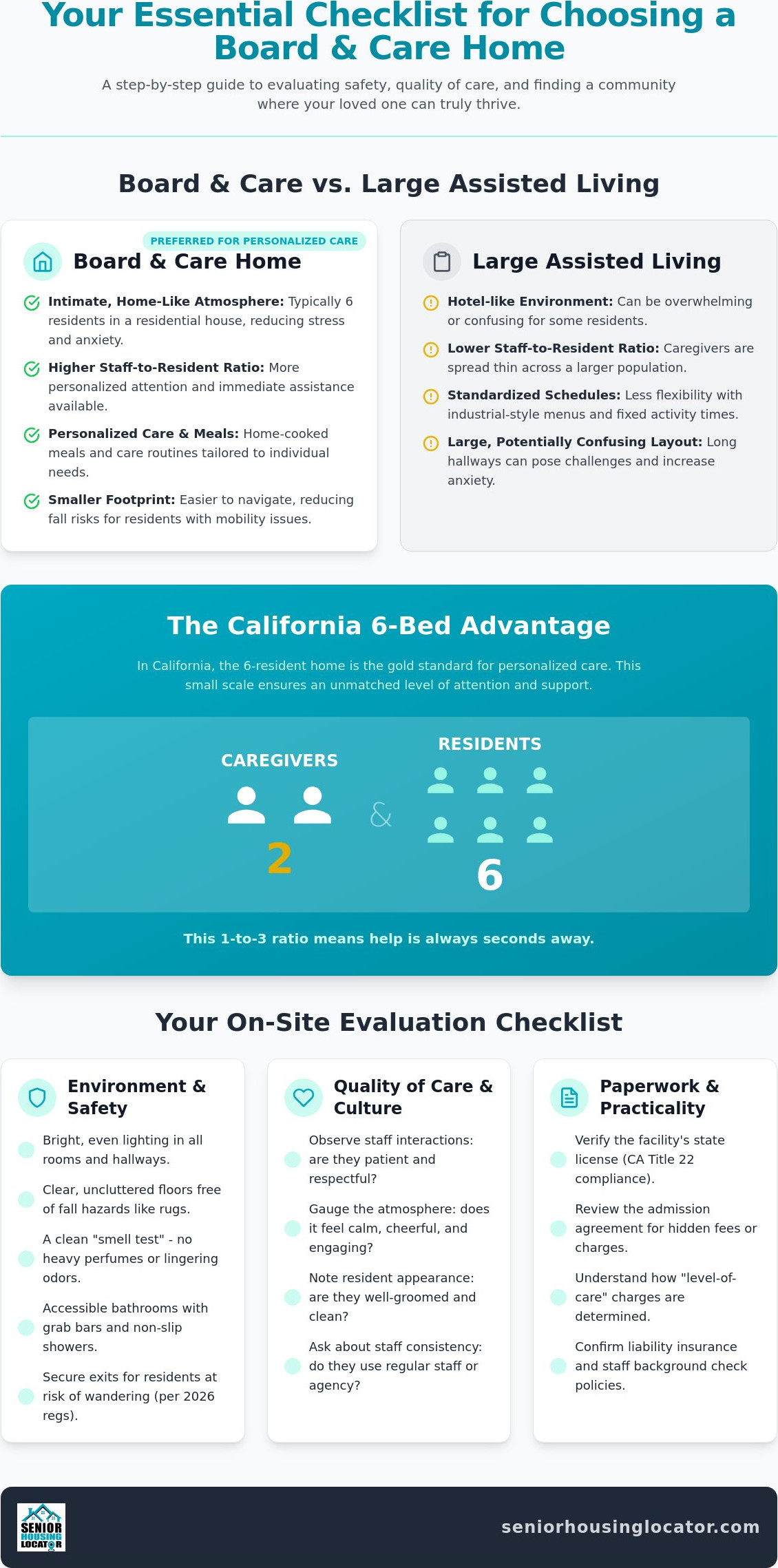
When you develop your board and care home checklist, it’s helpful to focus on why this model works so well for specific needs. Most of these homes in California are licensed for six residents. This small scale allows for a “Rule of Three” that defines the experience. First, you get higher staff-to-resident ratios that larger buildings cannot match. Second, residents enjoy home-cooked meals tailored to their specific tastes rather than a rotating industrial menu. Third, there is a consistent sense of familiarity. You aren’t just a room number here; you’re a member of a household where the caregivers know your name, your history, and your favorite routines.
In California, the 6-bed dynamic is the gold standard for personalized attention. While some 12-bed homes exist, the smaller setting ensures that two caregivers are often available for just six people. This ratio means help is always seconds away. Whether a resident needs help with a physical task or simply wants a friendly conversation, the staff is present and available without the distractions of a massive facility.
Board and Care vs. Large Assisted Living
Large assisted living communities offer grand lobbies and dozens of daily activities. While this suits active seniors who crave a social buzz, those with mobility challenges or cognitive changes often thrive in a smaller footprint. In a board and care home, the walk from the bedroom to the dining table is just a few steps. This reduces the risk of falls and lessens the anxiety that comes with navigating a massive, confusing building. Care is naturally personalized because the staff sees every resident throughout the entire day, allowing them to spot subtle changes in health or mood immediately.
The Local Advantage in the San Fernando Valley
Families in Woodland Hills, Sherman Oaks, and Encino often prioritize keeping their loved ones close to home. Choosing a house in a local residential neighborhood makes frequent visits much simpler for children and grandchildren. These homes feel like part of the community because they are. Residents might sit on a familiar-looking porch or watch neighbors walk their dogs, which provides a comforting sense of normalcy. Using a board and care home checklist designed for these specific environments ensures you find a place that feels like a true extension of your own family home.
The Essential Environment and Safety Checklist
When you step inside a potential home, your first impression should be one of order and comfort. A reliable board and care home checklist helps you look past the decor to see the actual safety infrastructure. Start with the basics: lighting, floor safety, and climate control. For instance, verifying that the home uses a professional service like HVAC Inspections Los Angeles to maintain its heating and cooling units is vital for senior health. A truly safe home prioritizes these core systems and clear paths above all else.
The “smell test” is equally revealing. A high-quality home shouldn’t smell like heavy perfumes or harsh chemicals used to mask odors. Instead, it should smell like a clean residence, perhaps with the scent of a meal being prepared. This indicates regular maintenance and active care. Beyond cleanliness, check for accessibility. Bathrooms must have sturdy grab bars and walk-in showers with non-slip surfaces. These aren’t just features; they are essential for preventing the most common accidents in senior care. If you feel unsure about what you’re seeing, you can always talk to a local expert who has already walked through these homes for you.
Security is another pillar of your evaluation. Since 2026 regulations now apply dementia care standards facility-wide in all RCFEs, every home should have clear protocols for residents at risk of wandering. Ask to see how they secure exits without making the house feel like a locked ward. You can verify a facility’s safety record and compliance history through the Community Care Licensing Division to ensure they meet California’s strict Title 22 requirements. This data gives you an objective look at how the home handles its responsibilities.
Indoor Safety and Navigation Standards
Walk through the rooms with a critical eye. If your loved one uses a walker or wheelchair, can they turn around easily in the bedroom? Check for fire safety equipment like smoke detectors and extinguishers in plain sight. Privacy matters too. Every resident should have a bedroom that feels like a personal sanctuary, with sturdy furniture and enough space for their belongings. A well-organized board and care home checklist ensures you don’t miss these small but vital details during a tour.
Outdoor Spaces and Maintenance
Don’t forget to step outside. A well-maintained backyard or patio offers residents fresh air and a vital change of scenery. Look for flat walking paths and comfortable seating with plenty of shade. If the garden is overgrown or the exterior paint is peeling, it may suggest that the administrator is stretched too thin. A home that takes pride in its curb appeal usually applies that same level of detail to the care provided inside. Maintenance is often a direct reflection of management’s commitment to quality.
Evaluating the Quality of Care and Culture
While the physical layout of a house is easy to see, the “soul” of a home is something you have to feel. A truly effective board and care home checklist moves beyond grab bars and floor plans to examine the emotional atmosphere. When you walk through the front door, take a moment to simply listen. Is the home filled with the sounds of conversation, music, or laughter? Or is there a heavy, uncomfortable silence? In a small residential setting, the social vibe is often a direct reflection of how the staff and residents connect with one another.
Pay close attention to how caregivers interact with the people in their care. Are they making eye contact? Do they speak with a warm, respectful tone? You want to see caregivers who treat residents like family members rather than tasks on a to-do list. This level of connection is the primary advantage of the board and care model. To help you structure these observations, you might also reference Medicare’s nursing home checklist, which offers excellent prompts for evaluating staff attentiveness and resident dignity.
Staffing ratios are another critical piece of the puzzle. In a 6-bed home, you should ask specifically about the nighttime hours. Is there an awake caregiver present at 3:00 AM, or is the staff on “sleep-over” status? For residents with high care needs or those who wake up disoriented, having an awake, alert professional is a necessity. Don’t forget to ask about mealtime dynamics either. Meals should be prepared fresh in the kitchen, smelling like a home-cooked dinner, and tailored to the specific dietary requirements of every resident at the table.
Staff Friendliness and Training
Longevity is a sign of a healthy culture. Ask the administrator how long the current caregivers have been with the home. High turnover can lead to inconsistent care and added stress for your loved one. Observe if the staff uses the residents’ preferred names and if they seem to understand their unique personality quirks. Since many homes now manage complex conditions, verify if the team has specialized training in dementia care or hospice support to ensure they can handle changing needs over time.
Resident Well-Being and Social Vibe
Look at the residents themselves. Are they clean, well-groomed, and dressed for the day? This is a simple but powerful indicator of the care they receive. Check if there is a schedule of activities that actually happens, or if the television is the only source of engagement. If possible, have a quick chat with a current resident or their family. Their firsthand experience is often the most honest piece of data you will collect during your search.
Paperwork and Practicality: The Business Checklist
Once you find a home that feels right, it’s time to look at the paperwork. This part of the process often feels cold and clinical compared to the warm environment you just toured. However, a solid board and care home checklist must include a deep dive into the business side to protect your family’s financial and emotional future. Start by looking for the Residential Care Facility for the Elderly (RCFE) license. By law, this must be displayed prominently in the home. If you don’t see it, ask the administrator immediately. A current license is your first guarantee that the state is monitoring the home’s safety and care standards.
Understanding the Admission Agreement
The admission agreement is the most important document you will sign. It’s often a long, dense contract, but you need to understand every page. Pay close attention to the “base rate” and what it actually covers. Some homes charge a flat fee, while others use “levels of care” that increase the price as your loved one needs more help with daily tasks. Clarify how they handle medication management and whether you need to provide your own supplies like incontinence products. Look for a specific clause that outlines the mandatory 30-day written notice required for any rate increases or planned move-outs. Understanding these details now prevents financial surprises later.
Verifying State Compliance and Reputation
A home’s reputation is built on more than just word-of-mouth. You can use the Community Care Licensing Division (CCLD) website to look up any facility’s history of citations or complaints. Ask the manager to walk you through their most recent state inspection report. A “clean” record is ideal, but how a home responds to a past citation is even more telling. Do they take accountability and show proof of improvement? High-quality homes are transparent about their history because they have nothing to hide. If navigating these state reports feels overwhelming, our team can provide personalized board and care home referrals to facilities we have already vetted for compliance.
Finally, ask about their discharge policy. As health needs change, you need to know if the home can support your loved one through the end of life. Many homes in the San Fernando Valley maintain hospice waivers, which allow residents to stay in their familiar surroundings even as their care requirements increase. Knowing these policies upfront provides the long-term stability your family needs during a difficult transition.
Simplifying Your Search with a Local Expert
Searching for the perfect home in a city as large as Los Angeles can feel like a full-time job. Even with a thorough board and care home checklist in hand, the sheer number of options in the San Fernando Valley can lead to significant tour fatigue. You might find yourself visiting home after home, only to realize they don’t fit your budget or specific care needs. This is where a local ally becomes an essential part of your journey. We have already spent years visiting these facilities, meeting the owners, and reviewing state records so you don’t have to start from scratch.
Our goal is to lower the emotional stakes of this transition. We focus on three core areas to help you find the right fit: matching your loved one’s specific care requirements, staying within your monthly budget, and finding a location that makes family visits easy. Senior Housing Locator offers this placement referral service at no cost to families. Because we are compensated by the homes, we can focus entirely on being your “helping hand” throughout the entire decision-making process. We take the burden of the search off your shoulders, allowing you to focus on supporting your parent or spouse.
Our Personalized Placement Process
We guide you through a logical, step-by-step progression to ensure no detail is missed. It starts with an initial assessment where we listen to your story and understand your unique needs. From there, we handle the heavy lifting of scheduling tours and verifying that every facility’s license is in good standing. Whether you are looking for a home in Woodland Hills, Burbank, or across the wider Los Angeles area, we stay by your side from that first phone call until the final move-in day. This structured approach ensures you feel cared for and well-advised at every turn.
Taking the Next Step with Confidence
You don’t have to make this life-changing decision alone. While a board and care home checklist provides a great foundation, having a knowledgeable guide who is deeply rooted in the community provides an extra layer of security. You can learn more about how a Senior Living Advisor Los Angeles provides clarity during this high-stress time. If you’re ready to find a safe, warm, and supportive environment for your loved one, contact us today for a free consultation. Let’s work together to find a place that truly feels like home.
Finding Peace of Mind for Your Family
Choosing a residential setting is a significant milestone for your family. By focusing on the physical safety of the environment, the warmth of the care culture, and the transparency of the business agreements, you’re already well-prepared. Using a board and care home checklist ensures that you aren’t just making a choice based on a feeling, but on clear, data-backed observations. You now have the tools to spot red flags and identify the high-quality homes that truly prioritize resident well-being.
You don’t have to carry the weight of this search alone. As local experts deeply rooted in Woodland Hills and the San Fernando Valley, we’re here to offer a helping hand. Our integrity-first referral process is a 100% free service for families, designed to match your loved one with a pre-vetted home that fits your needs and budget. We invite you to get your free, personalized list of vetted board and care homes in Los Angeles today. Making this transition with confidence is possible, and we’re honored to support you every step of the way.
Frequently Asked Questions
What is the most important thing to look for during a board and care tour?
Look for genuine warmth and respect in staff-resident interactions. While a board and care home checklist covers safety, the way a caregiver speaks to a resident tells you the most about the culture. Observe if residents are clean and engaged rather than just sitting in silence. A home where staff knows every resident’s personal history is usually a sign of high-quality, personalized care.
How do board and care home costs in Los Angeles compare to assisted living?
Board and care homes are generally more affordable than large assisted living facilities in Los Angeles. In 2026, the projected average monthly cost for a board and care home in LA County is approximately $6,281. In contrast, larger assisted living communities average around $7,965 per month. This price difference often makes residential homes an attractive option for families seeking high-quality care at a lower price point.
Can I visit a board and care home unannounced?
You can visit a home unannounced, and many families prefer this to see the daily routine without a “staged” feel. While a scheduled tour ensures the administrator is available to answer your business questions, an unannounced visit reveals the home’s true cleanliness and staff engagement. A reputable home should be welcoming and open to visitors during reasonable daytime hours, provided it doesn’t disrupt resident privacy.
What are the red flags to watch for in a residential care home?
Key red flags include strong unpleasant odors, a lack of resident engagement, and caregivers who seem rushed or dismissive. If you notice residents are unkempt or the home feels dark and cluttered, these are signs of poor management. Always check for a current state license; if it isn’t displayed or the administrator avoids showing it, you should look elsewhere for your loved one’s safety.
How many staff members should be in a 6-bed board and care home?
A typical 6-bed home usually has one to two caregivers present during the day to maintain a high staff-to-resident ratio. This small scale is a major benefit of the board and care model. You should specifically ask if there is an awake caregiver at night. Having at least one alert staff member 24/7 is vital for residents who may wander or require assistance during the late hours.
Is a board and care home the same as a nursing home?
No, board and care homes are Residential Care Facilities for the Elderly (RCFEs), which provide non-medical custodial care. Nursing homes, or Skilled Nursing Facilities, offer 24/7 medical supervision and clinical services. While a board and care home helps with daily living tasks like bathing and dressing, it doesn’t provide the intensive medical treatments or rehabilitation services found in a nursing home setting.
How do I check the licensing status of a California board and care home?
You can verify a home’s status through the California Department of Social Services website under the Community Care Licensing Division. This database allows you to look up any facility’s license number, current status, and history of citations. Checking these records is a vital step on your board and care home checklist to ensure the home meets the strict Title 22 regulations enforced as of 2026.
Does Medicare pay for board and care home stays in California?
Medicare does not pay for room and board in a residential care home because it is considered custodial care rather than medical care. While Medicare may cover specific medical services like physical therapy or home health visits that occur within the home, the monthly rent and daily care fees are typically paid privately. Many families use long-term care insurance or Veterans Aid and Attendance benefits to help cover these costs.