What if the most compassionate way to protect your parent’s independence is to admit they can no longer manage it alone? It is a heavy realization that often starts with a missed medication, an empty fridge, or a minor fender bender on Ventura Boulevard. You might feel a deep sense of guilt, wondering if you’re taking something away; however, recognizing the signs parents need senior care is actually a proactive act of love. It ensures they stay safe while you regain the ability to be their child rather than their full-time crisis manager.
We understand the unique pressure of living in Los Angeles, where managing a loved one’s needs often means battling hours of traffic or coordinating help from a distance. You deserve a clear path forward that replaces confusion with confidence. In this 2026 guide, we provide a straightforward checklist of red flags and break down the differences between San Fernando Valley assisted living and board and care homes. You will gain the local knowledge needed to find the right support, validate your decision, and finally breathe a sigh of relief.
Key Takeaways
- Identify subtle physical and emotional red flags, such as changes in hygiene or social withdrawal, that suggest your loved one needs extra support.
- Use our simple home assessment checklist to spot the signs parents need senior care, from expired food in the kitchen to unexplained dents in the car.
- Understand that your own physical and emotional exhaustion as a caregiver is a valid indicator that it’s time to explore professional care options.
- Learn how to navigate San Fernando Valley senior living choices, including the specific differences between assisted living and specialized memory care.
Physical Red Flags: Recognizing Changes in Daily Living Activities
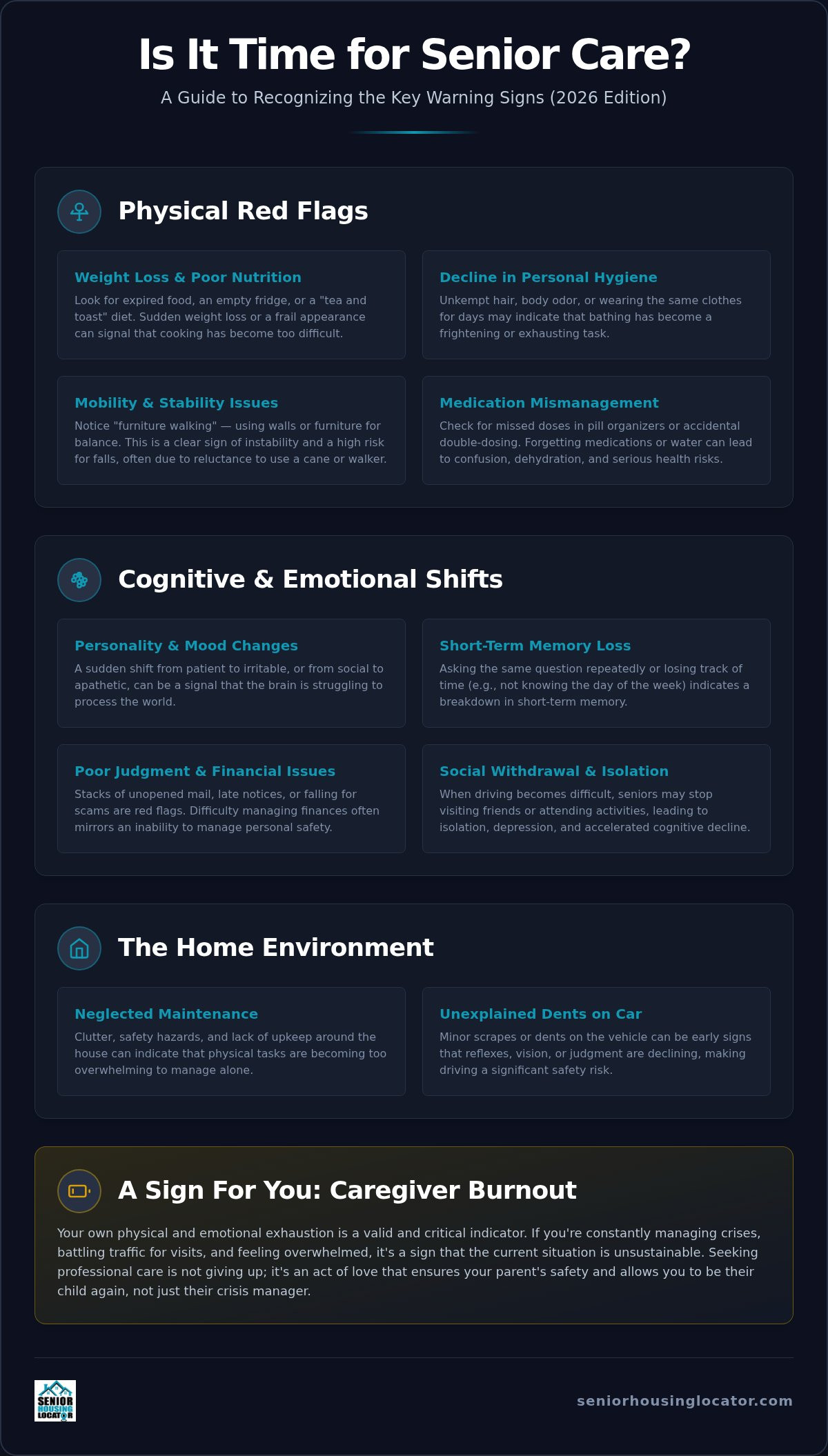
Physical changes are often the first tangible signs parents need senior care. These shifts can be subtle, like a slightly unkempt appearance, or more obvious, like a sudden change in how they move around their home. By paying close attention to their daily routines, you can identify when it’s time to offer extra support before a minor struggle becomes a major health crisis. It’s about preserving their safety, dignity, and peace of mind.
Start with the “refrigerator test” during your next visit. Open the door and look for expired milk, moldy produce, or a total lack of variety. Many seniors transition to a “tea and toast” diet because cooking has become too difficult or physically taxing. This often leads to noticeable weight loss or a frail appearance. You might also notice hygiene markers like unkempt hair, body odor, or unexplained bruising. These signs often suggest that bathing or navigating the bathroom has become a frightening or exhausting chore.
Watch how they move through the house. Do they use the walls, chair backs, or tables for balance? This behavior, known as “furniture walking,” is a clear sign that their stability is failing. It often happens when a senior is reluctant to use a walker or cane, yet their current living environment is no longer safe for their physical abilities. Identifying these signs parents need senior care early can prevent a dangerous fall in the future.
Struggles with Activities of Daily Living (ADLs)
Activities of Daily Living are the basic self-care tasks that determine whether a person can safely live on their own without assistance. You might notice your parent wearing the same clothes for several days or having significant difficulty getting in and out of the shower. These struggles are the standard benchmark for independent living safety. When these tasks become overwhelming, it’s a signal that the current living situation is no longer providing the level of care they deserve.
Medication and Nutritional Management
Managing multiple prescriptions is a complex task that requires focus and dexterity. Look for missed doses in pill organizers or bottles with small print that haven’t been opened in weeks. Some seniors may accidentally take “double doses” because they forget they already took their morning pills. In the warm Southern California climate, dehydration is a hidden danger that can lead to sudden confusion or dizzy spells. If they are forgetting to drink water or cannot manage their medications, it’s a strong indicator that they require a more structured, supportive care setting.
Cognitive and Emotional Shifts: Beyond Normal Aging
Cognitive changes often feel more personal and painful than physical ones. They strike at the heart of who your loved one is. While forgetting a name is common, a sudden shift in personality is one of the more telling signs parents need senior care. You might notice your usually patient father becoming uncharacteristically irritable or even paranoid about neighbors. Perhaps your mother, who once loved her weekly bridge club in Sherman Oaks, now shows total apathy toward her favorite hobbies. These shifts aren’t just “getting older.” They are signals that the brain is struggling to process the world around it.
Watch for “loss of time” and repetitive cycles. If they can’t tell if it’s Tuesday or Saturday, or if they ask the same question five times in ten minutes, it’s more than a simple lapse. This is one of the significant signs parents need senior care because it indicates a breakdown in short-term memory processing. They aren’t trying to be difficult. They genuinely don’t remember receiving the answer moments before. This repetition often leads to frustration for both the senior and the family caregiver.
Financial Red Flags and Judgment
Unopened mail and late notices are often early indicators of cognitive decline. Managing a bank balance requires complex math and logical reasoning that can become overwhelming as we age. Unfortunately, this confusion makes seniors prime targets for phone scams or predatory “charities.” These behaviors are often categorized under Signs of Elder Self-Neglect, as the inability to manage finances often mirrors an inability to manage one’s own safety. If you find stacks of unpaid bills or hear about unusual “investments,” it’s time to step in and provide a safety net.
The Impact of Social Isolation
In Los Angeles, driving is the primary lifeline to community. Once a senior stops driving because of vision or reflex issues, the “LA driving barrier” kicks in. Without easy transport, they stop visiting friends in Encino or attending religious services. This isolation accelerates cognitive decline and often leads to deep depression. You might also notice the “sundowning” effect, which is a state of increased confusion and agitation that spikes as the sun goes down. It’s a common stage in dementia that is very difficult to manage alone at home. If you’re seeing these shifts, exploring specialized memory care in the San Fernando Valley can provide the structure and social engagement they need to thrive.
The Home Assessment: Safety Hazards and Maintenance Neglect
Walking into a parent’s home often reveals a story they aren’t quite ready to tell. While they might insist they are doing fine, the physical state of their living space often says otherwise. One of the most telling signs parents need senior care is the “clutter creep.” You might see piles of laundry, stacks of old newspapers, or bags of trash that never quite make it to the curb. A messy home is often a sign of executive dysfunction, where the brain struggles to plan and execute the multi-step tasks required for basic upkeep.
Safety hazards also hide in plain sight during a home walk-through. Check for loose rugs, dim lighting in hallways, or broken stairs. These are major fall risks that can lead to a loss of independence overnight. In the San Fernando Valley, the environment itself can become a threat. During our intense summer heatwaves, an inability to manage the thermostat or a broken A/C unit can be life-threatening. If your loved one is sitting in a 90-degree house because they can’t remember how to operate the air conditioning, they need a more supportive environment.
Indoor and Outdoor Maintenance
A home’s exterior often mirrors the internal struggle. In neighborhoods like Woodland Hills or West Hills, an overgrown lawn or rows of dead plants can be a significant red flag. You should also trust your nose during your visit. Strange odors like stale food, pet waste, or a general lack of cleaning are clear indicators that the daily chores of homeownership have become too much. It’s not about a lack of effort; it’s about a lack of capacity to keep up with the demands of a large property.
Driving Safety in Los Angeles
Driving in Los Angeles is a high-stakes activity that requires sharp reflexes and clear vision. If you notice unexplained dents or scratches on their car, take it seriously. This is one of the most visible signs parents need senior care. They might be getting lost on familiar routes to the grocery store or the pharmacy they’ve visited for decades. Many seniors develop intense anxiety about merging onto the 101 or 405 freeways, which limits their access to doctors and social circles. When you weigh the high cost of frequent fender benders and rising insurance premiums against the safety of senior living, the transition often provides much-needed peace of mind.
Caregiver Burnout: When Your Needs Signal a Change for Them
Sometimes the most telling signs parents need senior care aren’t found in their home, but in your own mirror. Are you waking up with a sense of dread or dealing with constant fatigue? Many family members ignore their own physical symptoms, such as frequent headaches or sudden weight changes, because they feel obligated to do it all. This physical toll is a clear signal that the current care arrangement is no longer sustainable for anyone involved. When your own health begins to decline, you lose the ability to provide the high-quality support your parent truly deserves.
Emotional exhaustion is another critical marker that shouldn’t be dismissed. You might feel a growing sense of resentment, deep-seated guilt, or even hopelessness. These feelings are especially common for the “sandwich generation” in Los Angeles. Balancing a demanding career, raising children, and navigating hours of LA traffic to check on a parent is an immense burden. If you have stopped seeing friends or given up your own hobbies just to manage your parent’s daily needs, you are experiencing social withdrawal. This isolation often mirrors the very decline you are trying to prevent in your loved one.
Assessing Your Ability to Provide Care
It is helpful to distinguish between “helping out” and “providing medical-level care.” Dropping off groceries or managing a few bills is a neighborly act of love. However, managing complex medications, assisting with bathing, or monitoring dementia-related behaviors is a specialized job. Your own physical and mental well-being is a valid metric for moving to assisted living or a board and care home. If the demands of caregiving are affecting your job or your relationship with your children, it’s time to learn more about senior care transition help in Los Angeles.
The Risk of Caregiver Crisis
Waiting for a crisis, such as a fall or a middle-of-the-night emergency, is often the most expensive and stressful way to make a change. A reactive move leaves you with fewer choices and higher emotional stakes. When you choose safety over guilt, you are making a decision that supports long-term health for the whole family. Utilizing a local senior placement specialist can remove the heavy research burden from your shoulders. This allows you to return to being a daughter or son again, rather than a full-time, exhausted crisis manager.
Taking Action: Navigating Senior Living Options in the San Fernando Valley
Once you have identified the signs parents need senior care, the next step is choosing the right environment. This process can feel overwhelming, especially when you’re trying to balance your parent’s preferences with their actual safety needs. Starting the conversation early is the best way to avoid a crisis. It helps to use “I” statements, such as “I’m worried about your safety in this big house,” rather than telling them what they must do. This approach lowers defensiveness and keeps the focus on their long-term well-being.
If you’ve noticed social signs like loneliness or withdrawal, it might be time to consider Assisted Living in Woodland Hills. These communities offer a perfect balance of independence and social engagement. For those showing safety signs like wandering or forgetting the stove, specialized Memory Care in San Fernando Valley provides the secure, structured environment they need to stay safe.
Matching Signs to Care Levels
Every senior has a unique set of needs. Mapping specific red flags to the appropriate level of support ensures they get the right help without losing their dignity. We often look at three main categories to help families decide:
- Social signs: Loneliness or a lack of engagement often point toward Assisted Living or Independent Living.
- Safety signs: Wandering, leaving appliances on, or significant confusion indicate a need for Memory Care.
- Physical signs: If they need help with all activities of daily living, a Board and Care home may be the best fit.
Board and Care homes are an excellent option in the San Fernando Valley. These are traditional residential houses converted into licensed care facilities. They offer high-ratio care in a cozy, familiar setting. This is often less intimidating for seniors who prefer a quiet, home-like atmosphere over a large, resort-style community. Because there are fewer residents, the staff can provide more personalized attention to each individual.
How a Free Placement Service Works
You don’t have to walk this path alone. A local placement service is a free resource that removes the stress of vetting facilities yourself. We provide personalized tours and deep-dive vetting of communities from Santa Monica to Burbank. Because we are local experts, we know the “inside story” on staffing and care quality that online directories often miss. We also help you understand and navigate assisted living costs in Los Angeles. Our goal is to find a solution that fits your family’s budget while meeting every care requirement.
Moving Forward with Confidence and Clarity
Recognizing the signs parents need senior care is a courageous first step toward ensuring your loved one’s safety and dignity. Whether you’ve noticed subtle changes in their home or felt the heavy weight of caregiver burnout, these signals are a guide toward a more supportive future. You now have the tools to identify red flags and understand the specific care levels available in the San Fernando Valley. This knowledge replaces uncertainty with a clear, actionable plan for your family.
You don’t have to navigate these complex choices alone. Our team offers a free placement and referral service built on integrity and deep local knowledge. We have already done the hard work of vetting facilities across Woodland Hills and Greater LA to find the best fit for your family’s budget and care needs. Speak with a local Los Angeles Senior Living Advisor for free today for compassionate guidance from a trusted ally. Taking this step ensures your parent receives the care they deserve while you regain your role as a supportive son or daughter. Better days are ahead for your entire family.
Frequently Asked Questions
What is the best age for a senior to move into assisted living?
There is no specific “best” age for this transition because every individual’s health and safety needs are different. While many seniors move in their 80s, others benefit from the social engagement of a community much earlier. If you begin noticing the signs parents need senior care, such as social isolation or difficulty with home upkeep, it is often better to move while they are still healthy enough to enjoy the amenities.
How do I tell my parents they can no longer live alone?
Start the conversation early and use “I” statements to express your concerns for their well-being. Focus on specific observations like missed medications or safety hazards in the kitchen. It is helpful to present options rather than a single demand. Frame the move as a way to preserve their independence by providing the right support in a community like those in Sherman Oaks or Encino.
What should I do if my parent refuses to move to a senior living community?
Listen to their fears without judgment and validate their feelings. Often, resistance stems from a fear of losing control or leaving a familiar neighborhood. You might suggest a “trial stay” or a respite care period in a local Woodland Hills facility. If safety is at risk, involve a neutral third party like a doctor or a senior placement advisor to help bridge the communication gap effectively.
Is memory care more expensive than assisted living in Los Angeles?
Yes, memory care is typically more expensive due to higher staffing ratios and specialized security features. In the San Fernando Valley, memory care rates reflect the intensive training required for dementia care and 24-hour monitoring. These costs cover tailored programming designed to support cognitive health. We can help you compare specific facility rates to find a solution that fits your family’s budget while meeting every care requirement.
What are the first signs of dementia in elderly parents?
Early indicators often include short-term memory loss, such as repeating the same question or forgetting recent events. You might also notice poor judgment with finances or sudden personality changes like irritability. These are significant signs parents need senior care because they affect daily safety. If they are getting lost on familiar routes in Burbank or Northridge, it’s time to consider a professional care assessment.
How can I afford senior care in California on a limited budget?
Explore local options like the Assisted Living Waiver program or Veteran’s Aid and Attendance benefits. For those with limited assets, board and care homes in the San Fernando Valley can sometimes be more affordable than large luxury communities. You may also look into long-term care insurance or home equity. We specialize in finding quality placements that work within specific financial constraints across the Los Angeles area.
What is the difference between a board and care home and assisted living?
Assisted living facilities are typically larger communities with many amenities and social activities. Board and care homes are licensed residential houses that offer a more intimate, home-like setting with a higher staff-to-resident ratio. While assisted living is great for social engagement, board and care is often better for seniors who need more hands-on physical assistance or a quieter environment in neighborhoods like Granada Hills.
Can I get help finding a senior living facility for free?
Yes, Senior Housing Locator provides a completely free placement and referral service for families. We are local experts who have already vetted facilities across the San Fernando Valley and Los Angeles. Our team handles the research, schedules tours, and helps you negotiate costs at no charge to you. We are paid by the communities, allowing us to provide you with objective, integrity-driven guidance throughout the entire transition.