
You just left your father’s room, but as you walk to your car, that familiar knot of anxiety returns. You wonder if the morning shift passed along your notes about his appetite, or if your questions about his new medication will simply go unanswered. Learning the nuances of communicating with assisted living staff effectively is often the hardest part of this transition; however, it is the most vital step in securing your peace of mind.
It is natural to feel overwhelmed by the complex hierarchy of a care facility or to fear that speaking up might lead to friction. You want the best for your parent, but you don’t want to be labeled as the “difficult” family member. You deserve to feel confident that your voice is heard and your parent is safe even when you aren’t there.
By following a few simple strategies, you can master the art of collaborative care. This ensures your loved one receives high quality support while you build a respectful, stress-free relationship with the people who see them every day. It’s about moving from a state of worry toward a state of partnership.
This guide provides a clear plan for getting regular updates, identifying the right person for every concern, and fostering an environment where your parent can truly thrive. Let’s look at how to build that bridge together.
Key Takeaways
- Adopt a partnership model by sharing your parent’s personal history, which builds immediate trust and helps staff provide more personalized care.
- Save time and reduce frustration by learning exactly which staff members to contact for daily wellness checks versus specific medical or medication questions.
- Use tools like family portals and in-room logbooks for communicating with assisted living staff effectively, keeping you informed even when you are away.
- Apply the “I-Statement” framework to advocate for your loved one’s needs constructively, resolving issues without creating tension with the care team.
- See how a local Senior Living Advisor can help you find a community that prioritizes transparency, making healthy communication easier from day one.
Building a Collaborative Partnership with Your Care Team
Choosing a community in Woodland Hills is a big step, but the work doesn’t end at move-in. Think of care as a partnership rather than a simple transaction. You and the facility staff are now part of the same team with one goal: your parent’s well-being. Before diving into specific tactics, it helps to understand What is assisted living in a modern context: a social model of care designed to promote independence through a community-based approach.
Transparency is the foundation of this partnership. When you’re open about your father’s history, his quirks, or his specific triggers, you build immediate trust. Communicating with assisted living staff effectively starts with sharing what makes your loved one unique. This collaborative attitude directly impacts the quality of personalized care. In local San Fernando Valley facilities, staff are often busy, but they appreciate families who act as helpful resources rather than distant observers.
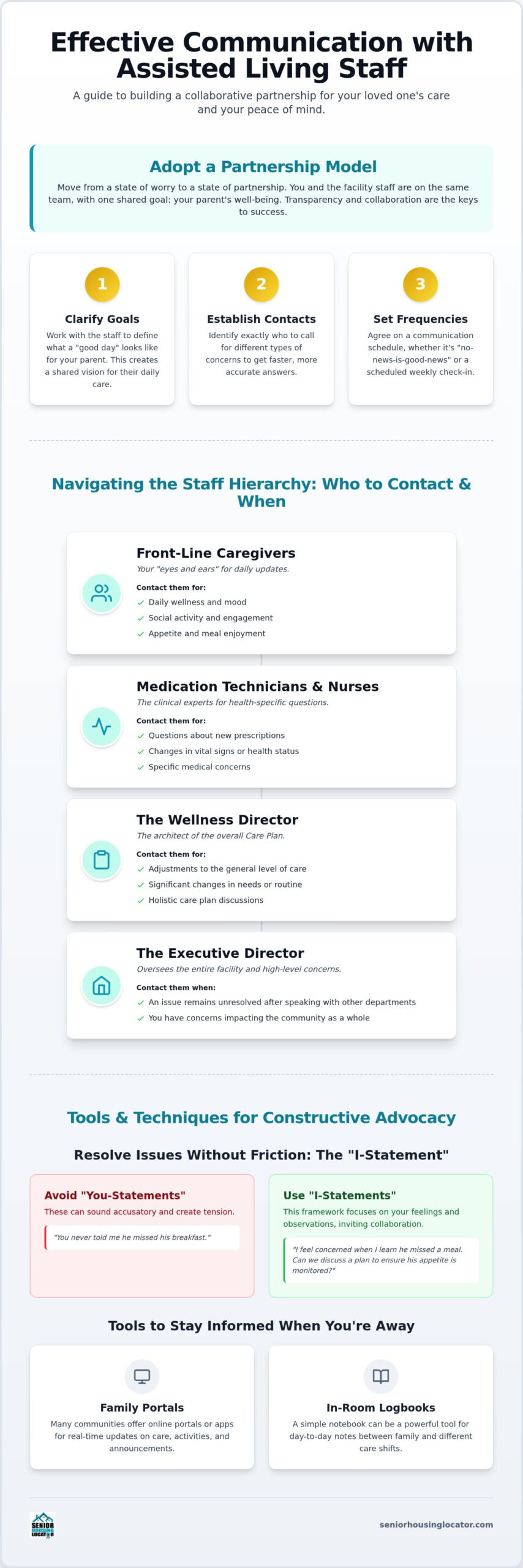
Use the “Rule of Three” during your first few weeks to set the right tone:
- Clarify goals: Define what a “good day” looks like for your parent.
- Establish contacts: Identify exactly who to call for different types of concerns.
- Set frequencies: Agree on how often you’ll receive routine updates.
This structure removes the guesswork and lowers your stress. It ensures everyone is moving in the same direction from day one.
The Power of the ‘Caregiver’s Insight’ Document
Most facilities have medical records, but those don’t tell the whole story. Create a one-page “cheat sheet” about your loved one’s personality. Include non-medical details like their favorite morning routine, topics of conversation they enjoy, or things that might make them anxious. This helps caregivers build a faster, deeper bond with your parent. It transforms a resident from a room number into a person with a rich history, making the staff’s job more rewarding and your parent’s care more precise.
Setting Mutual Communication Expectations
Clarity prevents conflict. Discuss whether you prefer a “no-news-is-good-news” approach or scheduled weekly check-ins. It’s helpful to identify the best times to call, usually avoiding hectic shift changes or meal times. Ask the team if they prefer phone calls, emails, or family portal apps. Communicating with assisted living staff effectively means respecting their workflow while ensuring your parent’s needs stay front and center. When expectations are clear, you don’t have to wonder if you’re being a burden; you’ll know exactly how to stay connected.
Navigating the Staff Hierarchy: Who to Contact and When
One of the biggest frustrations for families in Los Angeles is feeling like their questions disappear into a void. Often, this happens because the message went to the wrong person. Communicating with assisted living staff effectively requires a clear map of who does what within the building. When you know the right contact, you get faster answers and better results for your parent.
Staffing structures generally follow a specific hierarchy. You can save hours of phone tag by categorizing your questions into these three buckets:
- The Front-Line Caregivers: These are your eyes and ears. Contact them for updates on daily wellness, social activity, or appetite. They know if your dad enjoyed the afternoon music or if he’s been feeling a bit lonely.
- Medication Technicians and Nurses: Reach out to these professionals for health-specific changes. If there’s a question about a new prescription or a change in vitals, they are the ones with the clinical answers.
- The Wellness Director: This individual is the architect of the overall Care Plan. They are the person to call if you feel your parent’s general level of care needs an adjustment.
If a situation remains unresolved after speaking with these departments, it is time to contact the Executive Director. They oversee the entire facility and handle high-level concerns that impact the community as a whole.
Understanding Roles in Los Angeles Senior Living Facilities
Staffing looks different depending on the setting. In a large Woodland Hills community, you might have a dedicated Life Enrichment Coordinator for social health and a Lead Caregiver for each specific shift. In a smaller board and care home, one person might wear three different hats. If you aren’t sure where to start, finding the right community fit with a local advisor can help you understand the specific structure of a home before move-in day.
The Art of the ‘Non-Emergency’ Inquiry
Timing is everything in a busy care environment. Shift crossovers, usually occurring at 7 am, 3 pm, and 11 pm, are the most chaotic times of the day. Staff are busy passing off vital information to the next team. Avoid calling during these windows. Instead, try using the “24-hour rule” for non-urgent questions. This gives the team enough time to investigate a situation and provide a thoughtful answer. Following practical tips for communicating with facility staff helps you build professional capital. When you respect their workflow, they are more likely to prioritize your calls when a real emergency arises.
Effective Methods and Tools for Staying Informed
Once you understand the staff hierarchy, the next step is choosing the right tools to keep information flowing. Communicating with assisted living staff effectively is much simpler when you use established systems that fit into a caregiver’s busy day. Modern facilities often provide digital family portals. These platforms allow you to see real-time updates on meals, social participation, and daily wellness without needing to pick up the phone for every small detail.
For those who prefer a more personal touch, the “Notebook Method” remains incredibly effective. Place a simple, dedicated notebook in your parent’s room. When you visit, write down any small observations or questions you have. Caregivers on different shifts can read your notes and leave updates for you in return. This creates a consistent, low-pressure dialogue that doesn’t rely on catching someone in the hallway.
It is also important to respect privacy regulations. Ask the administration about their policy on HIPAA-compliant communication. While a quick text message might seem convenient, it often isn’t secure enough for sharing sensitive medical data. Stick to the facility’s official email or secure portal for health-related inquiries to ensure your parent’s information stays protected.
Maximizing the Value of Care Plan Meetings
Quarterly Care Plan meetings are your best opportunity to discuss long-term health goals and general well-being. These sessions should include the nursing staff, the wellness director, and the resident whenever possible. To make the most of this time, prepare your questions in advance using our checklist. Always document the outcomes of these meetings. Having a written record of agreed-upon changes ensures that everyone on the care team is held accountable for the next steps.
Local Resources for Families in the San Fernando Valley
You don’t have to manage these relationships in a vacuum. Families in Sherman Oaks, Encino, and surrounding areas can tap into local support groups to share experiences and advice. A senior living advisor in Los Angeles acts as an ongoing advocate, helping you navigate the complexities of the care system. If you ever feel that resident rights aren’t being respected, the Long-Term Care Ombudsman provides independent oversight. They are a vital resource for families seeking an outside perspective on care quality and facility transparency.
Constructive Advocacy: Resolving Concerns Without Friction
Even with the best partnership, issues will occasionally arise. The key to communicating with assisted living staff effectively during these moments is to focus on advocacy rather than accusation. Use the “I-Statement” framework to lower defenses. Instead of saying, “You forgot to help Mom with her shower,” try saying, “I feel concerned about Mom’s skin health because I noticed she hasn’t had her scheduled shower today.” This shift in language keeps the conversation focused on your loved one’s needs rather than the staff’s perceived failures.
Before you bring a concern to management, gather your facts. Document specific incidents with the date, time, and the names of any staff involved. Having a clear record allows you to move past vague complaints and focus on finding a solution. When you enter a meeting, aim for a resolution rather than assigning blame. Ask the team, “What steps can we take together to ensure this doesn’t happen again?” This forward-thinking approach makes the staff feel supported rather than attacked.
Don’t forget the power of positive reinforcement. If a caregiver goes above and beyond, tell them. Write a quick note to the supervisor praising their hard work. When staff feel appreciated, they’re more likely to listen and respond quickly when you have a difficult concern to discuss later. Gratitude builds a reservoir of goodwill that benefits everyone.
Scripts for Common Difficult Conversations
Sometimes, knowing exactly what to say can reduce your anxiety. If you notice a missed medication dose, try this: “I noticed the medication log is blank for this morning. I’m worried about Dad’s blood pressure staying stable; can you help me understand the delay?” For hygiene concerns, you might say: “I noticed Dad’s room has a strong odor today. I’m afraid for his comfort and health. What is the current cleaning schedule for this week?” If you need to discuss rising costs with the business office, use a direct approach: “I see a change in the monthly statement. Can we sit down and review the specific level of care adjustments that led to this increase?”
Knowing When to Escalate Your Concerns
It is important to distinguish between a “minor hiccup,” like a misplaced sweater, and a regulatory “red flag,” such as recurring medication errors or unexplained bruising. If your concerns are consistently ignored by the Wellness Director, follow these three steps: request a formal care meeting, document the lack of progress, and finally, contact the Executive Director. If the partnership feels permanently broken, it might be time to consider a fresh start. You can explore a new board and care home in Woodland Hills that better aligns with your communication style. If you aren’t sure if it’s time to move, you can get expert placement advice to help you weigh your options.
How a Senior Living Advisor Simplifies the Communication Gap
You have learned the frameworks for communicating with assisted living staff effectively, but applying these strategies in real-time can still feel daunting. This is where a local advisor becomes your secret weapon. By choosing the right placement in Woodland Hills, you’re already halfway to a successful relationship. Senior Housing Locator doesn’t just find a room; we find a team that speaks your language and values your input.
As a “Trusted Local Ally,” we understand the specific reputations of staff teams across Los Angeles. We know which communities have a culture of transparency and which ones might struggle with high turnover. This insider knowledge allows us to guide you toward environments where collaborative care is the standard. We help you set the tone for success before your loved one even unpacks their first box, ensuring that the foundation of your partnership is built on mutual respect.
Pre-Move-In Preparation: Setting the Stage
During the touring process, we help you vet the communication culture of a facility. We ask the hard questions on your behalf to ensure management is responsive and accountable. How does the Executive Director handle family feedback? What is the average response time for a non-emergency inquiry? Because we know the “hidden” culture of San Fernando Valley communities, we can spot red flags that a first-time visitor might miss. Our goal is to ensure you feel heard from the very first handshake, making the process of communicating with assisted living staff effectively much more natural.
Ongoing Support for Evolving Care Needs
Relationships evolve as health needs change. If your parent requires a higher level of support, such as transitioning to memory care, we’re here to mediate that complex transition. We help families interpret complex care jargon and billing statements that can often lead to confusion or friction with the business office. We act as a bridge, translating your worries into actionable requests that the care team can implement.
If you’re feeling a gap in your current communication or are just starting your search, contact us for a personalized consultation. We’ll help you find the best fit for your family and ensure you have a clear plan for staying connected to your loved one’s care team. You don’t have to navigate this journey alone; we’re here to provide the clarity and confidence you deserve.
Empowering Your Journey Toward Collaborative Care
You now have the tools to transform your relationship with your parent’s care team. By understanding the staff hierarchy and using specific advocacy scripts, you can ensure your loved one’s needs are met with precision and respect. Master the art of communicating with assisted living staff effectively to turn a high-stress situation into a manageable, supportive partnership. It is important to remember that you don’t have to navigate these complexities on your own.
If you’re struggling to find the right fit or need help navigating a transition, Senior Housing Locator is here to help. We provide expert local knowledge of Woodland Hills and the San Fernando Valley through a referral service that is completely free for families. Our compassionate, integrity-driven support ensures you find a community that values transparency as much as you do. Your peace of mind is just a conversation away.
Contact a Senior Living Advisor in Los Angeles for Free Personalized Guidance
Frequently Asked Questions
What is the best way to get a quick update on my parent’s health?
Contact the Medication Technician or the shift nurse directly for the fastest health updates. They manage daily vitals and medication logs. In larger Woodland Hills communities, check the digital family portal first for real-time logs on meals and activity. If you need a verbal update, call outside of shift changes, typically 7 am, 3 pm, and 11 pm, to ensure the staff can speak with you without interruption.
Who should I talk to if I’m unhappy with the food or cleanliness?
Start by speaking with the specific department heads, such as the Culinary Director for food issues or the Housekeeping Manager for cleanliness. If these concerns aren’t resolved within 48 hours, escalate the matter to the Executive Director. They oversee the entire facility’s operations. Documenting specific dates and times of the issues helps management address the problem with the right staff members in a quick and efficient manner.
How often should I expect the facility to call me with updates?
You should expect an immediate call for significant health changes, falls, or emergencies. For routine updates, many Los Angeles facilities follow a “no-news-is-good-news” policy unless you have requested a different arrangement. It is best to establish a preferred schedule during the move-in process. Many families find that a bi-weekly or monthly check-in with the Wellness Director provides a healthy balance of information without overwhelming the care team.
Is it okay to give gifts to the caregivers or staff?
Most assisted living communities in the San Fernando Valley have strict policies against individual cash gifts or expensive items to prevent favoritism. Instead, consider bringing a group treat like a pizza lunch or a basket of snacks for the entire breakroom. A heartfelt, handwritten thank-you note to a specific caregiver is often the most appreciated gesture. These notes can be placed in their personnel file to help with their career growth.
What should I do if the staff is not returning my phone calls?
If your calls go unanswered for more than 24 hours, try sending a polite email to the Wellness Director or the front desk. This creates a written trail of your request. Communicating with assisted living staff effectively sometimes requires a gentle nudge via a different channel. If the silence persists, visit the community in person. If you still face issues, contact your Senior Living Advisor to help mediate the conversation with the administration.
Can I request a meeting with the facility’s nurse at any time?
You can request a meeting, but it is usually best to schedule it in advance to ensure the nurse isn’t in the middle of a medication pass. Nurses in Los Angeles facilities have demanding schedules centered around specific resident care windows. For a productive conversation, ask for a 15-minute slot during their mid-morning or mid-afternoon lull. This ensures they can give you their full attention and have your parent’s chart ready.
How do I communicate effectively if I live in another state?
Rely on digital tools like family portals and schedule regular video calls with your loved one and their lead caregiver. Designate one family spokesperson to handle all inquiries to avoid confusing the staff with multiple calls. Communicating with assisted living staff effectively from a distance requires building a strong relationship with the Wellness Director. They can act as your primary point of contact for high-level care plan adjustments and routine wellness updates.
What are the signs that communication with the facility is failing?
Red flags include recurring medication errors, unanswered questions about health changes, or a noticeable decline in your parent’s hygiene that goes unaddressed. If you feel ignored or find that staff are defensive when you ask simple questions, the partnership is struggling. In these cases, it may be time to consult a local advocate in Sherman Oaks or Encino to evaluate if the current community is still the right fit for your family.