
A sparkling chandelier and a grand piano in the lobby are lovely; however, they don’t tell you anything about how a caregiver will treat your father at 3:00 AM. It is easy to be charmed by high-end amenities while missing the subtle signs of a facility that is understaffed or poorly managed. When you walk through those doors, you need a tactical plan that goes deeper than the surface. Using the right assisted living tour questions is the only way to ensure your loved one is safe, happy, and truly cared for.
We understand that this process feels heavy and high-stakes. You likely worry about the “bait and switch” of hidden fees, and you deserve to know exactly what level of care your budget provides. This 2026 guide promises to clear the fog and lower the emotional stakes of your search. You will learn how to audit staff culture, decode complex pricing models, and identify the red flags that most families overlook. We will walk you through a step-by-step framework to compare your options so you can make this life-changing decision with absolute peace of mind.
Key Takeaways
- Learn why visiting a community twice—once for a scheduled tour and once unannounced—reveals the true daily reality of care.
- Master the specific assisted living tour questions needed to uncover night-shift staffing ratios and emergency response protocols.
- Understand how to perform a “mealtime audit” to see if residents are truly engaged or simply passing the time.
- Identify hidden ancillary fees and the crucial differences between base rates and “Level of Care” pricing models.
- Gain a clear framework for weighing technical checklists against your emotional intuition to make a confident final decision.
Preparing for the Visit: Atmosphere and First Impressions
An assisted living tour is much more than a simple walk-through of a building. It is your opportunity to audit the daily reality of a facility beyond its polished marketing. While brochures highlight beautiful courtyards, your goal is to see how the community actually functions on a Tuesday afternoon or a quiet Sunday morning. Before you step through the door, it helps to ground yourself in the basics of what is assisted living? and how it differs from other care types. This foundational knowledge ensures you are looking for the right things from the start.
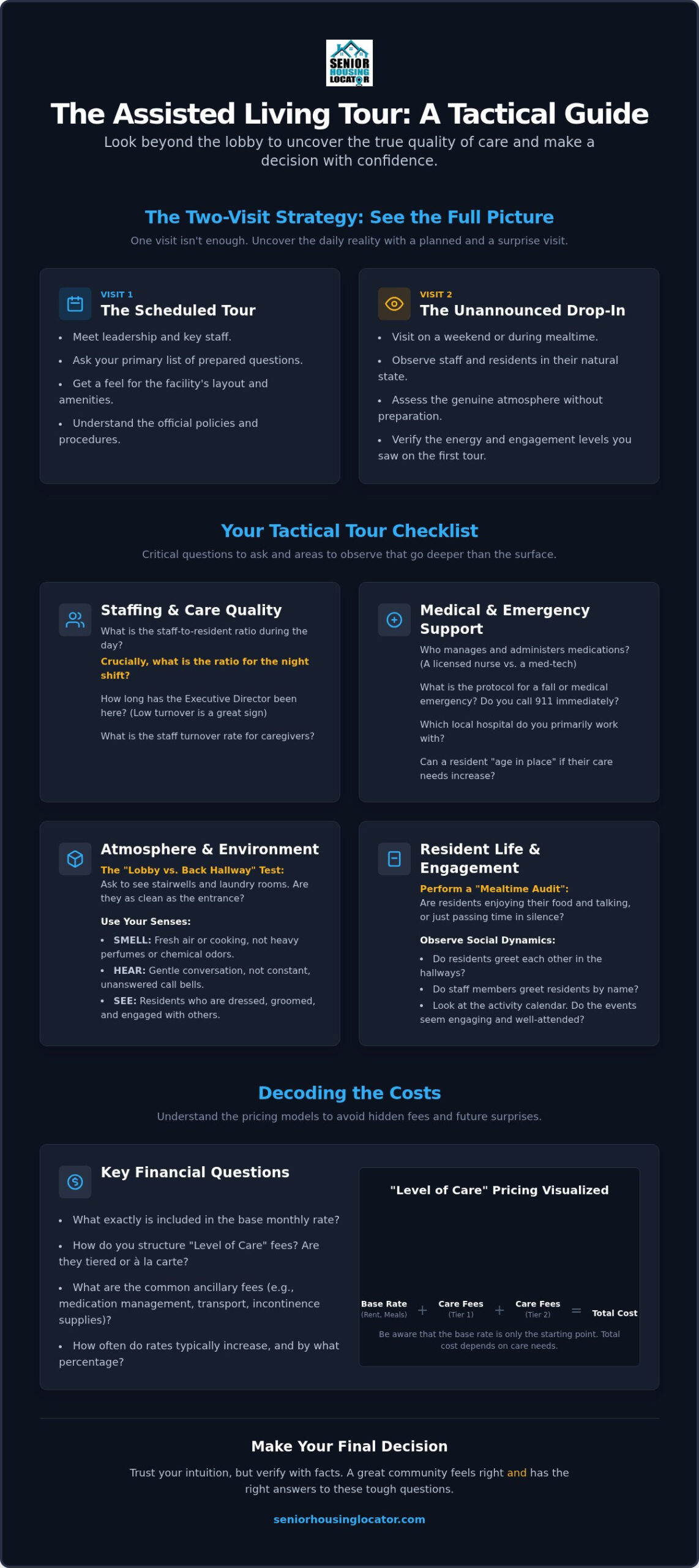
We always recommend visiting a community twice. Your first visit should be scheduled so you can meet the leadership and ask your initial assisted living tour questions. However, the second visit should be unannounced. Dropping by during a mealtime or on a weekend allows you to see the staff and residents when they aren’t “prepared” for a guest. This provides a much more honest look at the quality of life your parent might experience.
Involving your parent in this process is vital, but it can be overwhelming for them. Try to give them a specific, low-pressure “job” during the tour. Ask them to focus on the “vibe” of the common areas or the comfort of the chairs. While they focus on the feeling of the place, you can focus on the technical details. Use your senses as your guide. You should smell fresh air or cooking food, not heavy perfumes or cleaning chemicals used to hide odors. You should hear the gentle hum of conversation, not the constant ringing of unanswered call lights. Look for residents who are dressed, groomed, and actively engaged with their surroundings.
The “Lobby Test” vs. The “Back Hallway” Reality
Many facilities invest heavily in a grand entrance, but the true quality of care is often found in the corners most people don’t see. Ask to see the stairwells, the laundry rooms, and the secondary exits. Are these areas clean and well-lit? If the “back of house” is neglected, it might suggest that management is cutting corners. Pay close attention to resident-to-resident interaction. A community where neighbors are chatting in the hallways is a healthy sign of a social culture. Look for green flags like staff members who greet every resident by name. This shows a level of personal connection that goes beyond a basic job description.
Essential Questions for the Front Desk
The front desk is the gateway to the community’s culture. Start by asking how long the current Executive Director has been in place. Low management turnover is the single most reliable indicator of a stable, high-quality care environment where staff feel supported and residents are safe. You should also ask about their philosophy on “aging in place.” Can a resident stay in their apartment if their care needs increase, or will they be forced to move? Understanding these policies now prevents a crisis later. In local markets like Woodland Hills, knowing how a community coordinates with nearby medical centers can also give you a better sense of their emergency preparedness.
Evaluating Care Quality: Staffing and Medical Support
While a beautiful dining room is a nice feature, the people providing the care are what truly matter. Your parent’s safety depends on the presence and training of the staff. When you are building your list of assisted living tour questions, you must look past the sales pitch to find the hard numbers. A community might look peaceful during the day, but you need to know what happens when the sun goes down. Trust, safety, and reliability are the three pillars you are looking for here.
Ask for the specific staff-to-resident ratio during the night shift. In many facilities, staffing levels drop significantly after 8:00 PM. You want to hear a specific number, not a vague promise that “someone is always available.” If one caregiver is responsible for 30 residents, that is a red flag for safety. In Woodland Hills, ask which hospital the facility prefers and how they handle transport during an emergency. Do they call 911 immediately for every fall, or do they have an on-site nurse who can assess the situation first?
Medication management is another critical area. Ask who actually puts the pills in the cup. Is it a licensed nurse or a trained med-tech? Inquire about how they track errors and how often they audit their system. Reliability here prevents dangerous interactions and missed doses. When you ask assisted living tour questions about staff longevity, you are really asking about the heart of the home. High turnover often leads to inconsistent care and missed details in a resident’s routine. If you feel overwhelmed by these technical details, speaking with a local senior living advisor can help you get the “inside scoop” on which teams are the most stable.
Training and Specialized Care
If your loved one needs Memory Care Placement in San Fernando Valley, ask about specific dementia training. Staff should receive ongoing education on de-escalation and sensory engagement. You should also ask how Activities of Daily Living (ADLs), like bathing, dressing, and grooming, are tracked. Are these tasks logged digitally so you can review them, or are they just noted on a paper clipboard? A dedicated nurse on-site 24/7 is a major green flag compared to communities that rely on an on-call nurse who might be miles away.
The Resident Wellness Question
Care plans shouldn’t be “set it and forget it” documents. Ask how often they are updated and if you will have a seat at the table during those meetings. You also need to know their notification process for small incidents. If your parent has a minor scrape or a fall, will you get a call immediately, or will it wait until the next morning? Clear communication builds the trust you need to sleep soundly at night, knowing your family member is in good hands.
Dining, Social Life, and Daily Engagement
A community can have the best medical support in the world, but if the residents are bored or lonely, their health will eventually suffer. Quality of life is often found in the small details: the flavor of the coffee, the laughter in the hallways, and the variety of the afternoon activities. When you visit a community, don’t just look at the printed materials. You need to see these programs in action to understand if they truly fit your loved one’s personality and preferences.
One of your most essential assisted living tour questions should be a request to stay for lunch. This “Mealtime Audit” is the best way to see the community’s heart. While you eat, observe the room. Are residents talking to each other, or is the room silent? Do the servers know the residents by name? Most importantly, is the food actually good? A menu might list “garden fresh vegetables,” but the reality on the plate tells a different story. If the facility hesitates to let you try the food, consider that a major warning sign.
Next, take a close look at the activity calendar. You want to see “active” engagement rather than “passive” entertainment. A calendar filled with “TV time” or “nap time” suggests a lack of investment in resident wellness. Look for diverse options like guest speakers, gardening clubs, or music therapy. It is also worth asking how often residents get out into the local Woodland Hills or Sherman Oaks community. Regular trips to local parks, museums, or even just a drive to see the neighborhood help residents feel connected to the world outside their front door.
Nutrition and Culinary Flexibility
Dietary needs often change as we age. Ask if the kitchen can handle specific requirements, such as low-sodium, diabetic-friendly, or vegan diets, without charging extra fees. You should also check if they offer “anytime dining” or if residents are restricted to rigid meal windows. A great green flag is a community that has a “food committee” where residents meet with the chef monthly to suggest new dishes or share feedback on recent meals.
Social Connection and Loneliness Prevention
Isolation is a significant risk during the first few weeks of a move. Ask how the staff introduces new residents to their neighbors. Do they have a “buddy system” or a welcome committee? You should also inquire about the policy for guests. If you want to stay for dinner or have a grandchild visit for the weekend, how is that handled? If your loved one is still quite active but wants to shed the burdens of home maintenance, you might also want to compare these social features with Independent Living Communities in Woodland Hills to see which environment offers the best social balance.
Financials, Contracts, and the “Hidden” Costs of Care
Money is often the most stressful part of the senior living search. You might see a price tag that looks manageable, only to find that the monthly bill is much higher once care services are added. Understanding the difference between the “base rate” and “Level of Care” (LOC) pricing is essential. The base rate usually covers your rent, meals, and basic utilities. However, if your parent needs help with bathing, dressing, or medication, those services are typically billed as separate tiers or “levels.” When you prepare your assisted living tour questions, ask for a written explanation of how they determine these levels and how often they re-assess a resident’s needs.
Ancillary fees can also quietly drain a budget if you aren’t prepared for them. Many facilities in the Los Angeles area charge extra for items that families assume are included. Be sure to ask about specific charges for:
- Personal laundry and linen services.
- Medication delivery and management fees.
- Incontinence supplies and waste removal.
- Escorts to the dining room or activities.
It is also vital to look at the community’s financial history. Ask what the average annual rate increase has been over the last three years. If a facility has a pattern of 8% to 10% increases every year, you need to know if your budget can handle that long-term. Finally, ask about their move-out policy. If your parent’s health changes and they eventually require a Skilled Nursing Facility, you need to know how much notice is required and if there are any penalties for a quick transition. If you are feeling overwhelmed by the math, you can work with a local placement expert who can help you compare these contracts side-by-side at no cost to your family.
Contractual Red Flags to Watch For
Always ask about the “community fee” or “buy-in fee.” This is a one-time payment often due at move-in. You should check if any portion of this fee is refundable if your loved one moves out within the first 90 days. Another critical point is the “discharge trigger.” These are the specific medical or behavioral conditions that would force a resident to leave the facility. For more detail on what to expect in our local market, review our guide on Assisted Living Costs in Los Angeles.
California-Specific Regulatory Questions
In California, assisted living facilities are known as Residential Care Facilities for the Elderly (RCFE). You have the right to see the most recent inspection report from the California Department of Social Services (CDSS). This report will show you any “deficiencies” or safety violations. A community that shares this report transparently is a major green flag. Additionally, ask how they handle RCFE-specific requirements for fire safety. Do they have a clear evacuation plan for residents with limited mobility, and how often do they practice it?
Comparing Your Options: Making the Final Decision
After you have visited several communities and asked your assisted living tour questions, you might feel overwhelmed by a mountain of brochures and business cards. This is the moment to balance your technical checklist with a “gut check.” A facility might have perfect scores on paper, but if the atmosphere feels cold or the residents don’t seem happy, it isn’t the right fit. Conversely, a warm and inviting lobby shouldn’t blind you to staffing shortages or vague pricing models. Take a few days to sit with your notes and discuss the options with your family before making a commitment.
One rule we always emphasize is to never sign a contract on the day of your first tour. Sales directors often use “limited-time” discounts or move-in specials to create a sense of urgency. However, a major life transition shouldn’t be rushed. A quality community will respect your need for reflection. If you are still on the fence, ask if the facility allows a “trial stay.” Many Los Angeles communities offer a 30-day short-term stay option. This allows your parent to experience the social life and care firsthand before you commit to a long-term contract.
The Benefits of a Local Placement Specialist
Working with a Senior Living Advisor Los Angeles gives you access to the “inside scoop” that isn’t available on a website. We know which facilities have recently changed ownership and which ones have maintained the same care team for years. Because our referral service is free to families, we save you dozens of hours of stressful research. We can also help you negotiate “move-in specials” or community fee waivers that might not be offered to the general public, ensuring you get the best value for your budget.
Final Checklist: The Top 5 Non-Negotiables
Before you make your final choice, revisit these five critical areas to ensure long-term success. First, verify staff longevity and night-shift ratios. Second, confirm that the pricing model is transparent and predictable. Third, ensure the social activities are truly engaging. Fourth, check the most recent state inspection reports for any red flags. Finally, make sure the “vibe” of the community matches your parent’s personality. We define placement integrity as the commitment to choosing a home that fits the family budget for the long term while maintaining a high standard of care.
Let our local experts help you find the perfect placement in Woodland Hills for free.
Take the Next Step Toward Peace of Mind
Finding the right senior living community is a journey that requires both heart and a high level of organization. By using these tactical assisted living tour questions, you’ve already taken the most important step: moving from uncertainty to informed action. You now know how to look past the sparkling chandeliers to audit staff longevity, decode complex pricing models, and ensure your loved one’s social needs will truly be met. This preparation turns a high-stress search into a manageable, step-by-step process that prioritizes your family’s comfort.
You don’t have to navigate these complex decisions alone. Our team provides a free placement service for families, offering a personalized full-service approach that removes the heavy burden of research. With our expert knowledge of San Fernando Valley facilities, we help you find the “inside scoop” that isn’t found in a glossy brochure. Contact our Woodland Hills senior living specialists for a free personalized consultation. We are here to help you move forward with confidence, clarity, and the support you deserve.
Frequently Asked Questions
How many assisted living facilities should I tour before deciding?
You should aim to tour three to five different facilities before making your final decision. This range provides enough variety to compare different care styles and price points without becoming overwhelming for your family. If you look at too many communities, the details begin to blur together; if you look at too few, you might miss a better fit that was just around the corner in the San Fernando Valley.
Can I tour an assisted living facility without an appointment?
You can certainly drop by for an unannounced visit, though we recommend your very first tour be scheduled in advance. Scheduling ensures that the Executive Director or Sales Manager is available to answer your specific assisted living tour questions. Once you’ve had that formal introduction, coming back unannounced on a weekend or during a mealtime is an excellent way to see how the staff operates when they aren’t expecting a guest.
What are the biggest red flags to look for during a senior living tour?
The most critical red flags include persistent unpleasant odors, the sound of unanswered call lights, and staff members who don’t interact with residents. If you notice that residents are sitting in common areas with no engagement or if the facility feels uncomfortably quiet, these are signs of a poor social culture. Also, watch for deferred maintenance like stained carpets or flickering lights, as these often point to deeper management issues.
Is there a difference between assisted living and a board and care home tour?
There is a significant difference because board and care homes are smaller, residential settings with fewer residents to observe. During a board and care tour, you’ll focus more on the homeowner’s personality and the specific meal routines in a shared kitchen. In larger assisted living communities, your tour will cover multiple departments, expansive dining halls, and a much larger staff team, requiring a broader set of questions to evaluate the quality.
What questions should I ask about memory care specifically?
You should ask specifically about the staff’s specialized dementia training and their methods for managing exit-seeking behaviors. Inquire about the ratio of caregivers in the secured wing and what types of sensory-based activities are offered to keep residents engaged. It’s also vital to ask how the facility handles transitions as the disease progresses, ensuring your loved one won’t be forced to move again if their care needs increase.
How do I know if the staff-to-resident ratio is actually sufficient?
The best way to verify the staff-to-resident ratio is to ask for a look at the current shift’s assignment sheet. This document shows exactly how many caregivers are on the floor right now compared to the number of residents. Don’t rely on the “average” ratios mentioned in brochures. Instead, ask how many people are assigned to each hallway during the night shift when staffing levels typically drop and resident needs remain high.
Are assisted living tours free, and do I need to bring my parent?
Assisted living tours are always free of charge, and there is never an obligation to sign anything during your visit. We suggest that you pre-screen facilities on your own first to avoid exhausting your parent with too many visits. Once you have found two communities that meet your budget and care standards, bring your parent along to see which environment feels most like home to them and their specific social needs.
What should I ask about the facility’s COVID-19 or infectious disease protocols in 2026?
In 2026, your assisted living tour questions should focus on permanent wellness infrastructure like advanced air filtration and touchless technology. Ask how the facility balances resident safety with the right to have family visitors during a localized flu or virus outbreak. You want to ensure they have a plan that prevents total isolation while still maintaining high clinical standards for hygiene and infection control in all shared dining and social spaces.