
What if asking for help is part of caring for your loved one, not a sign that you’re letting them down? If you’re searching for caregiver burnout help Los Angeles families can turn to, you may already be carrying more than you can manage, with little time to rest and uncertainty about where to begin. Feeling exhausted or needing a break doesn’t mean you care any less.
Caregiver strain deserves attention before it takes a deeper toll on your well-being. Relief doesn’t have to mean one big decision or a sudden change in care. It can start with sharing one task, arranging a short break, or talking through what your family needs next.
This guide covers common signs of burnout and practical ways to look for support around Los Angeles, including local caregiver resources and respite options to investigate. You’ll also find steps for discussing responsibilities with family and considering longer-term care arrangements. Senior Housing Locator offers families a free referral service for options such as senior home care and senior living. The company does not provide in-home caregiving directly. The aim is to find a support plan that feels realistic for both you and your loved one.
Key Takeaways
- Ongoing exhaustion, stress, or too little time to recover can be signs that your caregiving routine needs more support.
- Identify one pressure point, then make a specific request to share a task or coordinate an appointment.
- Compare support options by the help they provide, where it happens, and whether the arrangement fits your loved one’s needs, preferences, and budget.
- When looking for caregiver burnout help Los Angeles offers, check each program’s eligibility and whether it serves your neighborhood.
- If your current arrangement feels unsustainable, a senior care referral can help you explore longer-term options without committing to placement.
Caregiver burnout in Los Angeles: what it can feel like and why it matters
Feeling overwhelmed can mean the caregiving load needs more support, not that you’re doing something wrong. Caregiver burnout describes physical and emotional exhaustion that can build when caregiving demands continue with too little time to rest or recharge. Experiences vary, and these signs don’t diagnose you or your loved one. The overview of Caregiver burden explains how ongoing responsibilities can affect unpaid caregivers.
In Los Angeles, caregiving may involve travel between home, appointments, and other responsibilities, alongside changing care needs and limited backup. Over time, strain can disrupt sleep, affect mood, make it harder to stay connected with family and friends, or turn everyday tasks into a struggle. Consider whether your routine is safe and sustainable for both you and the person receiving care, rather than asking whether you can push through one more difficult day.
How can you recognize caregiver burnout?
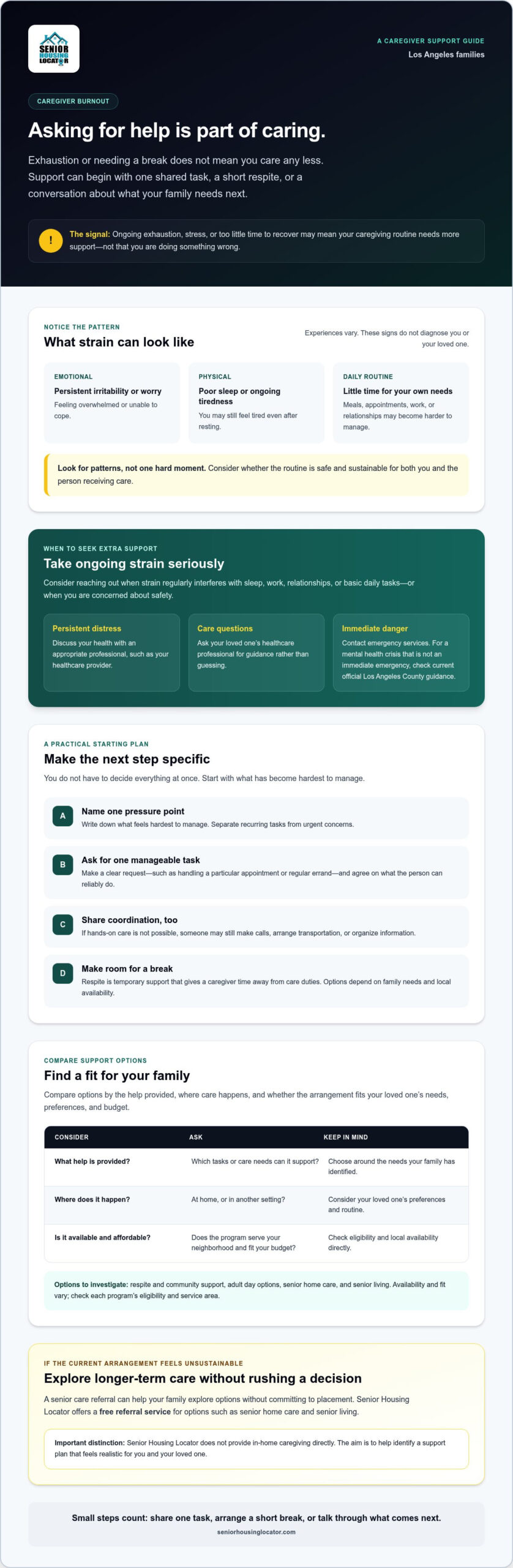
Signs may be emotional, physical, or changes in your usual routine. You might notice persistent irritability or worry, feel unable to cope, sleep poorly, or remain tired even after resting. You may also find that caregiving leaves little time for meals, appointments, or other personal needs.
Look for patterns rather than judging yourself over one hard moment. If changes continue or concern you, note what you’ve noticed and discuss your health with an appropriate professional, such as your healthcare provider.
When does caregiving strain call for extra support?
A difficult day may improve with rest or a little help. Ongoing strain deserves attention if it regularly interferes with sleep, work, relationships, or basic daily tasks, or if you’re concerned about safety for yourself or your loved one. These are reasons to seek support, not reasons for shame.
If distress persists or you’re concerned about your health, contact an appropriate healthcare professional for guidance. If there’s immediate danger, contact emergency services. For a mental health crisis that isn’t an immediate emergency, check current official crisis guidance for Los Angeles County before choosing a resource, since local services and instructions can change.
Taking the first step toward caregiver burnout help Los Angeles families can explore doesn’t require deciding everything at once. Start by naming what has become hardest to manage. That gives you a clearer starting point for discussing what support might help.
What can cause caregiver burnout, and what support can change
Caregiving pressure often builds gradually. A loved one may need more help over time, while meals, personal care, medication routines, appointments, and household tasks continue day after day. If responsibilities extend across the day or night and there’s little backup, even a loving, capable caregiver may have too little time to recover. Not every caregiver experiences burnout, and no single type of support works for every family.
Coordination can add strain alongside hands-on care. If relatives aren’t clear about who will handle transportation, calls, or appointment follow-up, tasks can quietly fall to one person. Keeping track of changing needs without knowing which questions to ask a healthcare professional can add another layer of worry.
Sharing specific, manageable responsibilities can make caregiving more sustainable than leaving one person to carry the entire load.
Which caregiving pressures can families address first?
Start with a short list. Separate recurring tasks from urgent concerns, then note which responsibilities someone else might be able to take on. A family conversation is more useful when the request is specific: ask one person to handle a particular appointment or regular errand, and agree on what they can reliably do. If you’re unsure how to manage a care task, ask your loved one’s healthcare professional for guidance rather than guessing.
Keep the plan practical. A relative who can’t provide hands-on help may still be able to make calls, arrange transportation, or organize information. Clear commitments reduce the chance that “let me know if you need anything” leaves all the planning with you.
How can respite and community support create breathing room?
Respite care is temporary support that gives a caregiver time away from care duties. Depending on your family’s needs and what’s available locally, this might mean another person providing care for a set period or a loved one attending adult day services. Community programs may also offer information or other forms of caregiver support. These are options to investigate, not guaranteed solutions, and availability can vary.
Before relying on a service, confirm its eligibility requirements, schedule, location, costs, and the kind of support it provides. Ask whether it can meet your loved one’s needs and preferences. Families considering longer-term arrangements can also explore senior care referral options. Senior Housing Locator’s referral service is free to families and can include senior home care options, but the company doesn’t directly provide in-home caregiving.
Finding caregiver burnout help Los Angeles families can use may begin with one manageable change: identify the task that weighs on you most, then ask who or what could help carry it.
Comparing caregiver burnout support options in Los Angeles
Support might mean a break, help during the day, or a different long-term care arrangement. Start with the pressure point that matters most and consider what the older adult wants and needs. Use this comparison to identify options to investigate, not as a promise that a service is available or suitable for every family.
| Option | Need it may address | How it’s delivered and coordinated |
|---|---|---|
| Respite care | A caregiver needs temporary time away from care duties. | Care is arranged for a limited period. Confirm who provides it and how to arrange coverage. |
| Adult day services | A family is looking for daytime support outside the home. | Services take place during scheduled hours at a program location. Ask about eligibility, schedule, location, and costs. |
| Senior home care referral | A family wants to explore support delivered in the older adult’s home. | Senior Housing Locator can refer families to senior home care options. It does not directly provide in-home caregiving. |
| Assisted living or board-and-care home | A family is considering a residential setting as needs or daily routines change. | Explore the setting and care arrangements with the older adult’s needs and preferences in mind. |
| Memory care or skilled nursing facility | A family wants to explore options when cognitive support needs or other care needs are part of the picture. | Discuss the care needs with appropriate professionals and compare options with local providers. |
Respite, adult day services, and senior home care referrals
Respite provides temporary relief, while adult day services may offer a daytime option to research locally. Neither should be assumed to fit without checking the details. Ask each program or provider about eligibility, schedule, location, costs, and the support offered. Senior Housing Locator’s free referral service can help families explore senior home care options, but a referral is not direct caregiving from the company.
When might assisted living or another residential option be worth exploring?
Residential care isn’t the only response to caregiver strain. Depending on the older adult’s care needs, preferences, budget, and nearby options, families may explore assisted living, board-and-care homes, or skilled nursing. If cognitive support needs are part of the situation, memory care may also be worth discussing. For an overview of the placement process, read the Los Angeles assisted living placement guide.
For caregiver burnout help Los Angeles families can act on, compare options by the need addressed, where support happens, and who coordinates it. A senior living advisor may help families explore longer-term arrangements, but the choice should reflect the older adult’s circumstances, not pressure to select a particular type of care.
A practical plan for finding caregiver burnout help in Los Angeles
Finding support can feel like another task on an already full list. Keep the first steps small: identify what’s hardest, ask for specific help, then check which local options fit. Families in Los Angeles and the San Fernando Valley can start with regional resources, but service areas and eligibility differ, so confirm details directly.
- Name the pressure point. Is it overnight supervision, getting to appointments, or having no time away from care?
- Ask for one concrete form of help. Tell a family member or provider what task needs covering and when.
- Check local options. Contact relevant programs or providers to learn whether their support fits your situation.
Which local caregiver resources should families check?
Investigate California Caregiver Resource Centers and Family Caregiver Alliance to learn what caregiver guidance may be available. In Los Angeles, families can also check with the Los Angeles County Aging & Disabilities Department or the City of Los Angeles Department of Aging. The Family Caregiver Support Program offers services such as counseling, training, and respite care. The listed contact number is (800) 510-2020; confirm current contact details and which office or program serves your area before relying on them.
Coverage can vary across Los Angeles County, the city, and San Fernando Valley communities. Ask about eligibility, service area, wait times, current offerings, and any steps needed to apply. A program’s name alone doesn’t confirm that it serves your neighborhood or can meet your needs.
How can families make the first support conversation easier?
A few notes can help you explain the situation without having to remember everything on the spot. Write down the daily care tasks, what’s causing the most strain, and the specific break or assistance you’re seeking. Include questions about accessibility needs, preferred schedules, and budget limits.
For any provider or program, ask what support is available, when it may be available, what qualifications are required, what care boundaries apply, and what happens next. If you’re comparing longer-term care options, the Los Angeles senior living advisor guide offers another starting point for understanding the process.
Families considering senior living or care referrals can explore senior care options with Senior Housing Locator. Its referral service is free to families and can help you consider options based on care needs, preferences, budget, and location. It doesn’t provide direct in-home caregiving, and a referral doesn’t guarantee placement or availability.
How a Los Angeles senior care referral can help lighten the load
If your current care arrangement feels difficult to sustain, exploring alternatives can help you understand what support may fit your family. A referral service can help organize the search around your loved one’s needs, preferences, budget, and preferred location. Exploring options doesn’t mean you have to choose residential care or decide before you’re ready.
Senior Housing Locator is a free referral service for families exploring senior care options in Woodland Hills, the San Fernando Valley, and greater Los Angeles. Referrals may include assisted living, memory care, board-and-care homes, independent living, skilled nursing facilities, or senior home care. The company does not directly provide in-home caregiving, and a referral doesn’t guarantee that a particular option will be available or suitable.
What information helps match a family with care options?
Before a conversation, note what a typical day involves and where support is most needed. Share relevant safety concerns, the older adult’s preferences, and any social or psychological needs that may shape the search. Identify preferred locations and budget parameters too, so options can be considered in the context of what matters to your family.
Think of this information as a starting point, not a final care plan. Each provider must confirm its services, eligibility requirements, costs, and availability directly with your family.
What can families expect from a first conversation?
A first conversation can focus on your family’s needs and possible senior care referrals. It isn’t medical advice or a diagnosis. You can ask how the referral process works, what information is used to make recommendations, and whether relationships with care providers affect how options are presented. Clear answers help you decide whether the service is useful for your search.
It’s fine to bring questions and take time to consider the information. Explain what feels unsustainable now, what kind of help you’re looking for, and what you’re not ready to change. Exploring referrals doesn’t commit your family to placement.
If you’re looking for caregiver burnout help Los Angeles families can explore at their own pace, a senior care referral may be one practical step toward understanding the options. Talk with Senior Housing Locator about local care options and share your loved one’s needs, preferred location, budget, and questions.
Take the next step toward more support
Caregiver strain can build gradually, but you don’t have to wait until you’re at a breaking point to ask for help. Notice which responsibilities are hardest to sustain, talk with family or appropriate professionals, and explore local support that fits your loved one’s needs and preferences. A break, shared tasks, or a different care arrangement may each be worth considering.
Finding caregiver burnout help Los Angeles families can use starts with one manageable step. If you’re weighing longer-term care options, Senior Housing Locator offers a free referral service for families. Recommendations are tailored to care needs, preferences, budget, and preferred location. Providers confirm their services and availability directly.
Talk with Senior Housing Locator about care options for your family when you’re ready to discuss your questions and what matters most. Seeking support isn’t giving up. It’s a thoughtful way to care for your loved one and yourself, one step at a time.
Frequently Asked Questions
What are the signs of caregiver burnout?
Caregiver burnout may show up as persistent exhaustion, irritability, worry, or feeling unable to cope. You might also have disrupted sleep, less time for your own needs, or trouble keeping up with everyday tasks and relationships. These signs don’t diagnose a condition, but ongoing changes are worth taking seriously. Notice how long they’ve been happening and discuss health concerns with an appropriate professional, such as your healthcare provider.
Where can I find caregiver burnout help in Los Angeles?
Start by checking caregiver support programs and caregiver resource centers serving your area, including options in Los Angeles County and the San Fernando Valley. Ask directly about current services, eligibility, location, and wait times, since coverage can vary. Senior Housing Locator helps families explore care options in Woodland Hills, Granada Hills, Northridge, Sherman Oaks, Encino, Burbank, Los Angeles, Santa Monica, and Pasadena. The right first call depends on the kind of help you need.
Can respite care help with caregiver burnout?
Respite care can provide temporary support so you can step away from caregiving duties for a period. Depending on what’s available and appropriate, families might investigate in-home respite or short-term care in another setting. It isn’t a guaranteed fit or a complete solution for every source of strain. Before making plans, confirm the provider’s services, schedule, eligibility, costs, and ability to meet your loved one’s needs.
What happens if I can no longer care for my parent at home?
If home care no longer feels manageable or safe, you can explore options without deciding everything at once. Talk with your parent, other family members, and appropriate healthcare professionals about current care needs and what support may be required. Depending on the situation, families may investigate senior home care referrals, assisted living, board-and-care homes, memory care, or skilled nursing. Providers can explain their services, requirements, costs, and availability.
Does Medicare pay for respite care or senior home care?
Medicare generally doesn’t cover ongoing custodial care when personal assistance is the only care needed. Coverage for specific services can depend on the circumstances and, for Medicare Advantage, the plan’s terms. Before arranging care, contact Medicare or the health plan to ask what may be covered, what conditions apply, and whether a particular provider or service qualifies. Don’t assume a referral or care option is covered until you confirm it.
How can I ask family members to share caregiving responsibilities?
Make a specific request rather than asking generally for help. List the recurring tasks and explain which one would make the biggest difference, such as taking your parent to an appointment, handling a regular errand, or making follow-up calls. Ask relatives what they can realistically commit to and agree on who will do what and when. Clear, manageable responsibilities can make it easier to coordinate support and revisit the plan if needs change.
Can a senior living placement service help an overwhelmed caregiver?
Yes. A referral service can help a family explore senior care options when current arrangements feel unsustainable. Senior Housing Locator provides a free referral service, with recommendations tailored to care needs, preferences, budget, and preferred location. Options may include residential care or senior home care referrals, but the company doesn’t directly provide in-home caregiving. Providers confirm their services, costs, eligibility, and availability, so ask how referrals work and whether provider relationships affect recommendations.